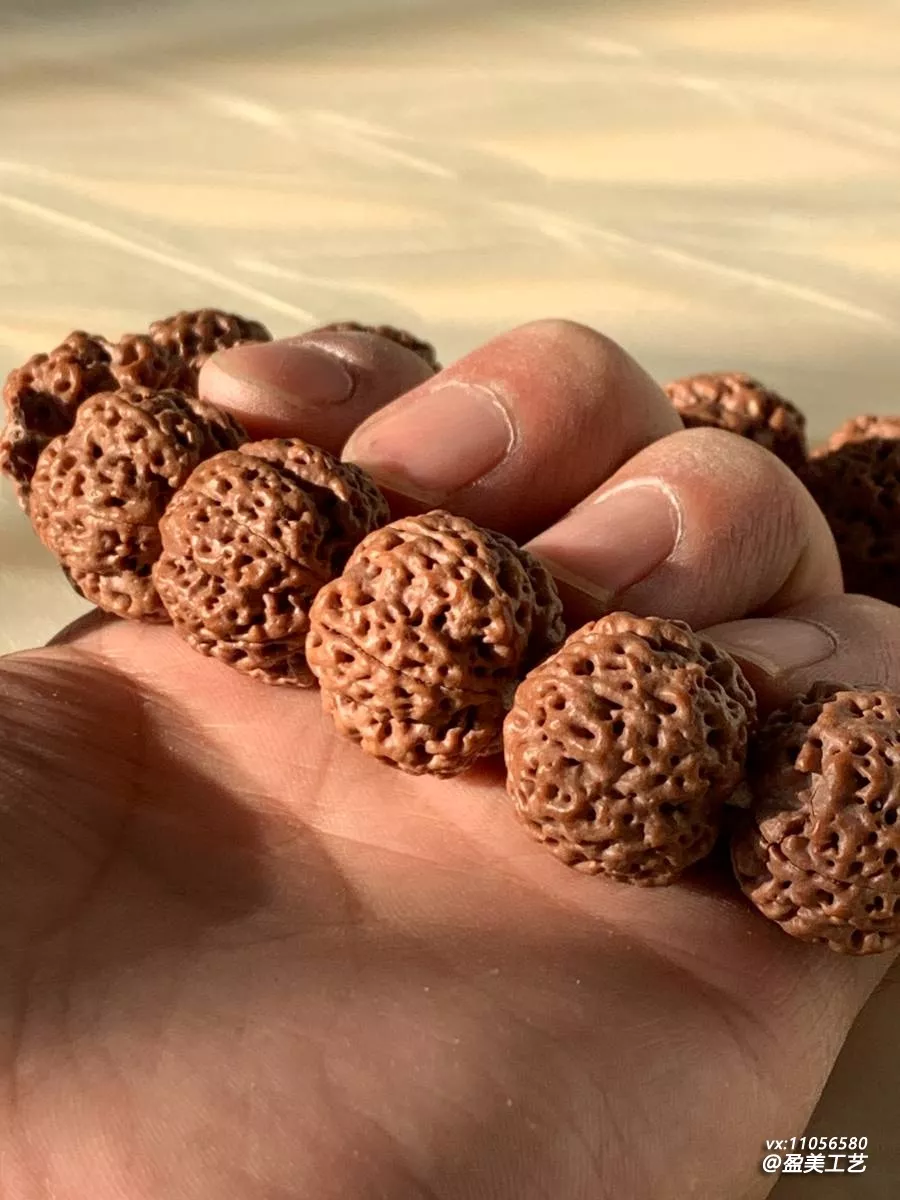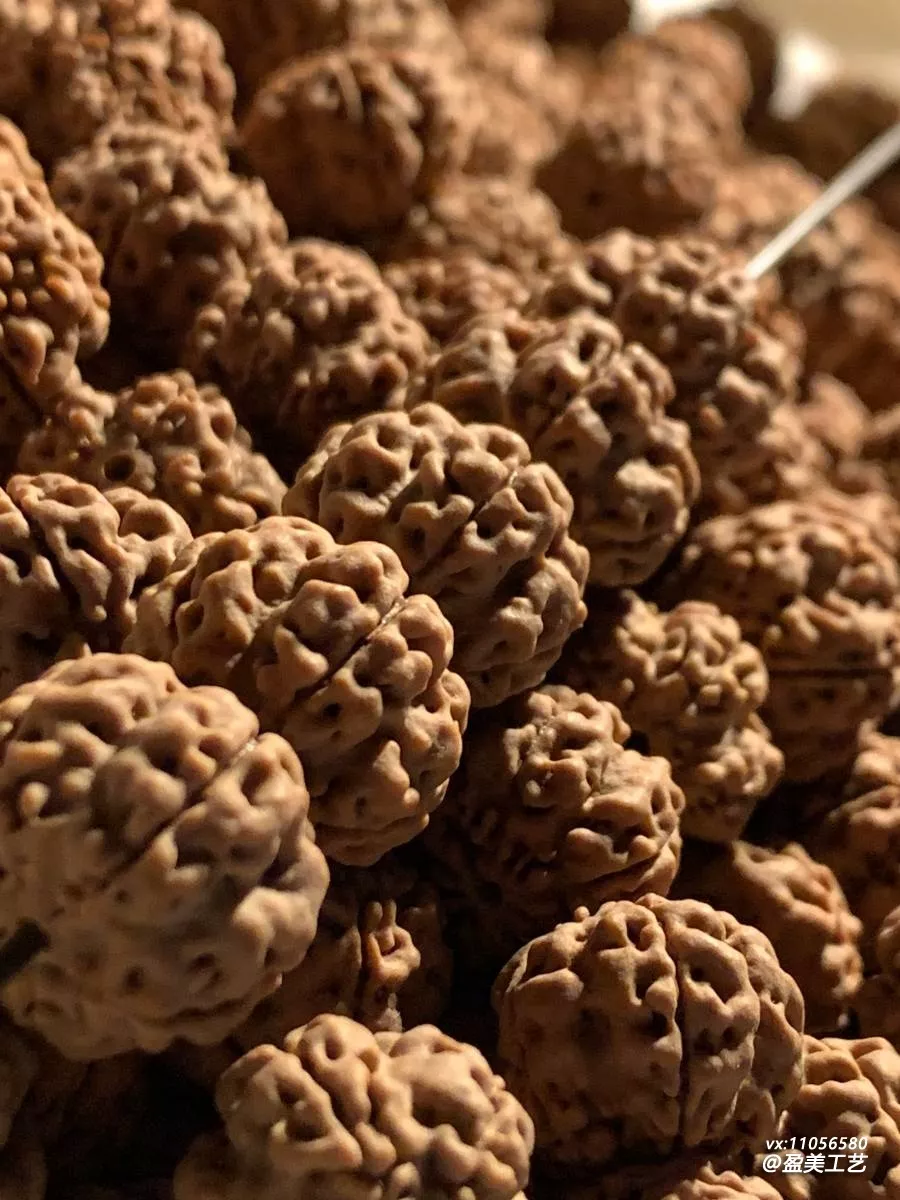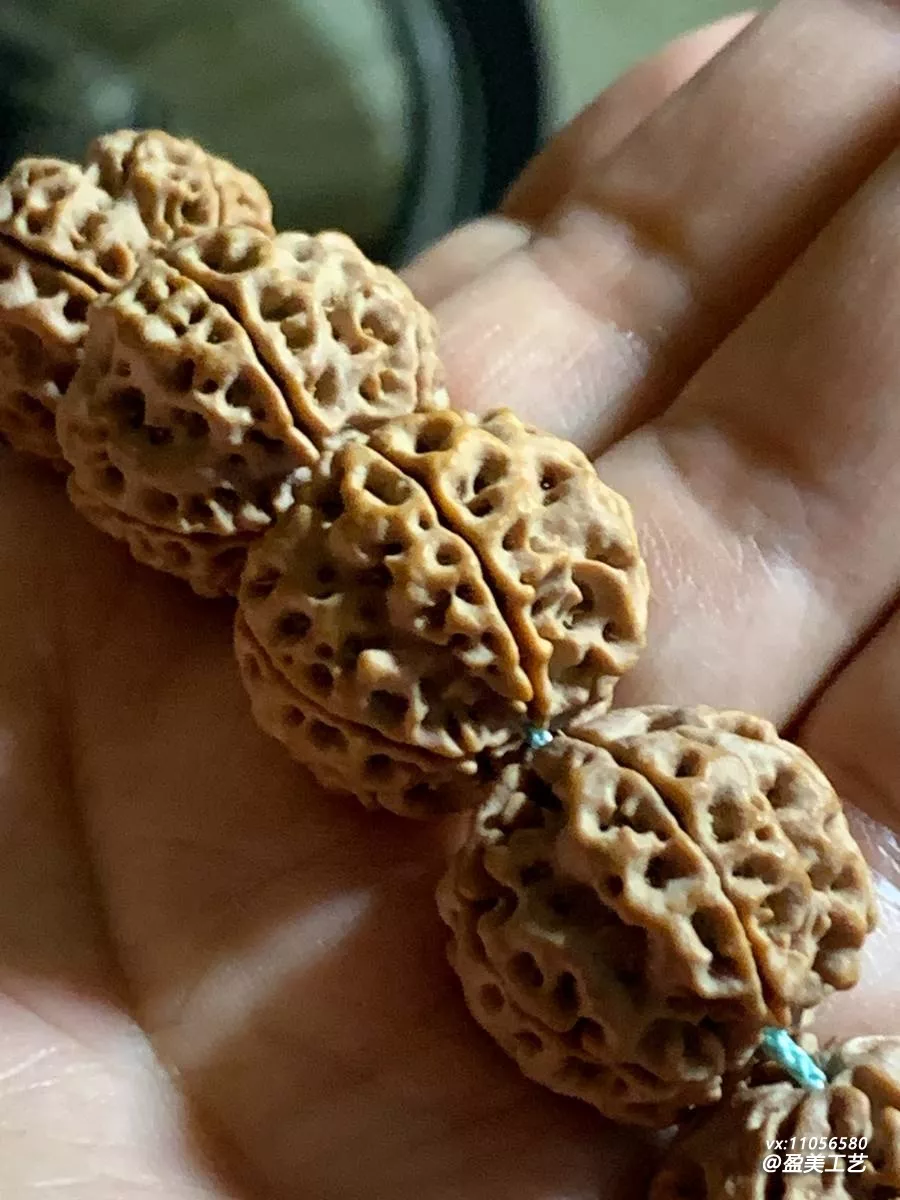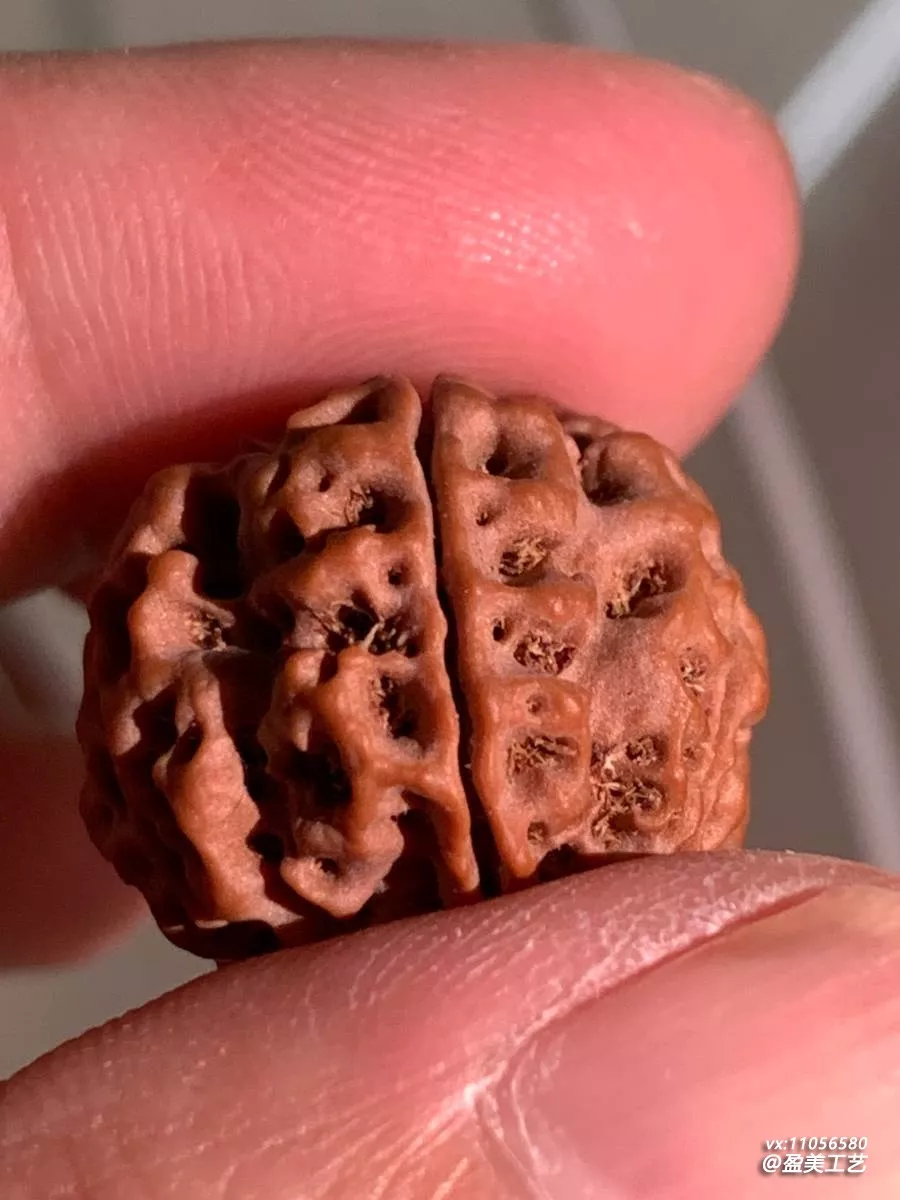
Patina and jade-like transformation—which comes first for large Rudraksha? People who work with large Rudraksha often talk about patina and jade-like transformation. What is the relationship between the two, and which appears first? Many beginners cannot tell them apart. Let me explain it clearly once, and you will understand.
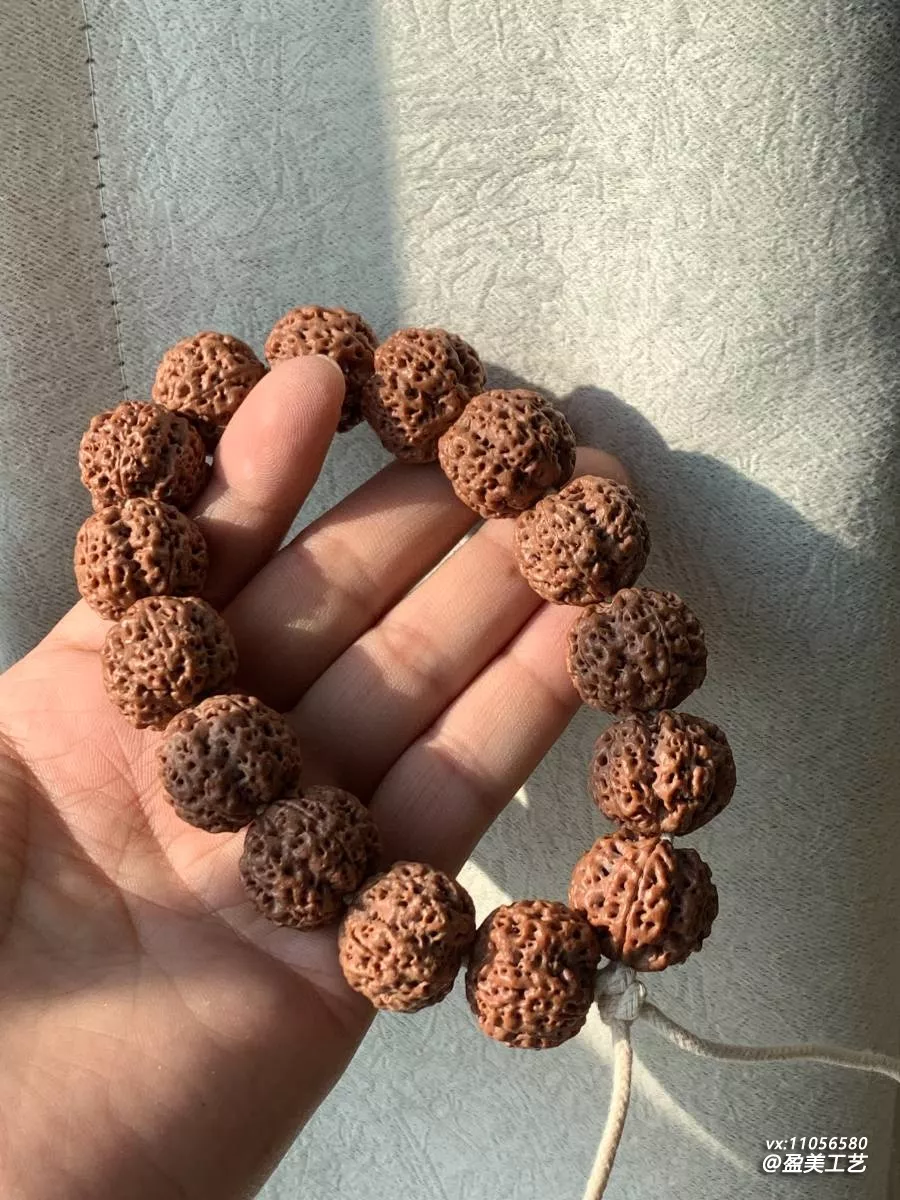
The difference between patina and jade-like transformation
The difference between patina and jade-like transformation: patina is an oxidation layer formed by sweat and oil on the surface of the seed, looking glossy and feeling smooth; jade-like transformation is when the patina penetrates deep inside, making the whole seed translucent and bright like jade. Patina is a surface change, while jade-like transformation is a deeper change—different degrees.
Which appears first
Which appears first: patina comes first, then jade-like transformation. In the early stage of breaking-in, sweat and oil accumulate on the surface, and patina slowly forms, a process taking six months to a year; once the patina thickens, it gradually seeps into the interior of the seed, the seed becomes translucent, and jade-like transformation begins to appear, usually taking more than two to three years.
How to move toward jade-like transformation
How to move toward jade-like transformation: jade-like transformation depends on time and persistence. Combine brushing with handling, and as the patina grows thicker, it naturally progresses toward jade-like transformation; seeds with good skin density are more likely to achieve jade-like transformation, while those with poor density find it hard to produce that effect. Patina and jade-like transformation—which comes first for large Rudraksha? Patina first, then jade-like transformation. Do not rush; handle it long enough, and jade-like transformation will come naturally.
People who work with malas always want to reach the final result in one step, but in fact both patina and jade-like transformation come step by step. Patina first, then jade-like transformation—get the order right, and leave the rest to time.