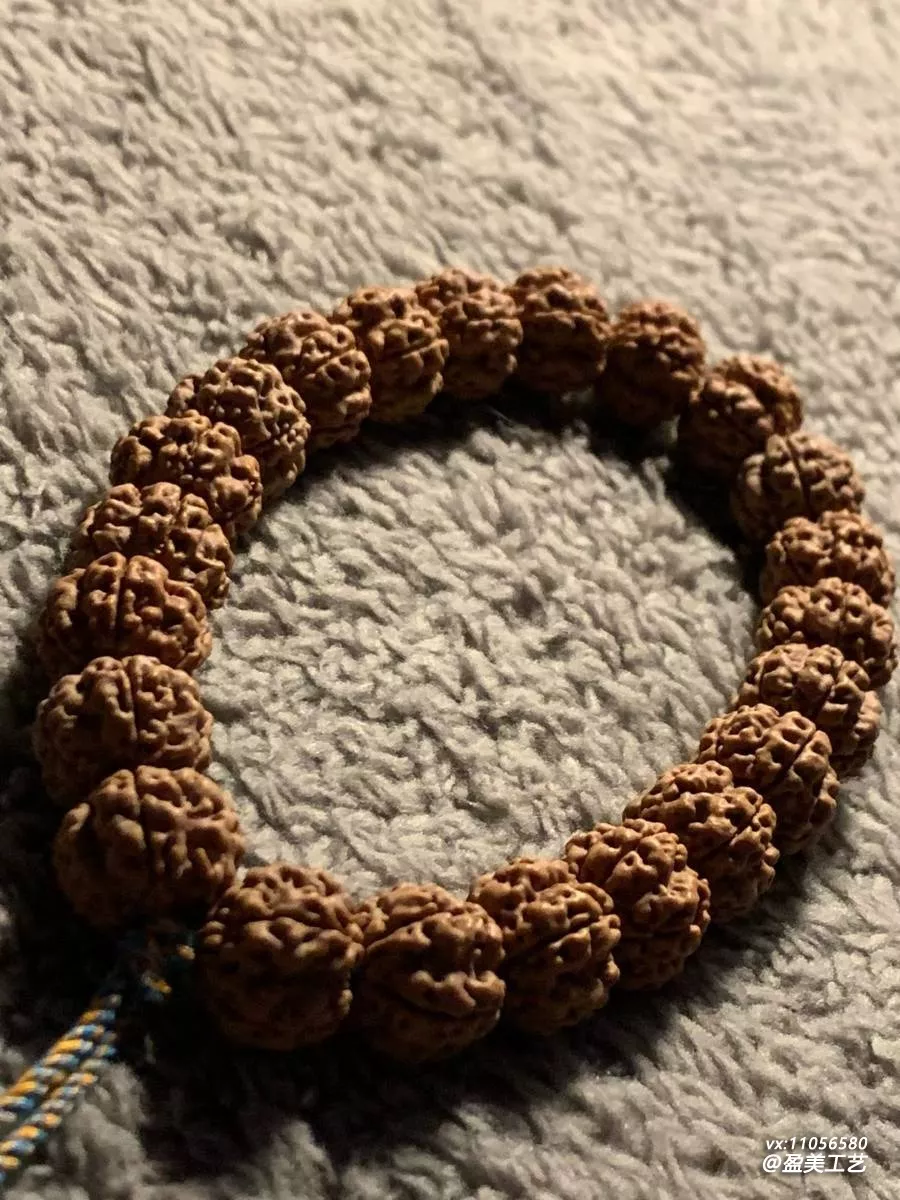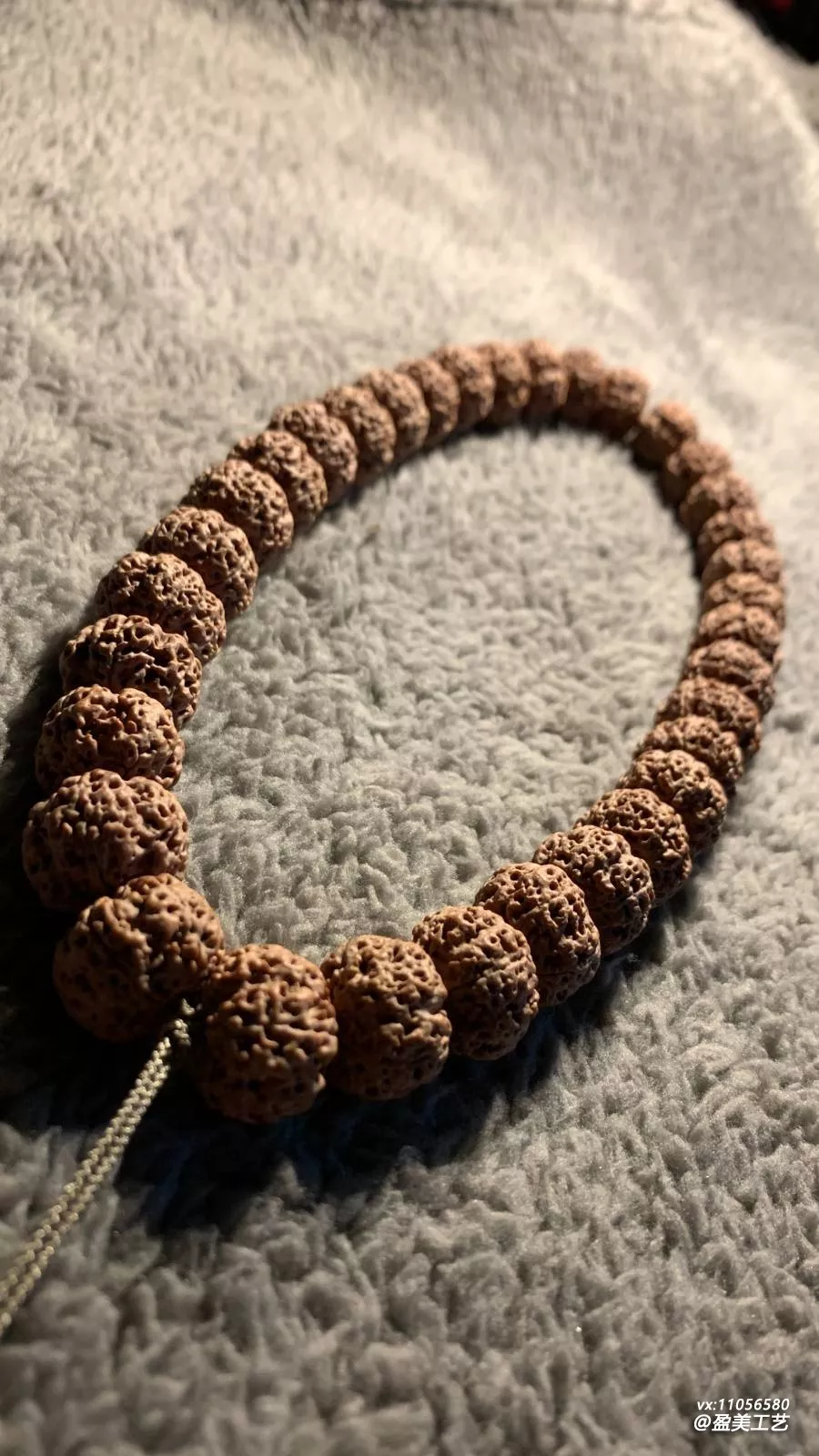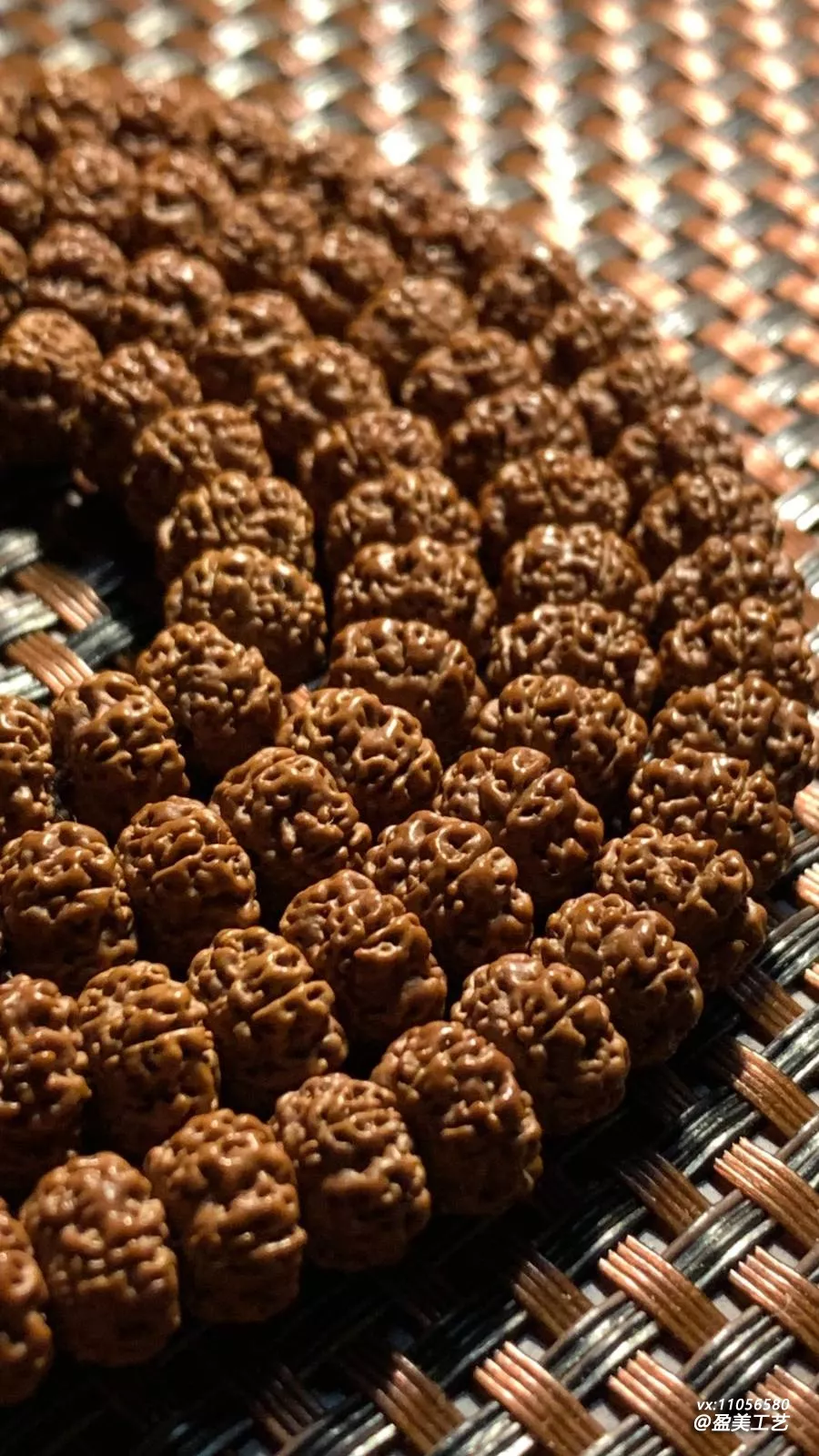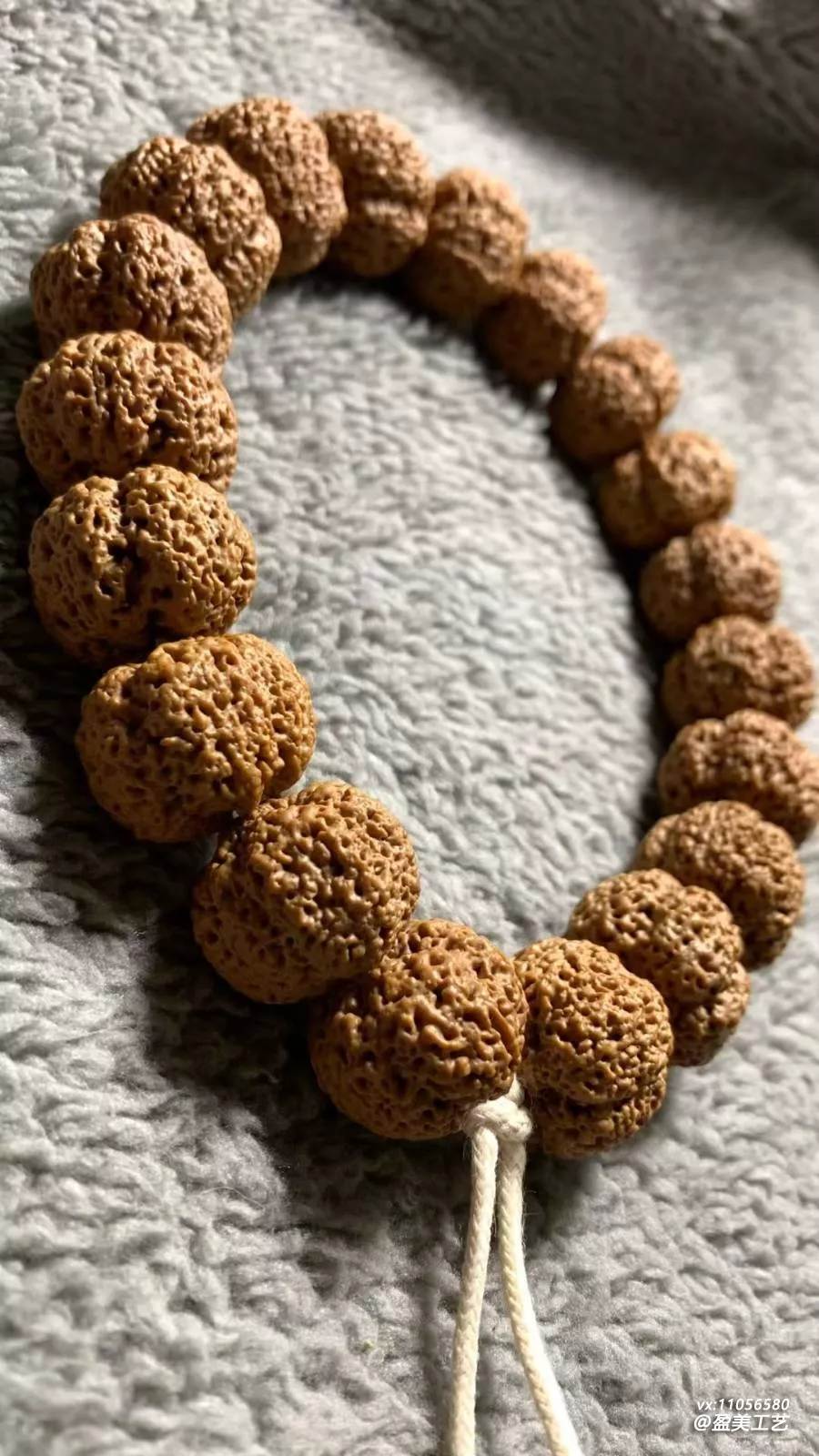
How big is the difference between breaking in large Rudraksha with sweaty hands versus dry hands? People who break in malas (prayer beads) fall into two types—sweaty hands and dry hands—and the malas they produce turn out quite differently. Where the difference lies and how to make the most of your strengths while working around your weaknesses—once that's clear, you'll know how your own hands should go about it.
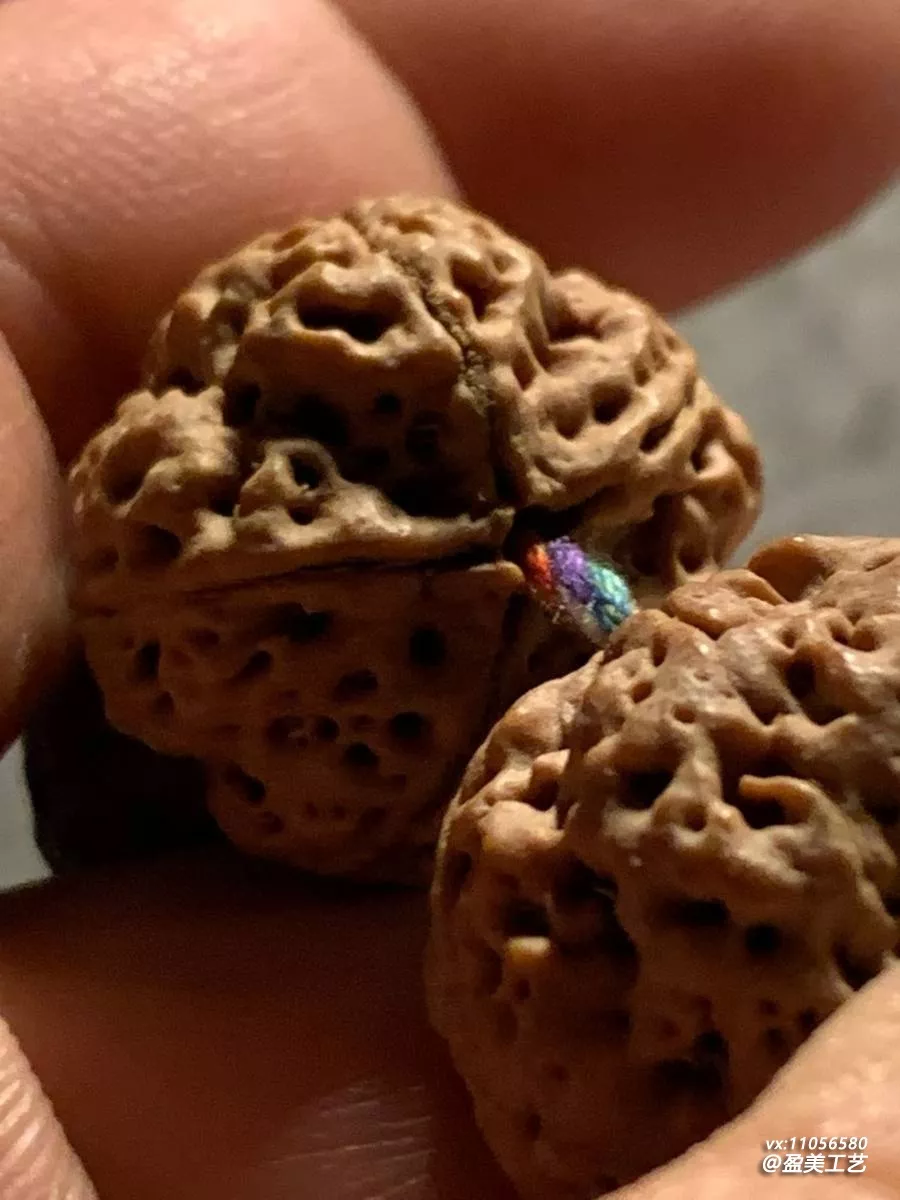
What breaking in a mala with sweaty hands is like
What breaking in a mala with sweaty hands is like: lots of sweat and oil, so color develops fast, but it easily turns patchy and murky, with uneven color. A mala broken in with sweaty hands shows obvious changes early on, with color moving quickly; later, if you don't keep it in check, it easily goes dark and muddy, so frequent brushing is needed alongside.
What breaking in a mala with dry hands is like
What breaking in a mala with dry hands is like: little sweat and oil, so color develops slowly, but the color is even, and the resulting mala is clean and translucent. A mala broken in with dry hands shows little change early on, which easily makes people impatient, but later the patina is clean and beautiful—it's slow work that yields fine results.
How to make the most of your strengths and work around your weaknesses
How to make the most of your strengths and work around your weaknesses: with sweaty hands, brush often—brush after every session—control the pace, and prevent patchiness; with dry hands, you can appropriately use gloves to break it in with a bit of sweat, or extend the breaking-in time to speed up color development. For breaking in large Rudraksha with sweaty hands versus dry hands, the difference lies in the speed and evenness of color development; with the right method, both types of hands can produce a good mala.
You can't choose your hands, but you can adjust your method. Sweaty hands and dry hands each have their own way of playing; figure out your own characteristics and treat the cause, and either can produce a good mala.