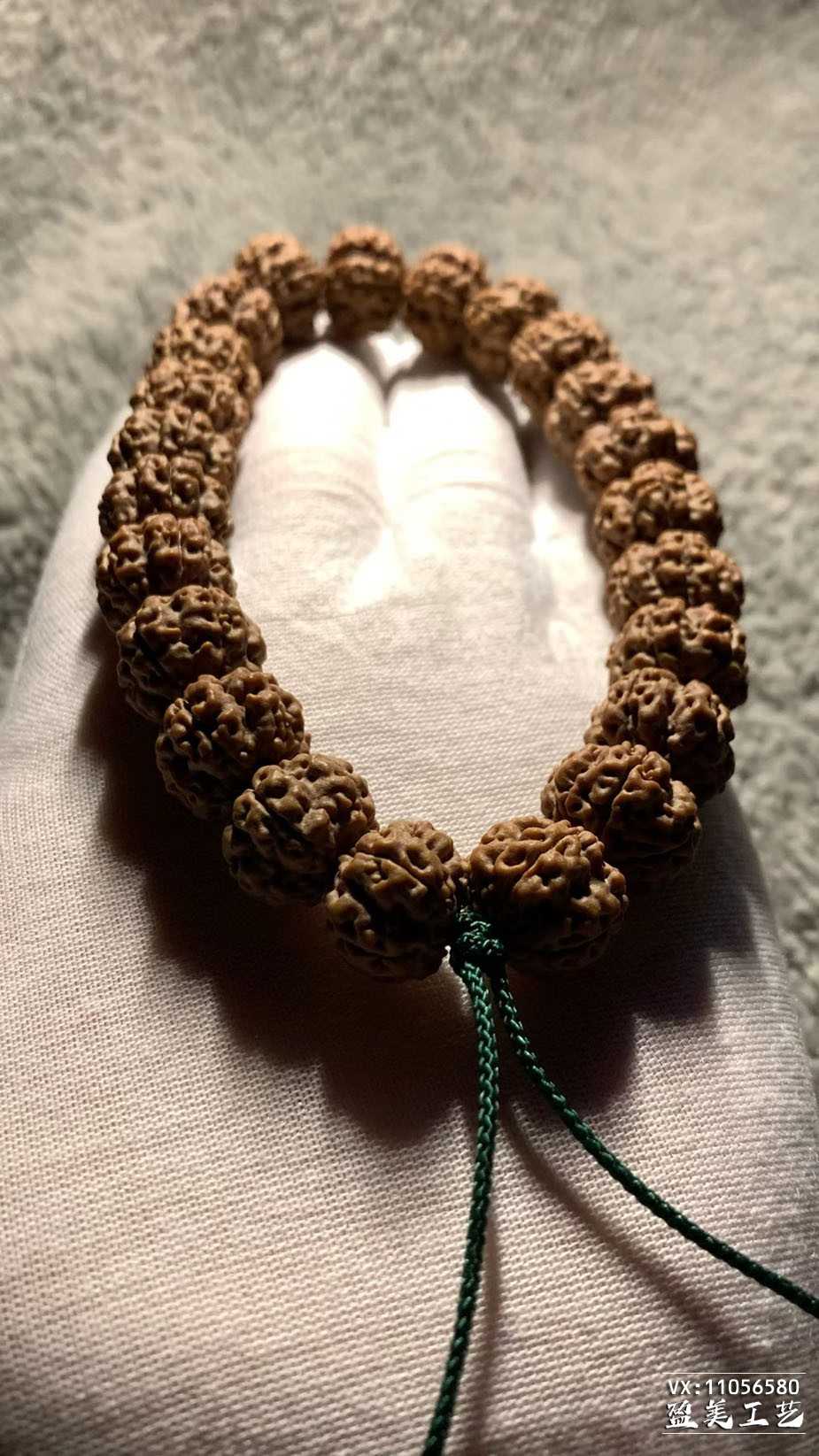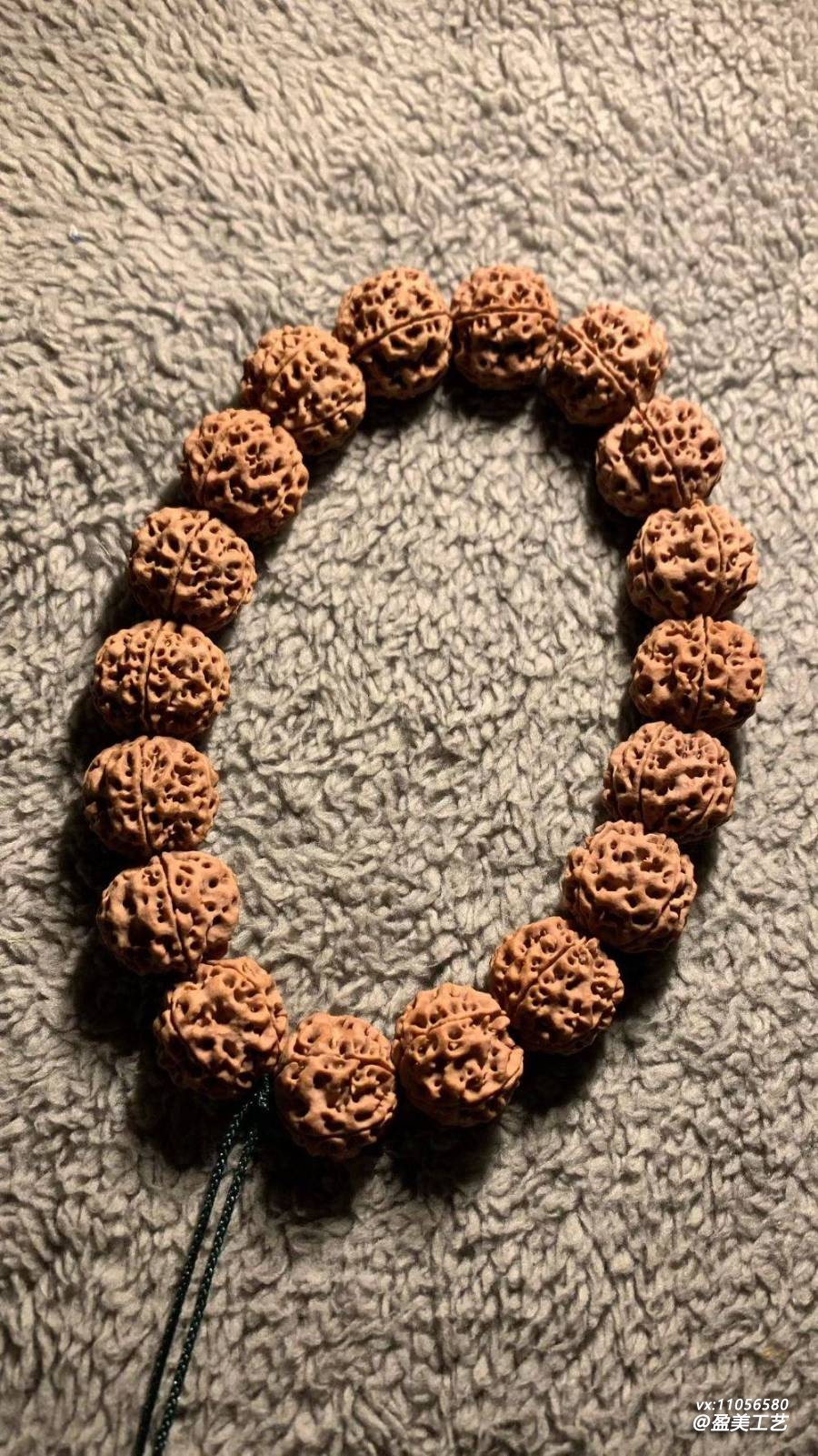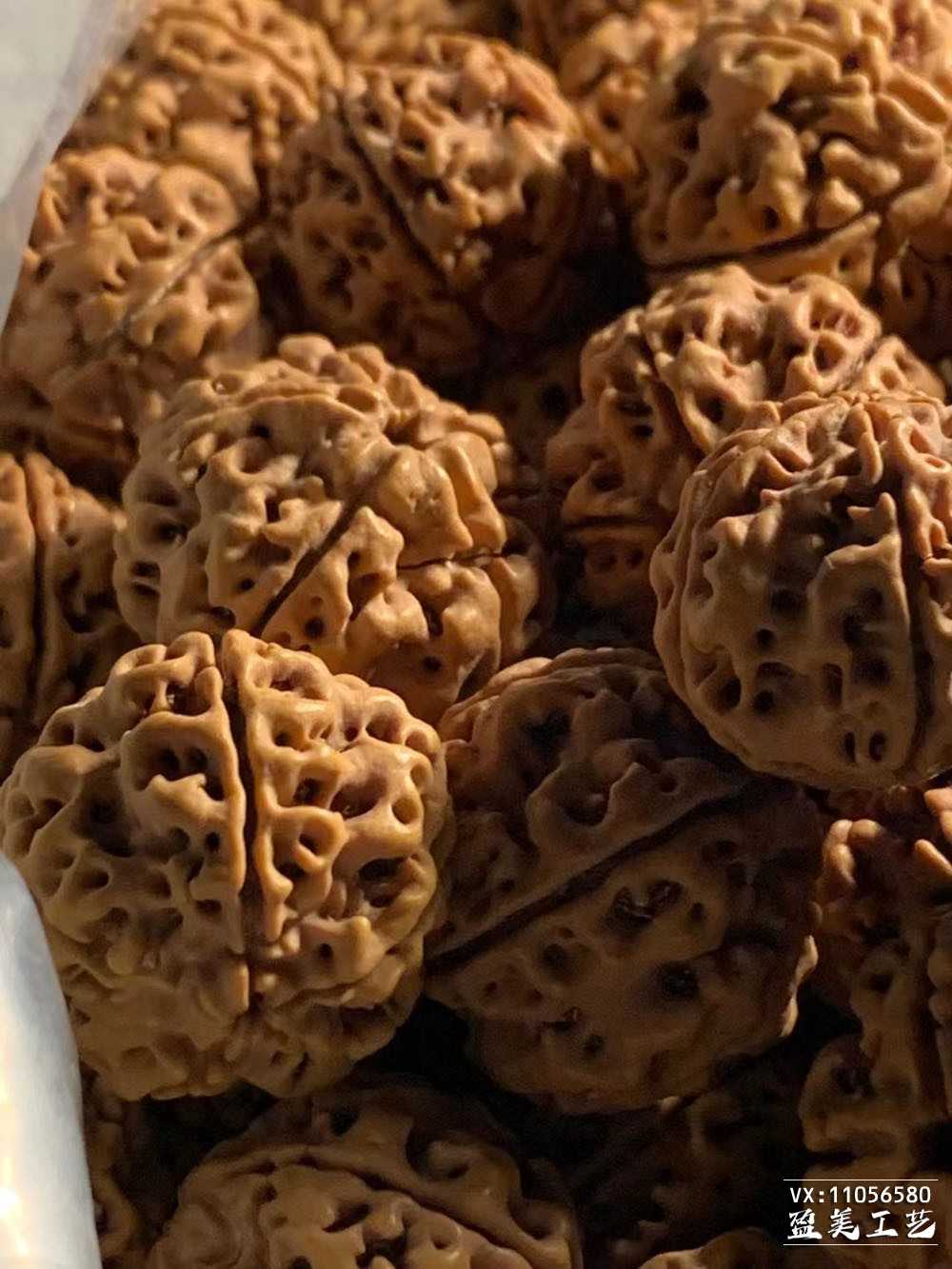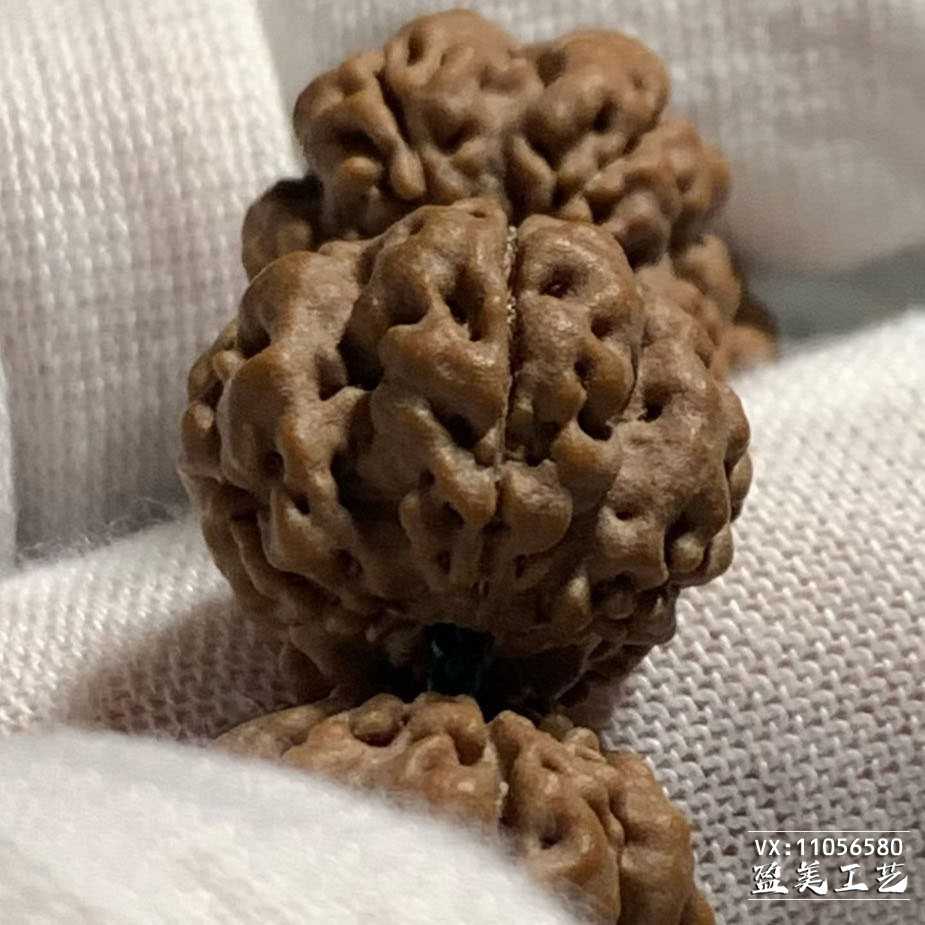
Is the difference between a Rudraksha (large) that costs 300 and one that costs several thousand visible to the naked eye? Many people ask whether an expensive Rudraksha (large) is just a fool's purchase. Having broken in both strands myself—a 300-yuan commercial-grade one and a several-thousand-yuan premium one—the difference is real, but not as mystical as it sounds. Once explained clearly, you'll know how to choose.
Surface differences
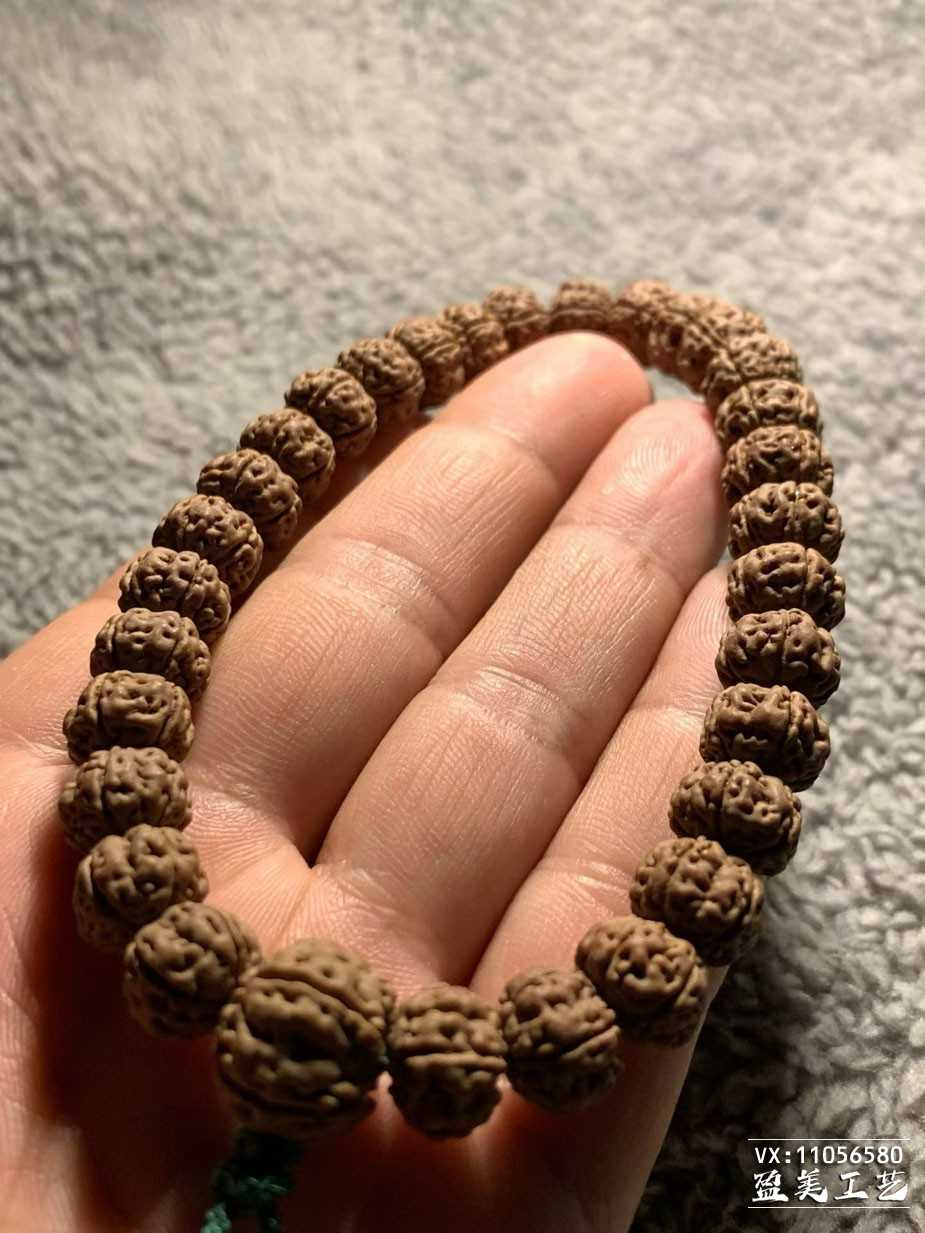
The surface differences are visible. On a strand costing a few hundred, the texture is ordinary, the seeds are less uniform, and some have flaws. On a strand costing several thousand, the texture is regular, every seed is uniform, and the skin is oily and smooth—it looks refined at a glance. Placed side by side, the gap in appearance is unmistakable.
Differences after breaking-in
The differences after the breaking-in (patina process) are even more obvious. With the same handling, a several-thousand-yuan strand has a better foundation: it colors faster, more evenly, and develops a translucent patina. A few-hundred-yuan strand colors more slowly and tends to show color unevenness. However, as long as the base preparation is done well and a few-hundred-yuan strand is broken in carefully, it can still achieve a decent result—just with a lower ceiling.
How to choose without losing out
How to choose without losing out? Consider your budget and purpose. For beginners practicing, a few-hundred-yuan strand is entirely sufficient—you can learn the technique without worrying about cost. If you're pursuing quality and want a premium result, a several-thousand-yuan strand is worth it, but you need to know how to pick. The difference between a 300-yuan and a several-thousand-yuan Rudraksha (large) lies in appearance, foundation, and breaking-in ceiling. Choose according to your own situation—don't follow the crowd blindly or chase high prices.