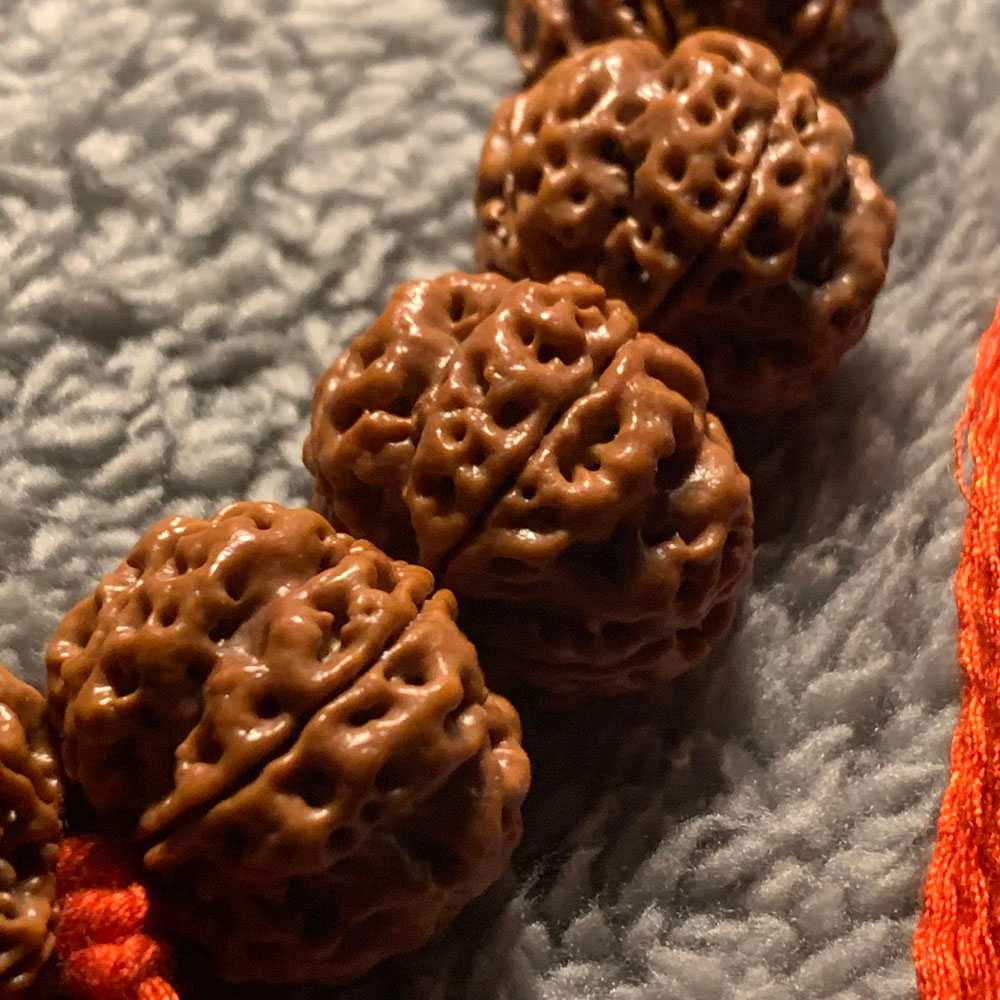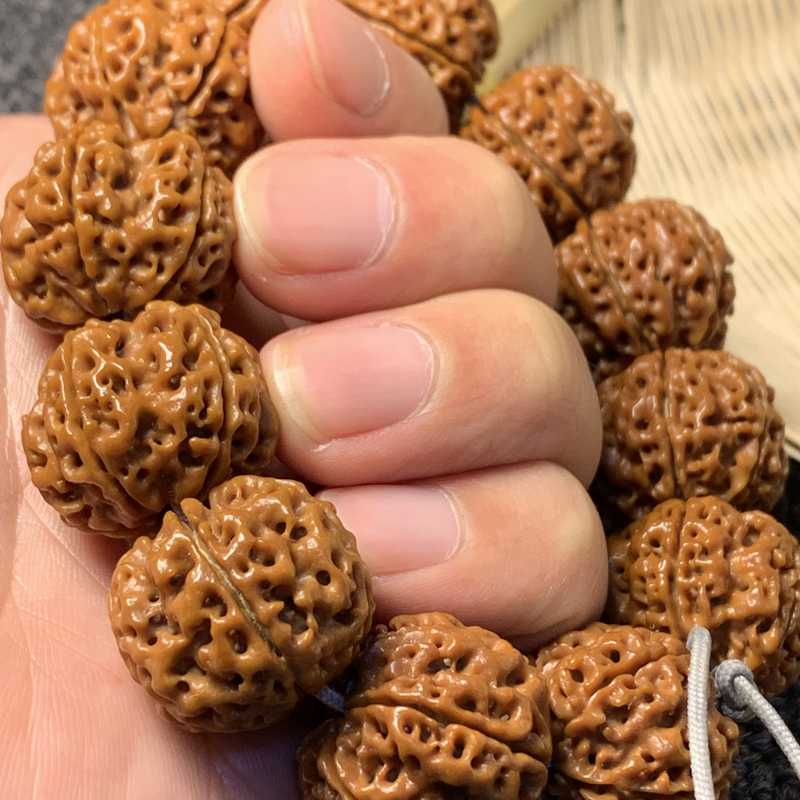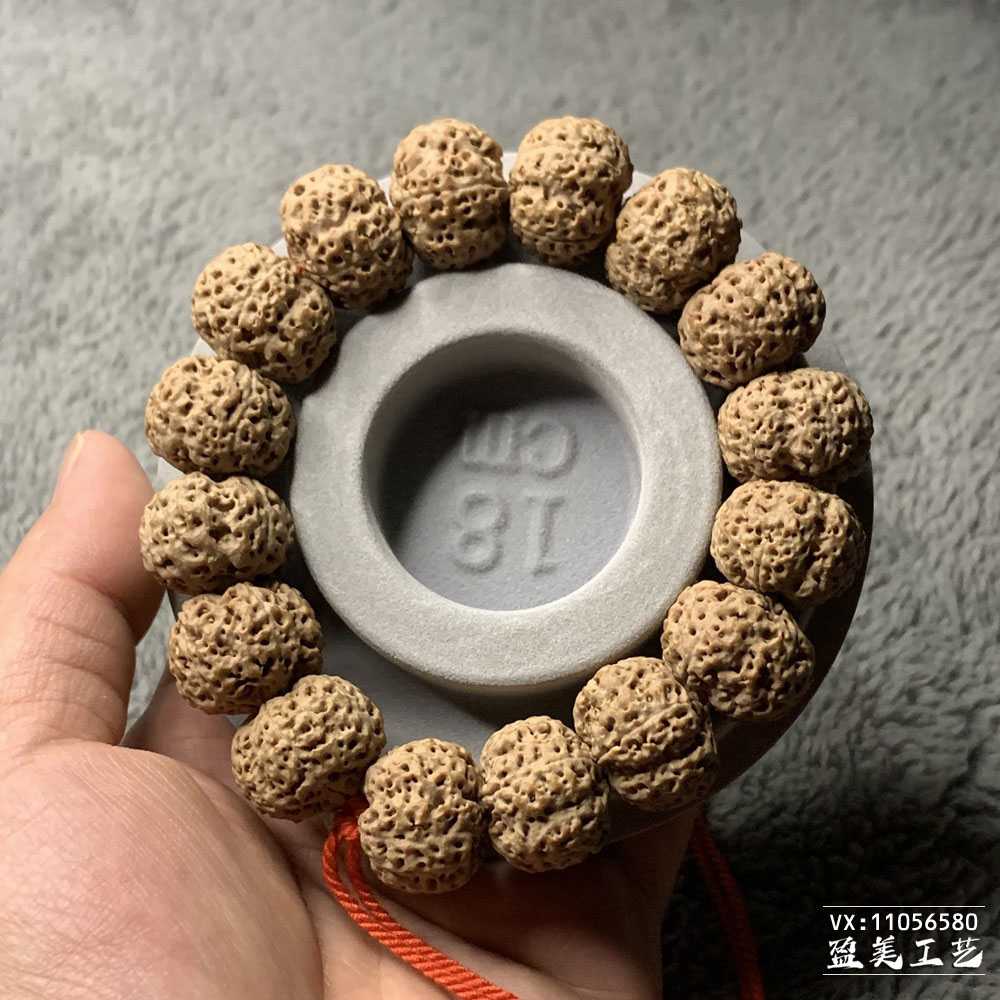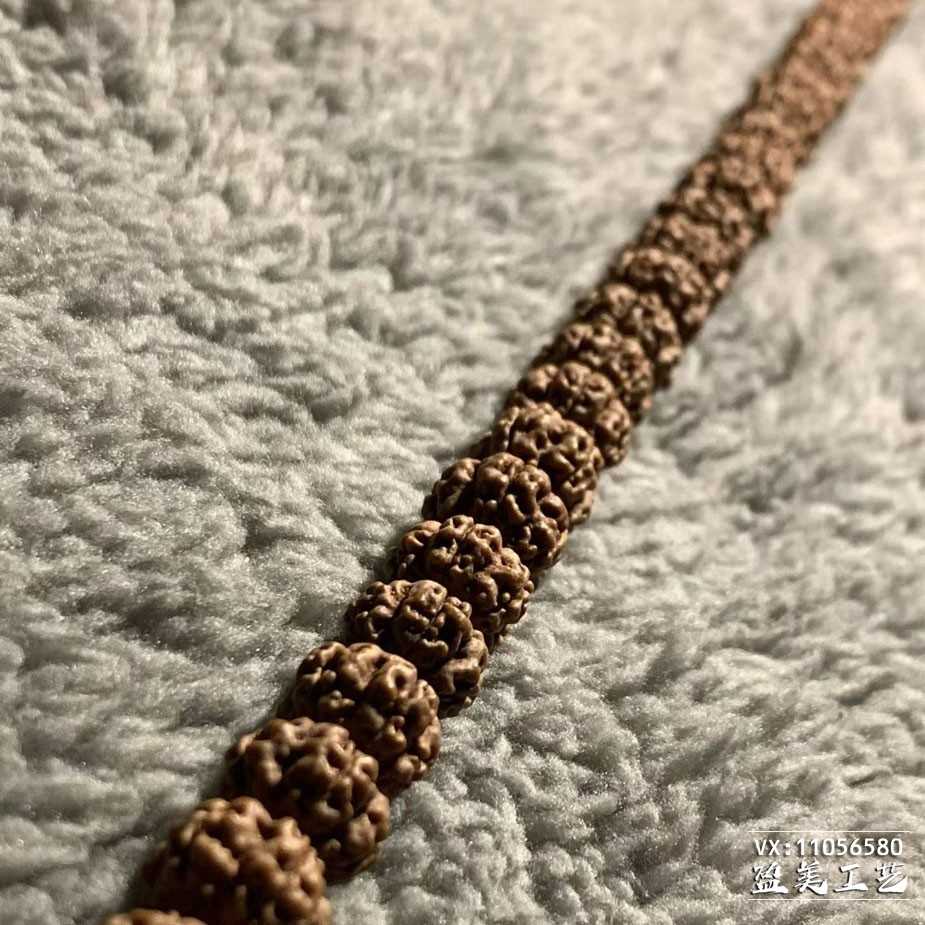
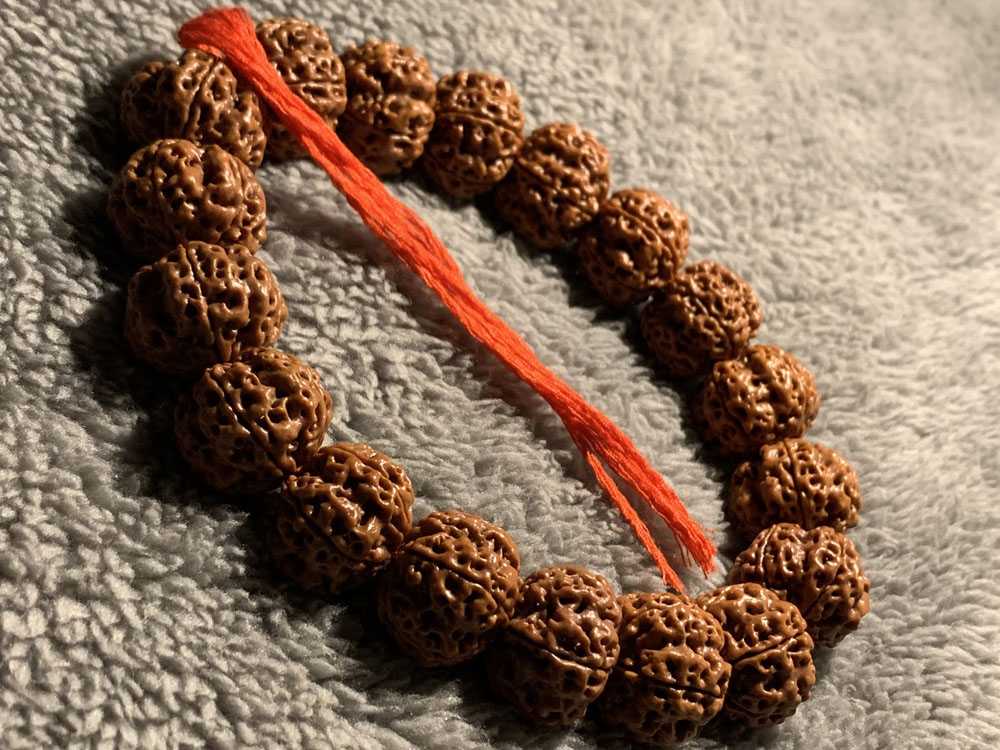
After brushing for two months, my single-strand flat-grain Rudraksha mala is finally completely clean. The flat-grain beads are small with tight gaps, so the base preparation is far more laborious than that of large Rudraksha beads. After these two months of brushing, both the skill in my hands and the changes of the mala are clearly visible. I'm documenting this to offer a reference for friends who are also working on flat-grain Rudraksha.
The difficulty of base preparation for flat-grain Rudraksha
Base preparation for flat-grain Rudraksha is more laborious than I expected. The beads are small with tightly packed gaps, and alkaline bloom hides deep in those narrow crevices. You have to brush bit by bit along the grain, you can't rush the process. In the first month, I brushed it every day but the alkaline bloom faded very slowly. Looking at the white spots in the narrow gaps, I really felt a little discouraged. But flat-grain Rudraksha mala is exactly the kind that tests your patience. If you keep brushing slowly, there will definitely be changes over time.
Changes after two months
After two months, the changes are very obvious. The alkaline bloom in the gaps is almost completely removed, the surface of the mala has developed a glossy sheen, and it feels delicate and smooth to the touch. The fine grain of flat-grain Rudraksha makes it look extremely exquisite once fully cleaned, and its aesthetic appeal stands out immediately. Two months of effort paid off with a clean, bright mala, it's totally worth it.
Gains from the base preparation process
The gains from base preparation go far beyond just a clean mala. The tedious base preparation for flat-grain Rudraksha cultivates your patience and helps you sum up practical methods. You will get a clear grasp of the proper rhythm: using a stiff brush to clear gaps and a soft brush for polishing. After two months of brushing, my single-strand flat-grain Rudraksha mala is finally clean. With a spotless surface and a well-prepared base, the mala will bring you pleasant surprises in the subsequent breaking-in (patina process).