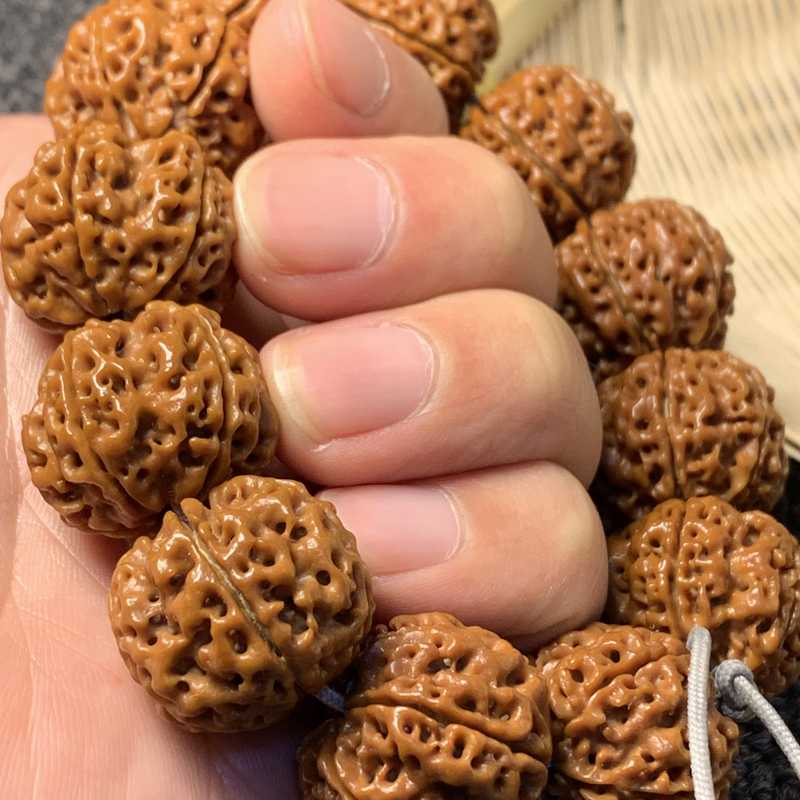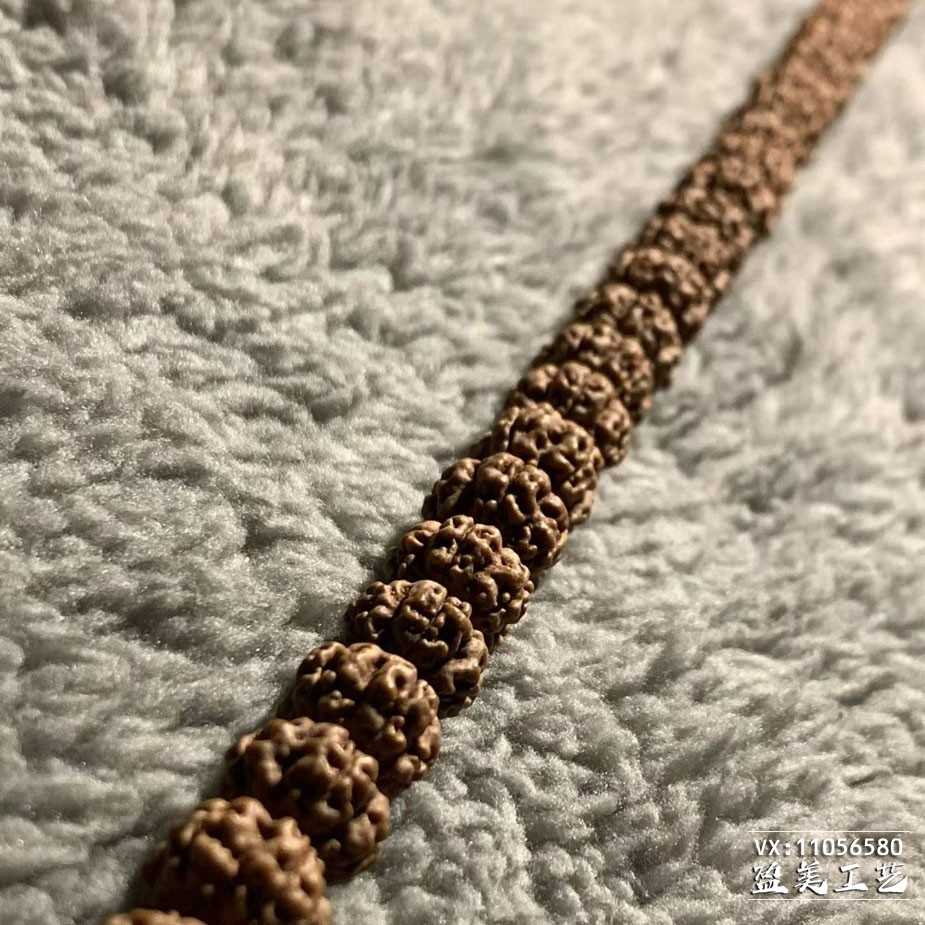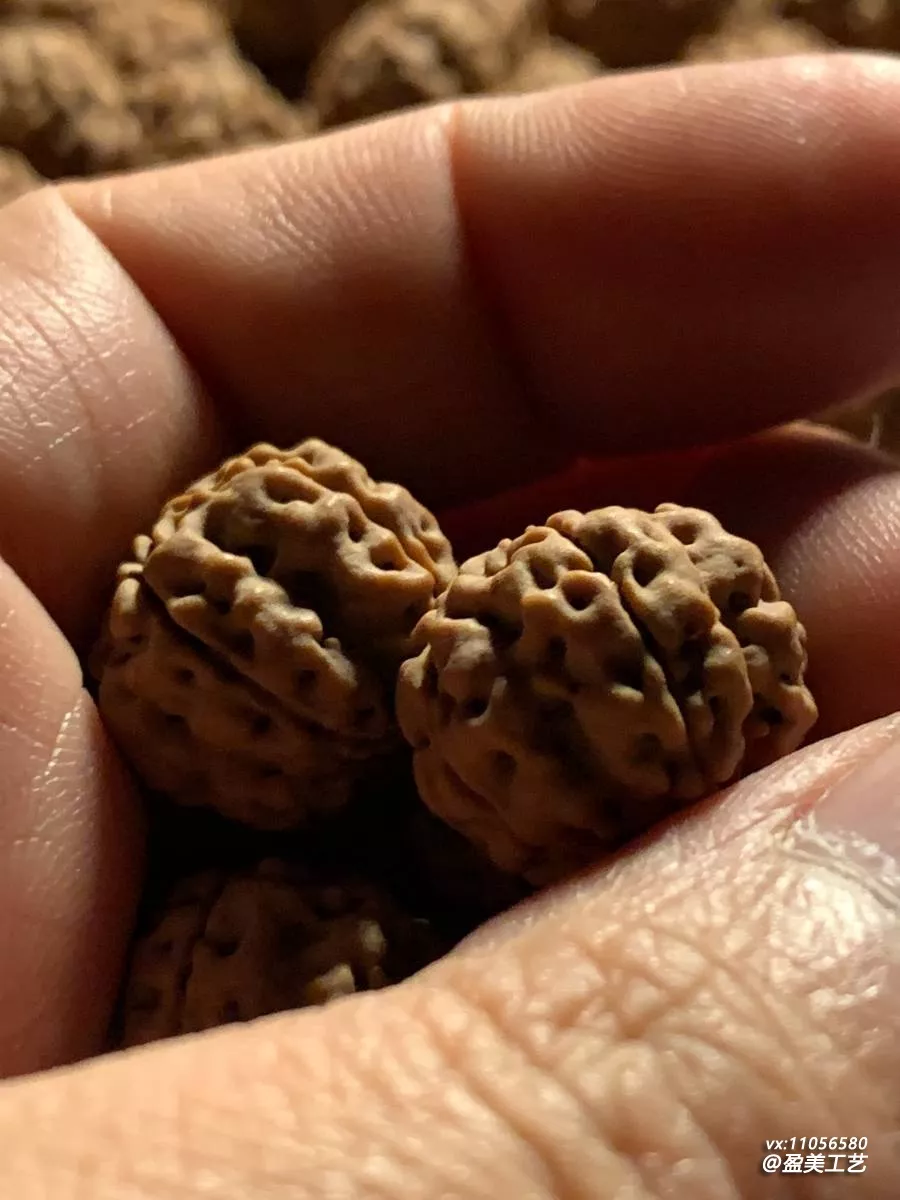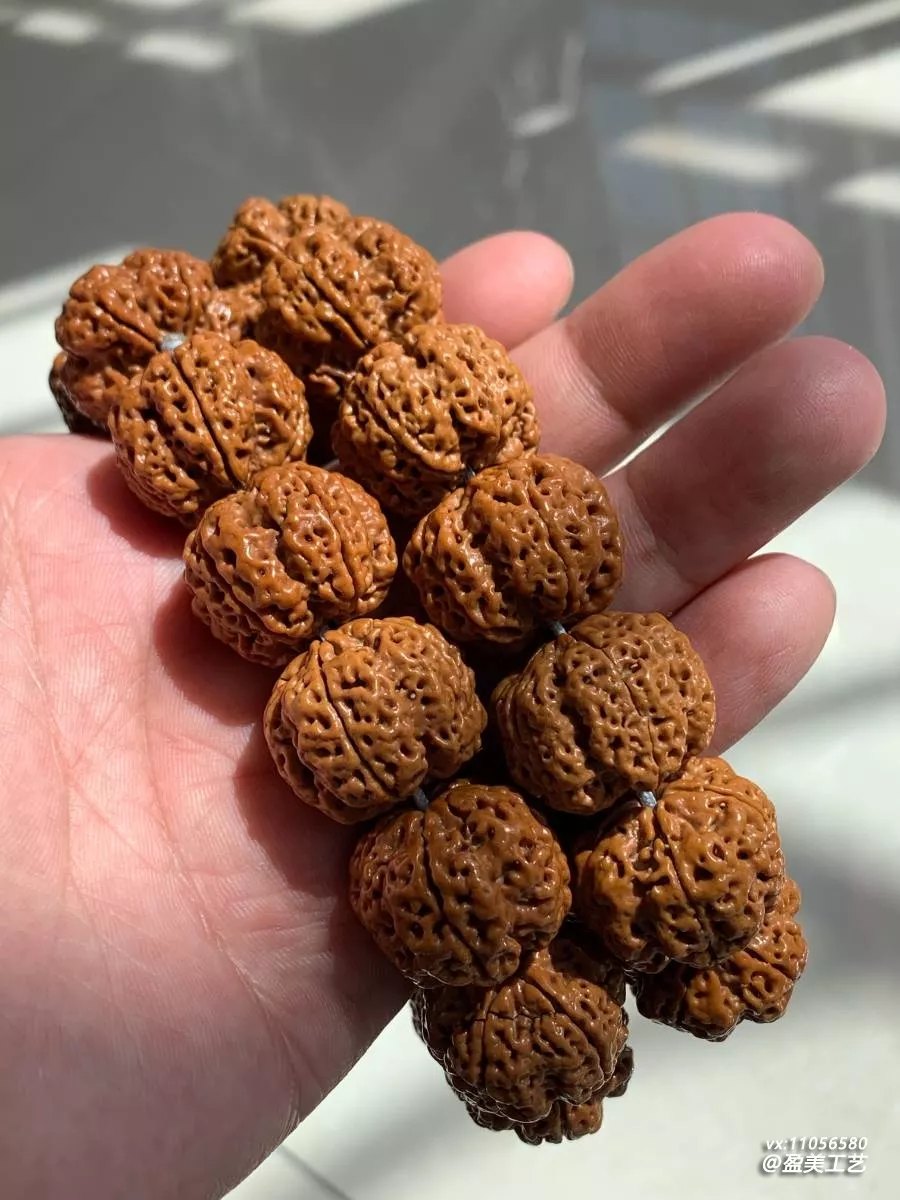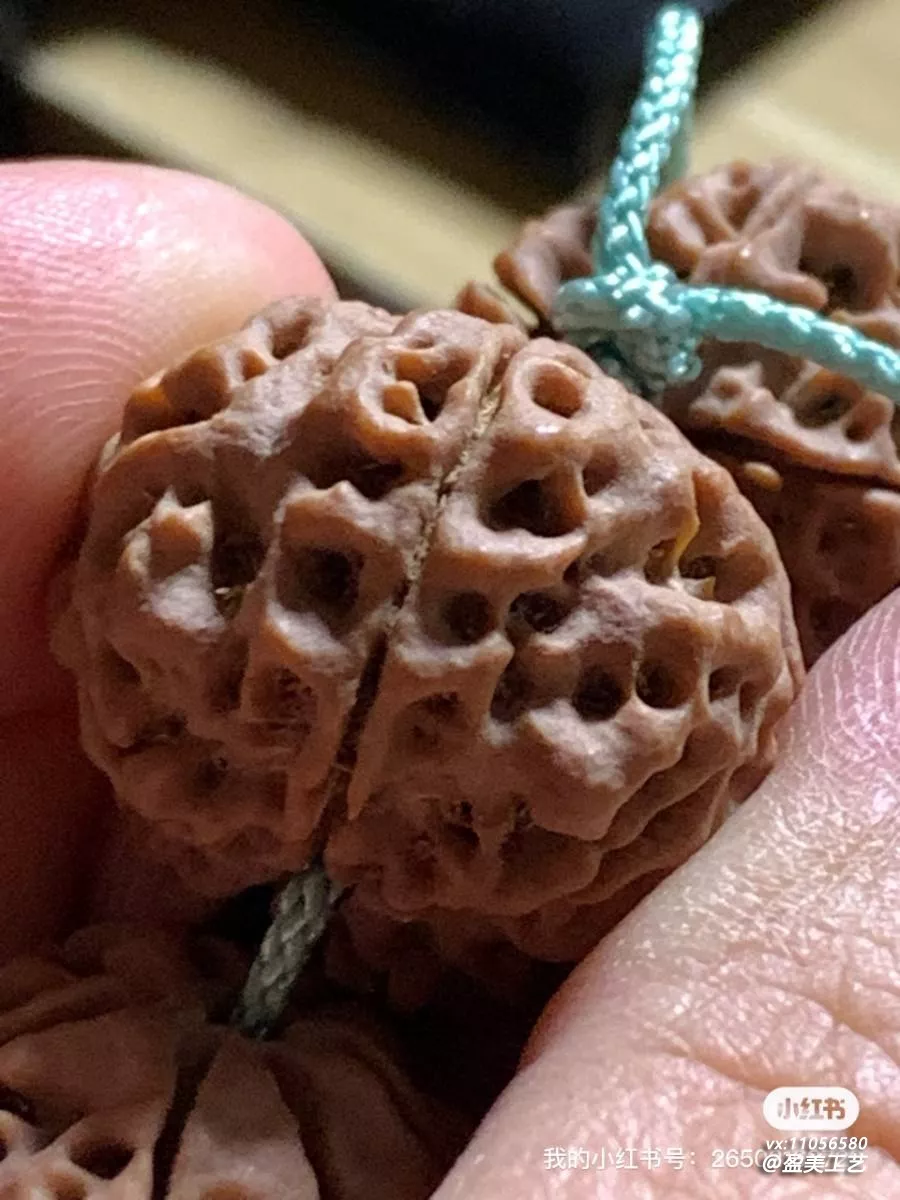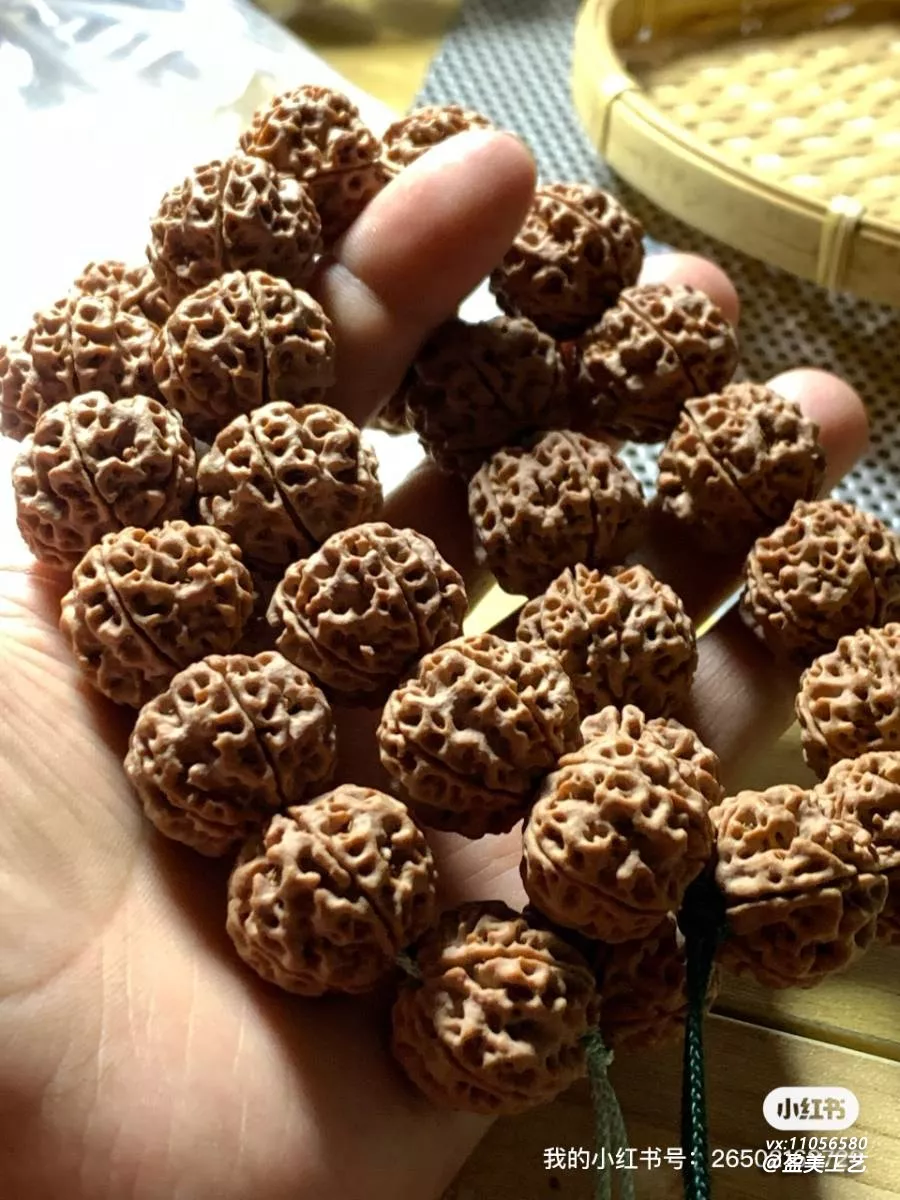
How to choose a flat-fine 108? Density and grain come first. A long 108 has many seeds, so choosing a flat-fine 108 needs the essentials even more: density and grain are the foundation, and once you see them clearly the string will not be a bad pick. Do not be dazzled by sales talk — hold on to these two.
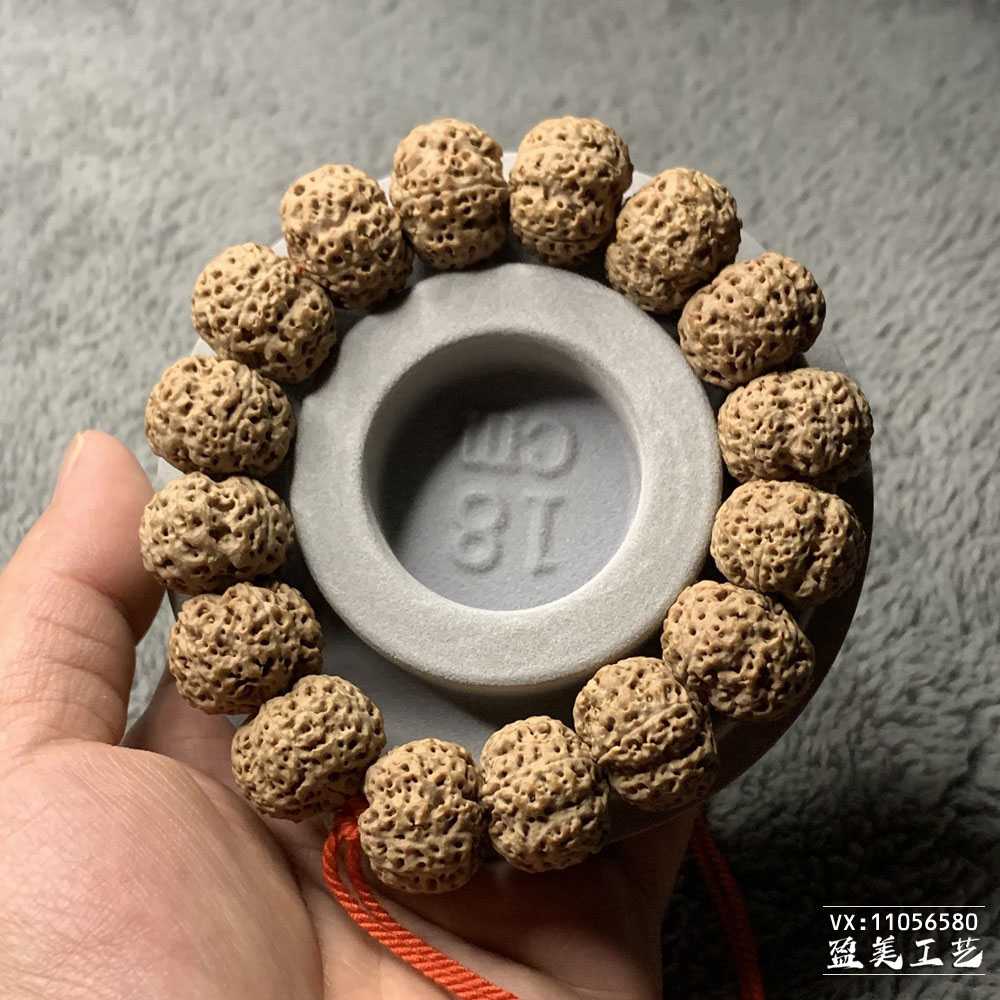
How to judge density across the string
To judge density, judge the whole string. Weighing 108 seeds one by one is unrealistic, but you can feel the whole: hold the string — weighty and substantial means good overall density; light and airy means it is not there. You can also pull out a few seeds and heft them to feel single-seed density. Flat-fine seeds are small and density is hard to tell, so feel carefully; if overall density passes, the string's foundation is good.
How to judge the grain
Look at the grain for fineness and evenness. The flat-fine grain is fine and dense; when choosing, see whether the grain style across the string is consistent. Seeds with fine, even grain are top grade; uneven grain and uneven flesh drop the grade. The grain decides the flat-fine's looks — a coordinated string looks good, so check this carefully.
Follow up with other details
Besides density and grain, follow up with other details. Check the skin: even colour and oily. Check flaws: with 108 seeds, inspect each for cracks and broken teeth. Check consistency: size and body shape coordinated. How to choose a flat-fine 108: density and grain first, skin and consistency next; see the details fully and the choice is solid.