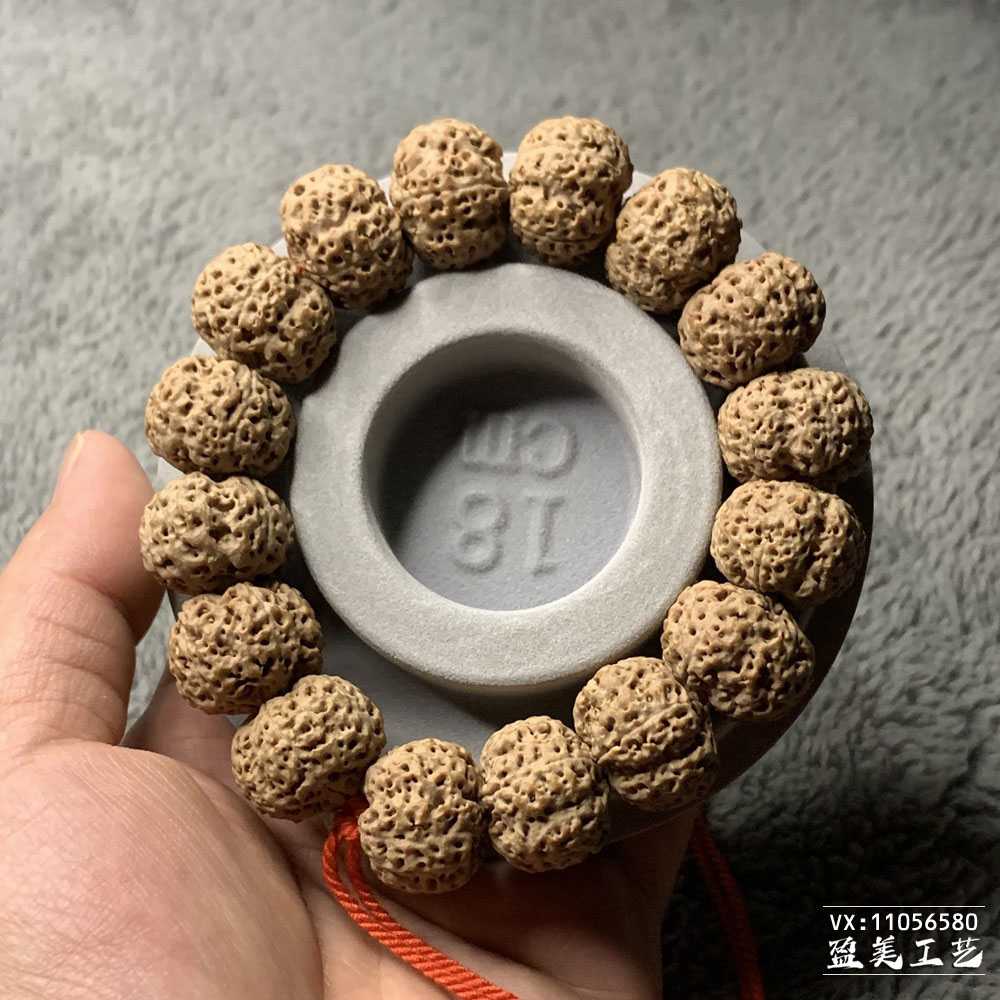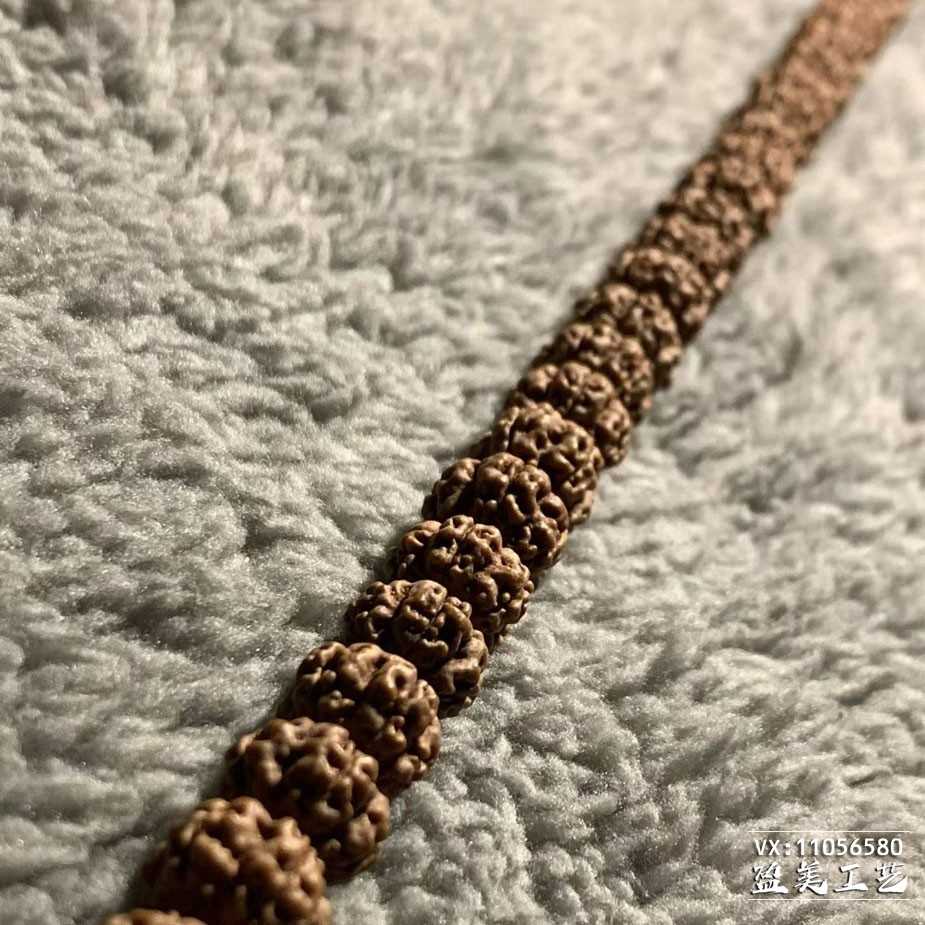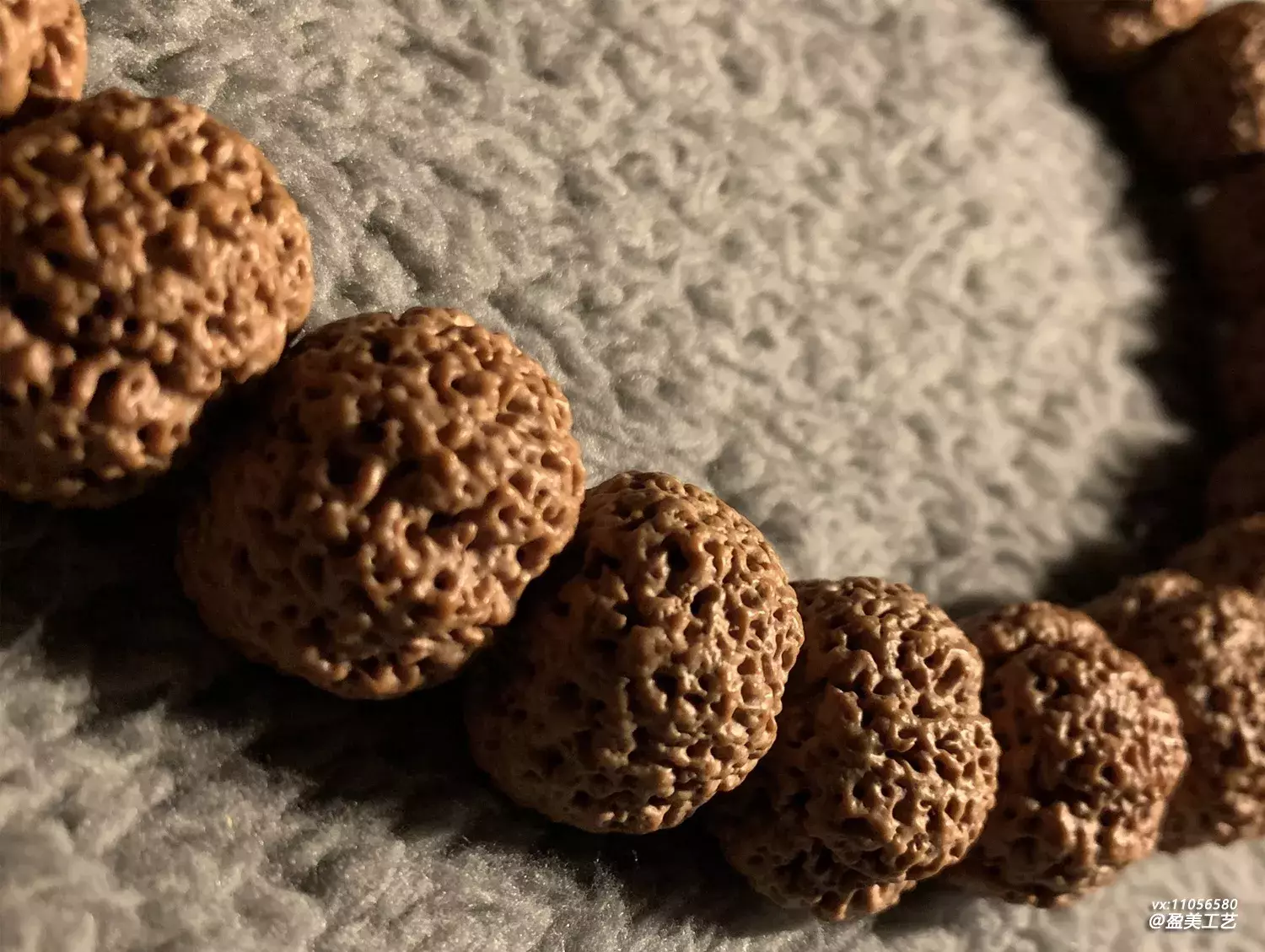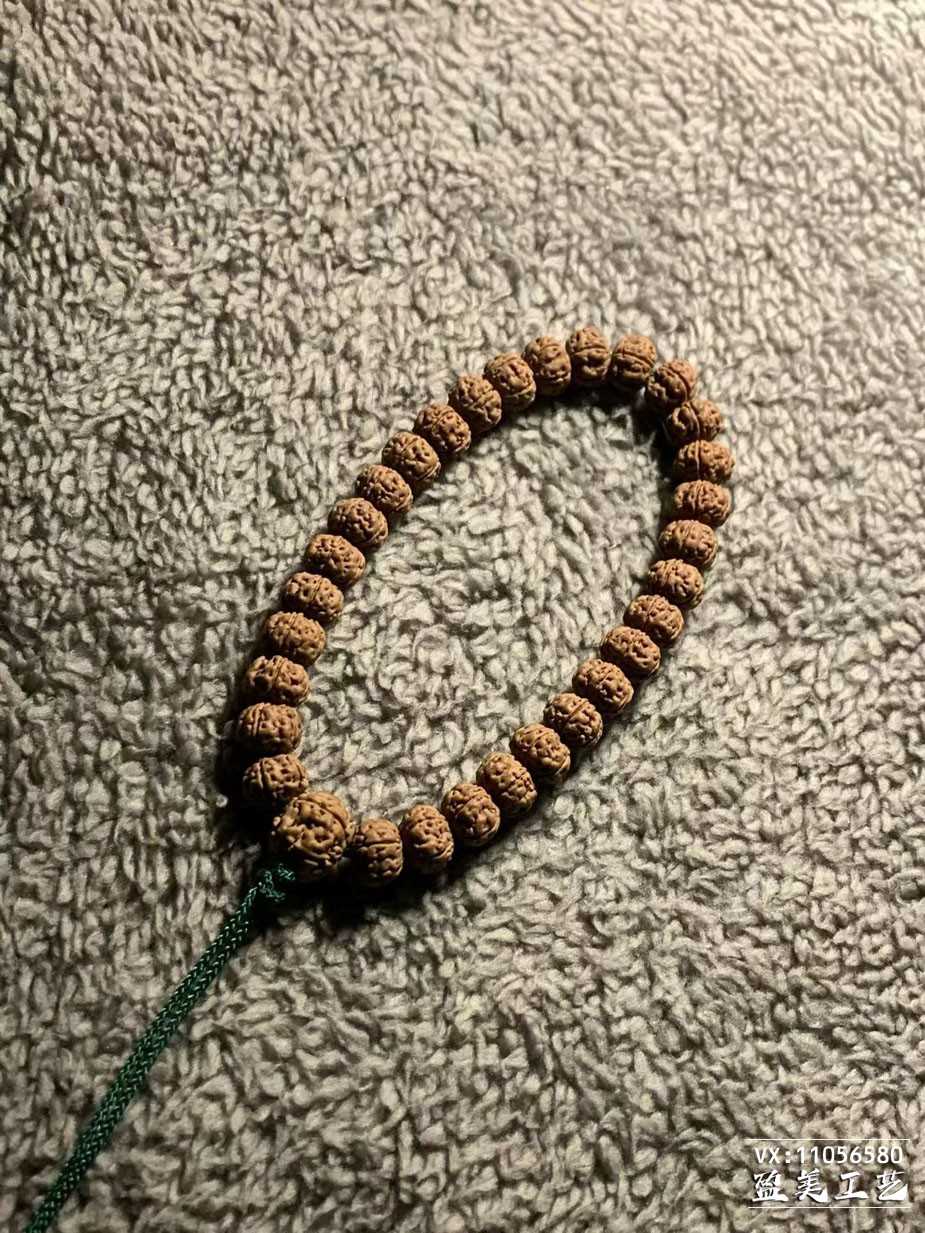
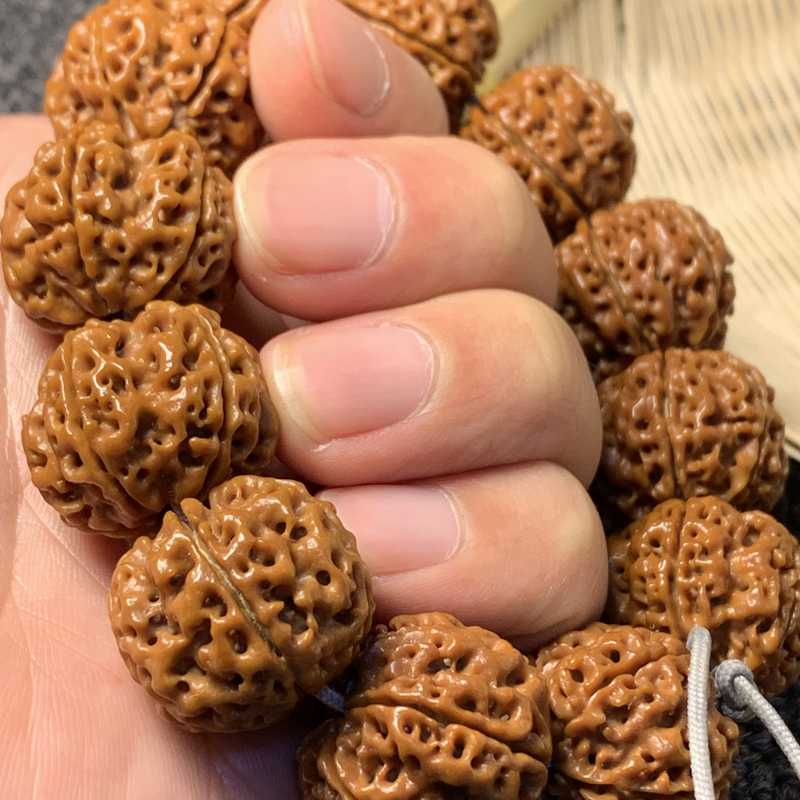
After two months of brushing, my old-tree king single-loop mala is finally clean. For these two months, I brushed it every day, and the alkaline bloom has finally faded while the crevices are cleared. Looking at the spotless mala, I feel an indescribable sense of comfort. I'm documenting these two months of the base-preparation process to offer some reference for you, who are also working on base preparation.
Brushing in the First Month
The first month was about using a stiff brush to clean the crevices. When the new mala arrived, there was quite a bit of residual fruit pulp and alkaline bloom in the gaps. I brushed along the texture with a stiff bristle brush for one to two hours every day. The first month was the hardest; after half a month of brushing with little visible change, I almost wanted to give up. But by keeping at it, the residue in the crevices noticeably decreased and the alkaline bloom lightened, which finally gave me confidence.
Brushing in the Second Month
In the second month, I combined stiff and soft brushes. The stiff brush cleaned the remaining crevices, while the soft brush polished the surface, and the mala began to develop a sheen. The changes this month were visible—most of the alkaline bloom had faded, the mala was clean, and it felt smooth to the touch. After two months of base preparation, the mala finally looked as it should, and these two months of effort were not in vain.
Rewards After Completing Base Preparation
After finishing the base preparation, the rewards are substantial. The mala is clean and its foundation is clear, so when I move on to hand breaking-in, the patina process will go smoothly. More importantly, two months have cultivated my patience and taught me the principle of working a mala: slowness is speed. After two months of brushing, my old-tree king single-loop mala is finally clean. What is clean is the mala; what has settled is the mind. The next step is to begin the breaking-in process with peace of mind.