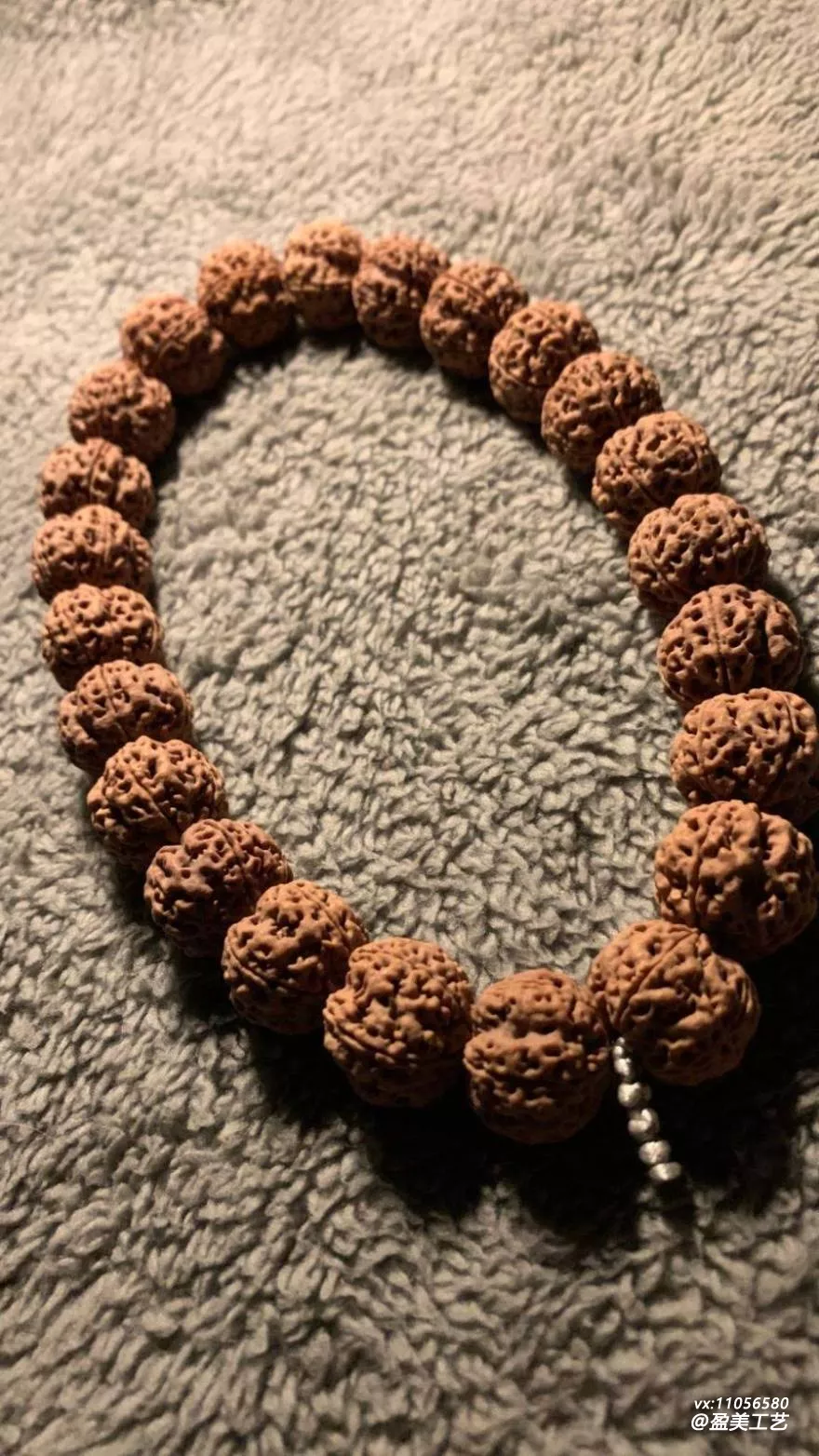
Appreciation of a 7-year-old mala (prayer beads)
Recently, many friends have been asking me how to start with a new mala. I've decided to document the transformation of this mala from new to old. All the pictures are below. You can see the changes for yourselves.
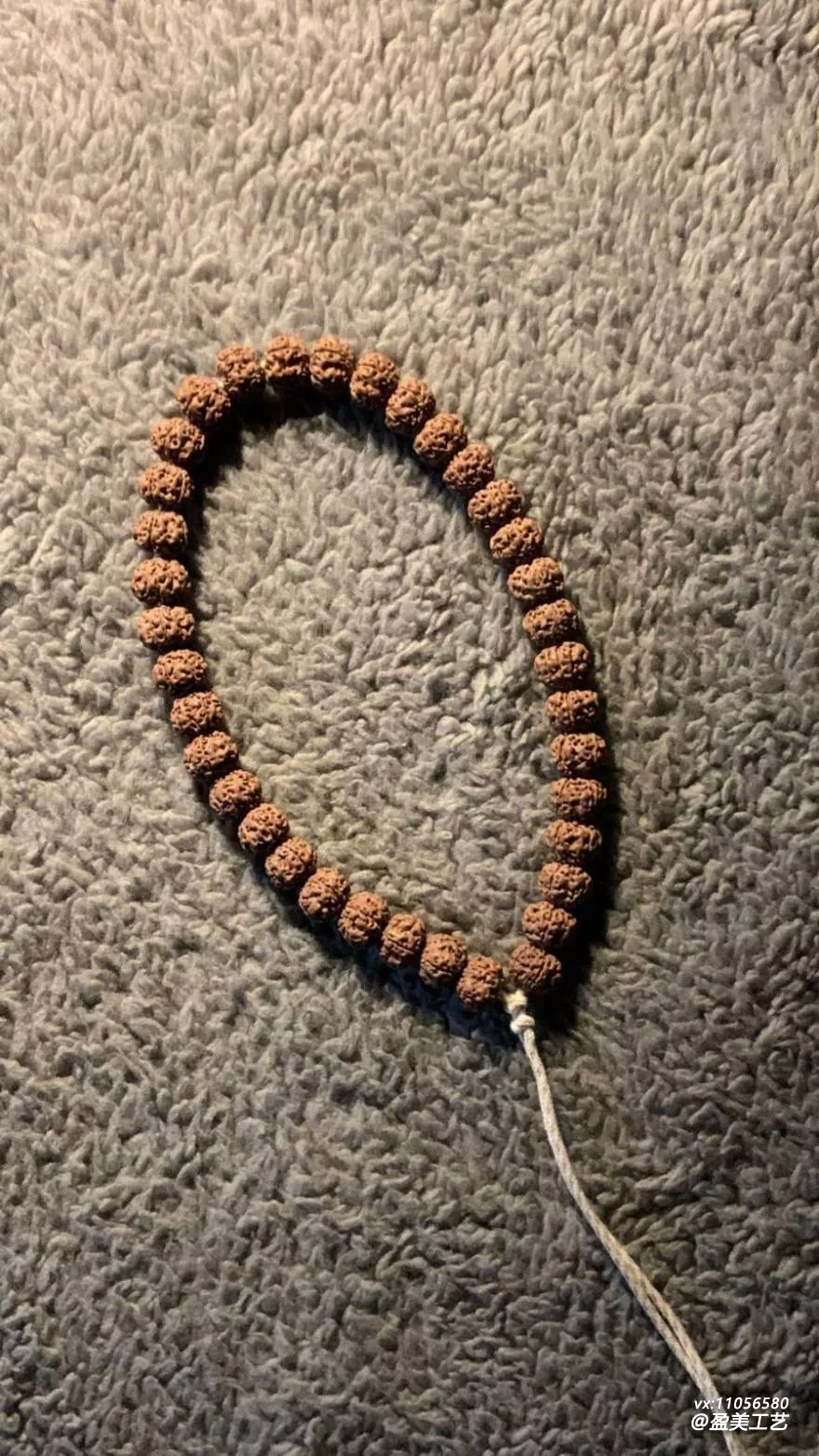
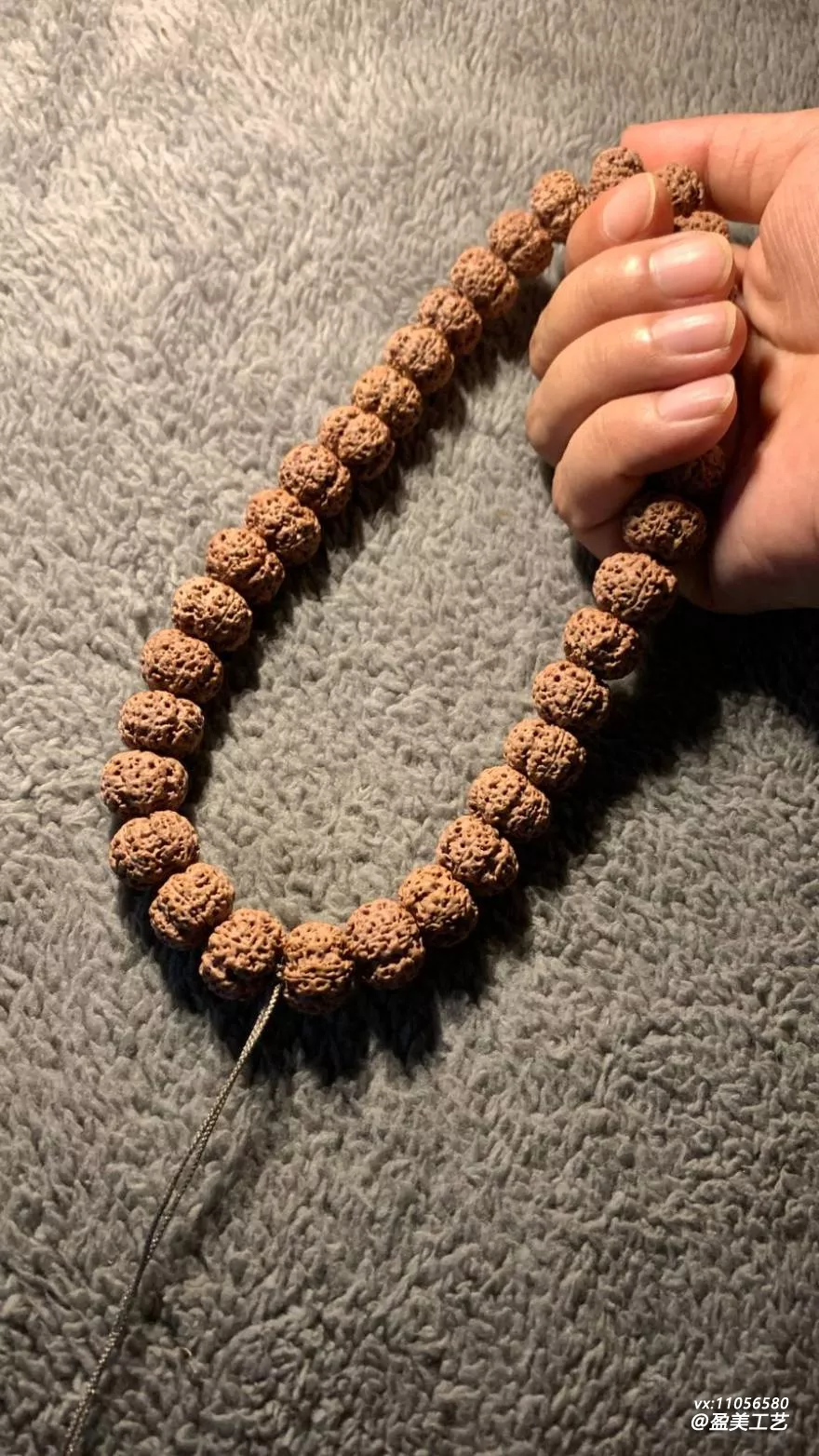
I acquired this mala a few years ago. At that time, it was just an ordinary yellow-skin Rudraksha (large). The grain was okay and the density was decent, but there was nothing particularly outstanding about it. Unexpectedly, after so much breaking-in (patina process), the current color and patina far exceed my expectations.
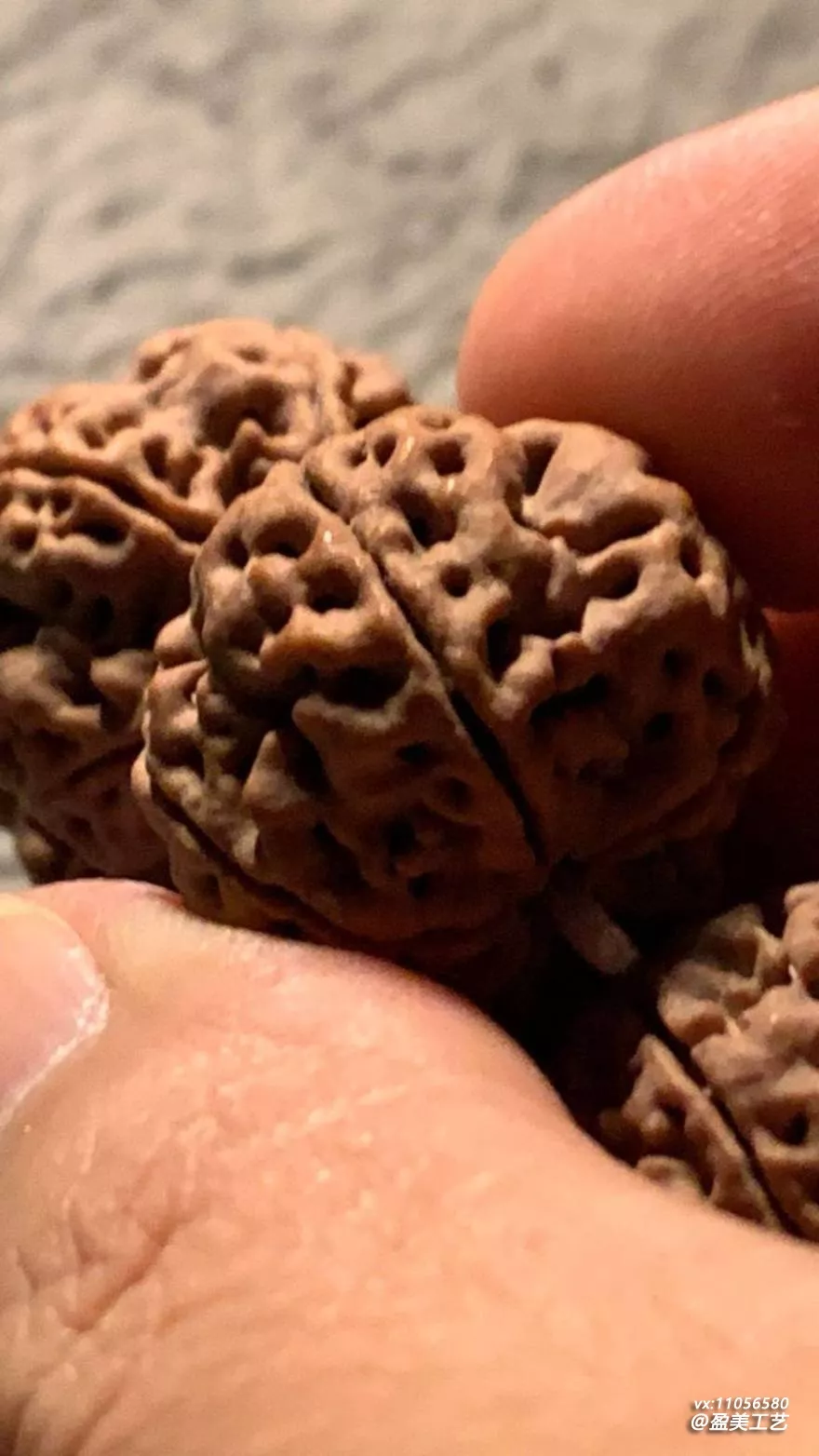
Appreciation of a 7-year-old Rudraksha mala (prayer beads) after breaking-in
When I first got it, the color of the seeds was light and the surface was dry and lacked any luster. Back then, I didn't know anything and just started breaking it in right away. After a week of breaking-in, I noticed that the color didn't change much and instead became dull. I felt quite uncertain at that time.
Later, I found out that I was too eager to start touching it and didn't clean the residue on the surface properly. I re-did the base treatment, dry-brushed it with a stiff brush for a month, brushing thoroughly every day to remove all the residue deep in the grain. At this point, the seeds felt different.
After the base treatment, follow the normal routine. In the first three months, brush more and play less. After achieving a glossy sheen, reverse the routine. After about half a year, the color deepened and the luster on the surface became increasingly smooth. There's no need to deliberately pursue any specific effect.
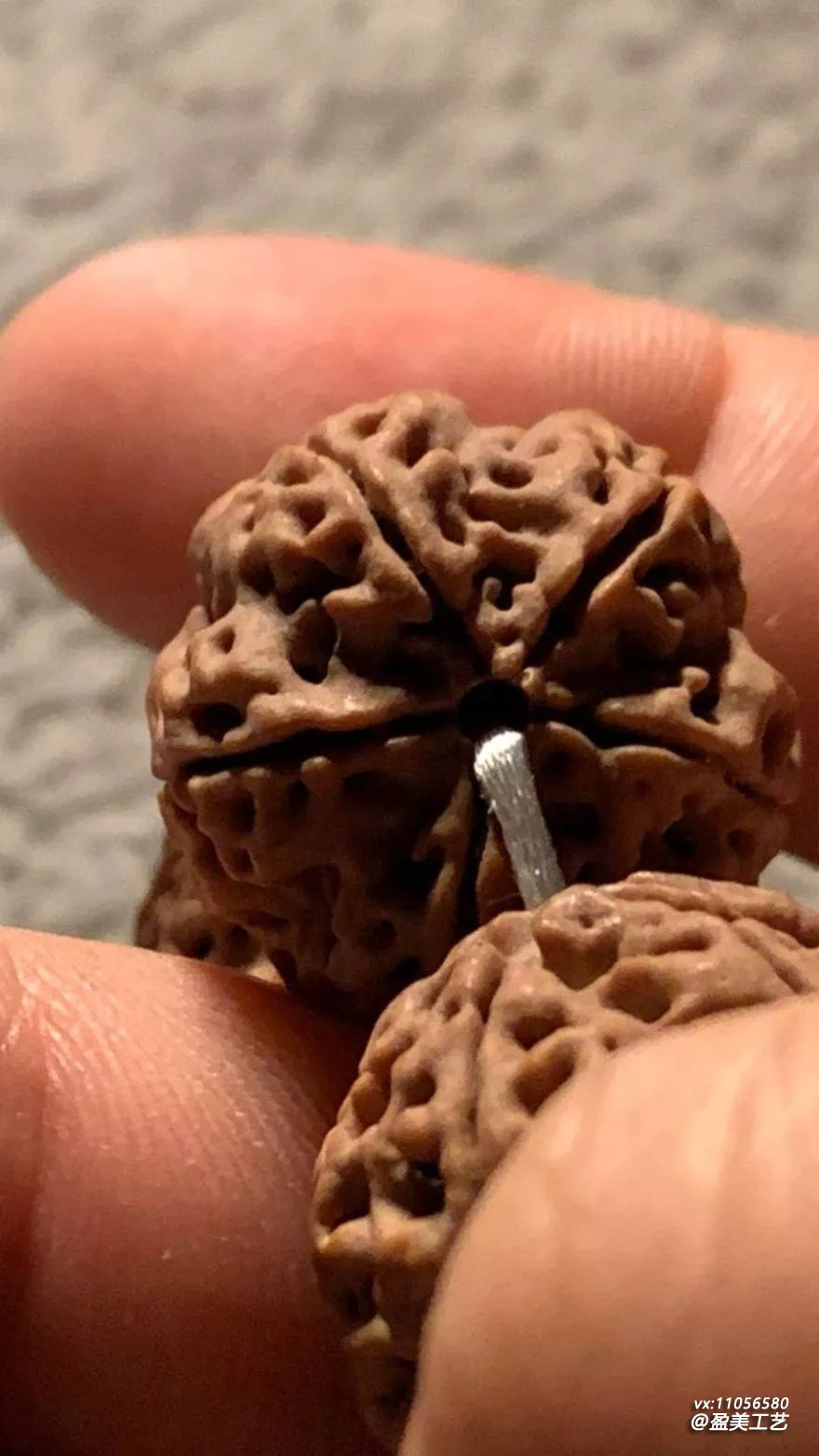
What it looks like now
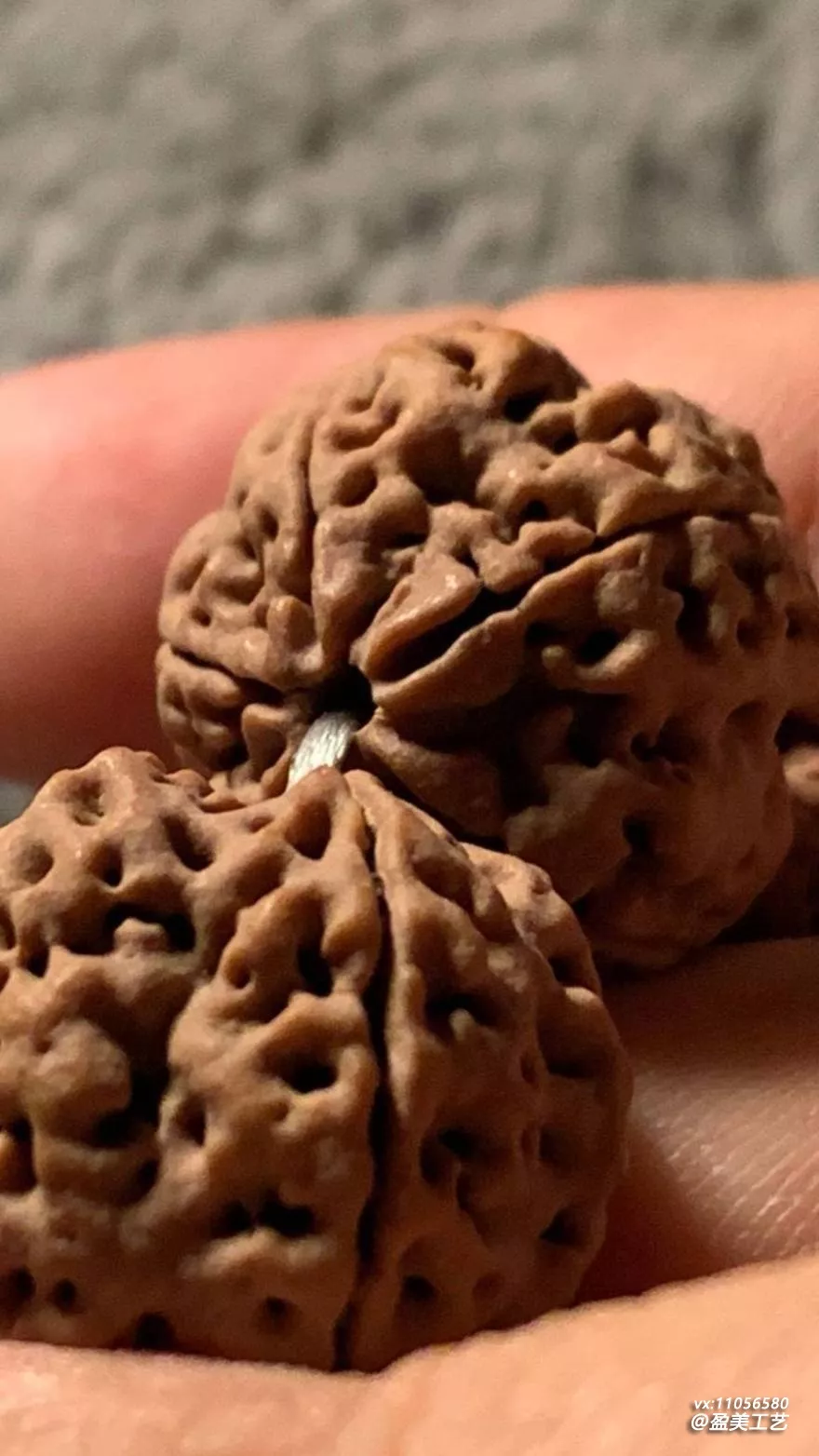
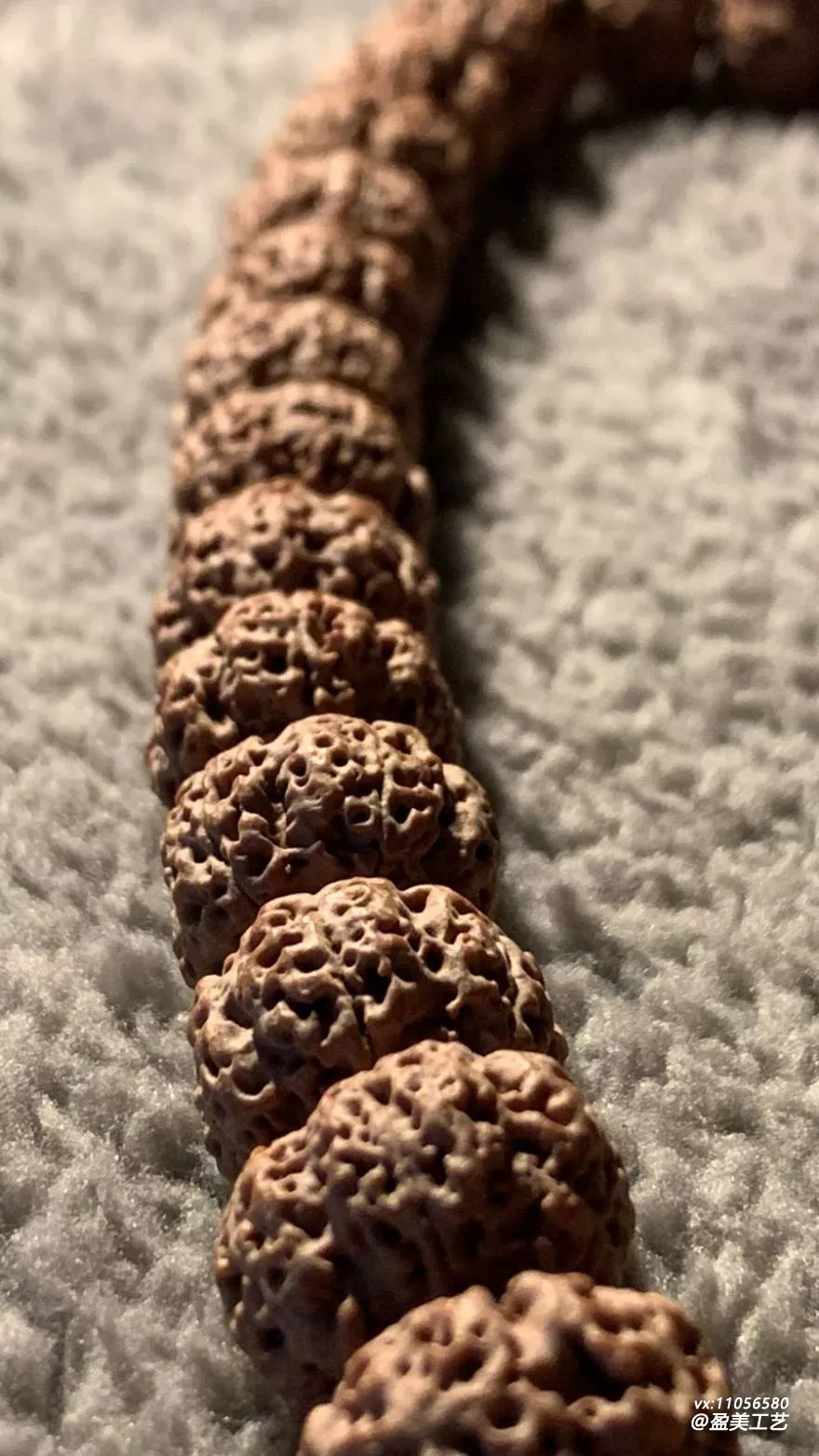
The current color of this Rudraksha is dark red, translucent. The patina is very thick and it has a strong jade-like texture. Under sunlight, each seed emits a warm luster. The dragon-ridge (ridge line) is translucent, and the color in the grooves is slightly darker. The three-dimensional effect of the grain is extremely strong. It feels heavy in the hand and has a great tactile sensation.
A few days ago, a friend saw this mala and asked me if it was an old one I bought. He said that the patina and color must have taken at least three to five years to achieve. I told him that I had only been breaking it in for two years, but he didn't believe me. In fact, when it comes to breaking in Rudraksha, if you use the right method and give it enough time, the results will naturally show up. There's no need to rush.
Looking back on the breaking-in process of these two years, there really isn't any special secret. It's just about patience. Break it in and brush it every day, without rushing or causing unnecessary disruptions. When problems arise, look up information and find ways to solve them. Don't give up. Over time, the mala will naturally reward you.
Speaking of this
To be honest, there isn't so much mystery to Rudraksha. As long as the density is sufficient, the texture is right, and you brush it thoroughly, it will look good naturally as time passes. Those so-called remedies to turn it red in a year are just for listening and shouldn't be taken seriously.
That's all for today's chat. Next time, I'll show you newly photographed malas or talk about other grain patterns. If you find this useful, give it a like. See you in the next article.