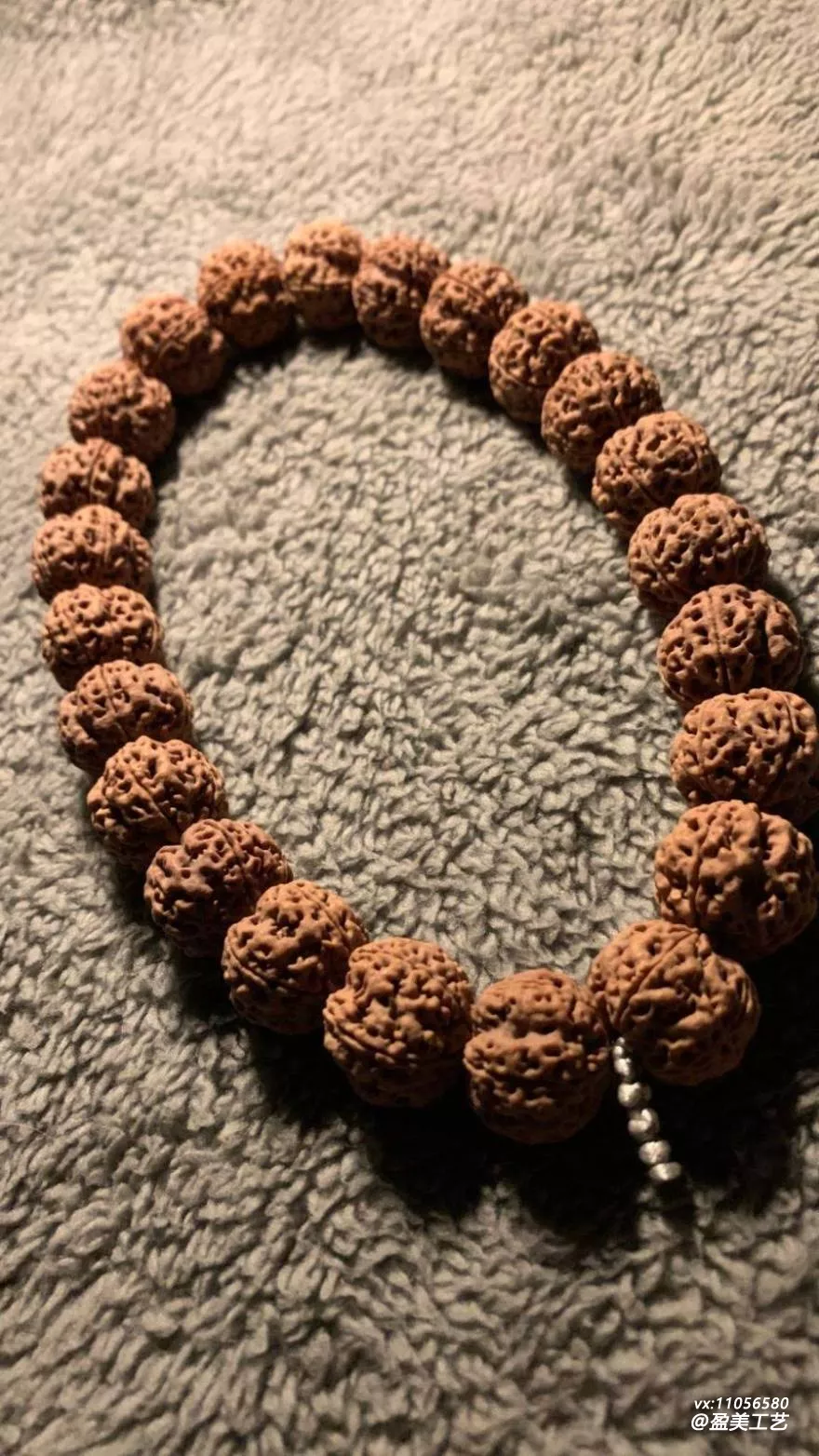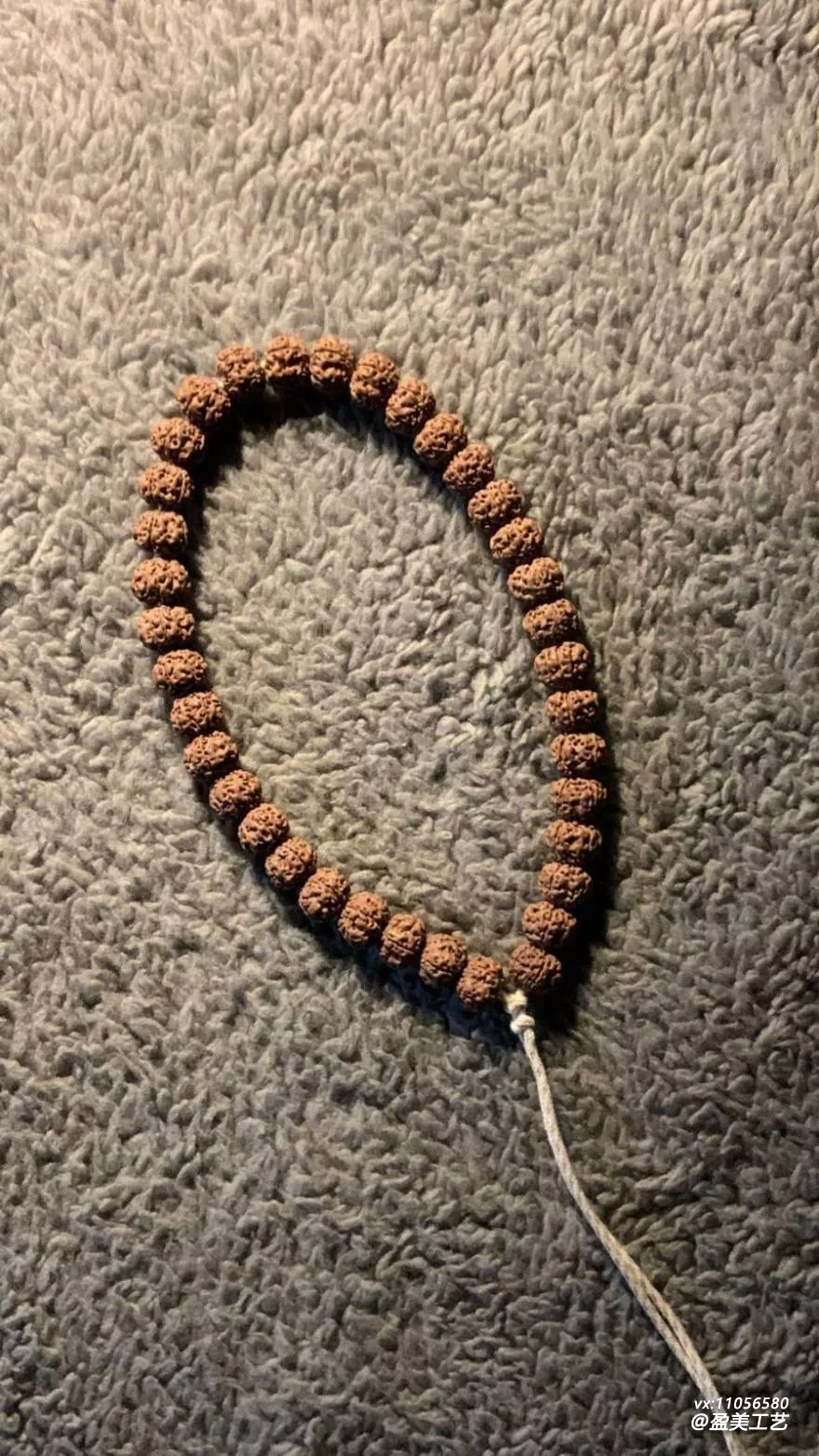
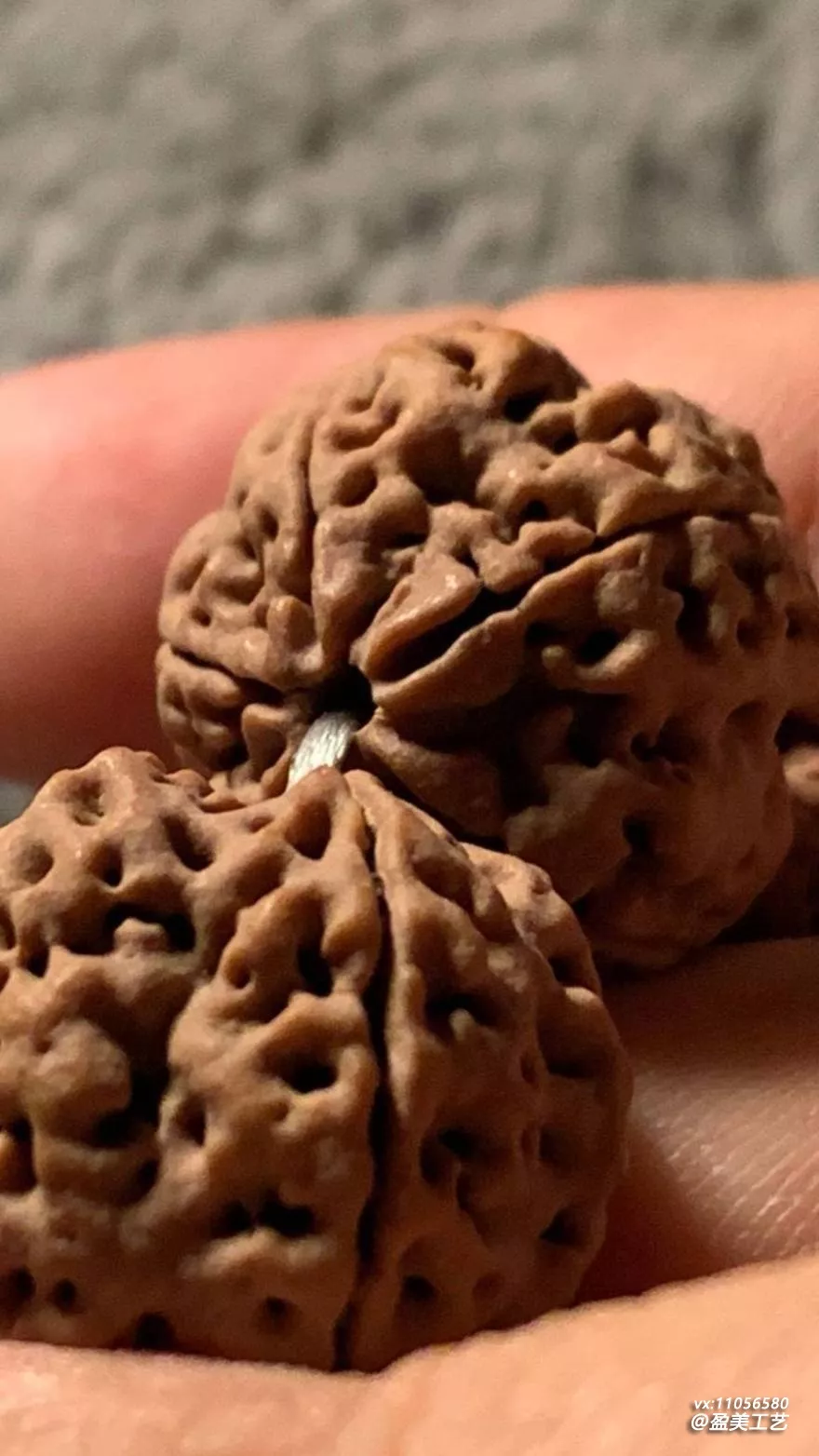
My first Rudraksha mala
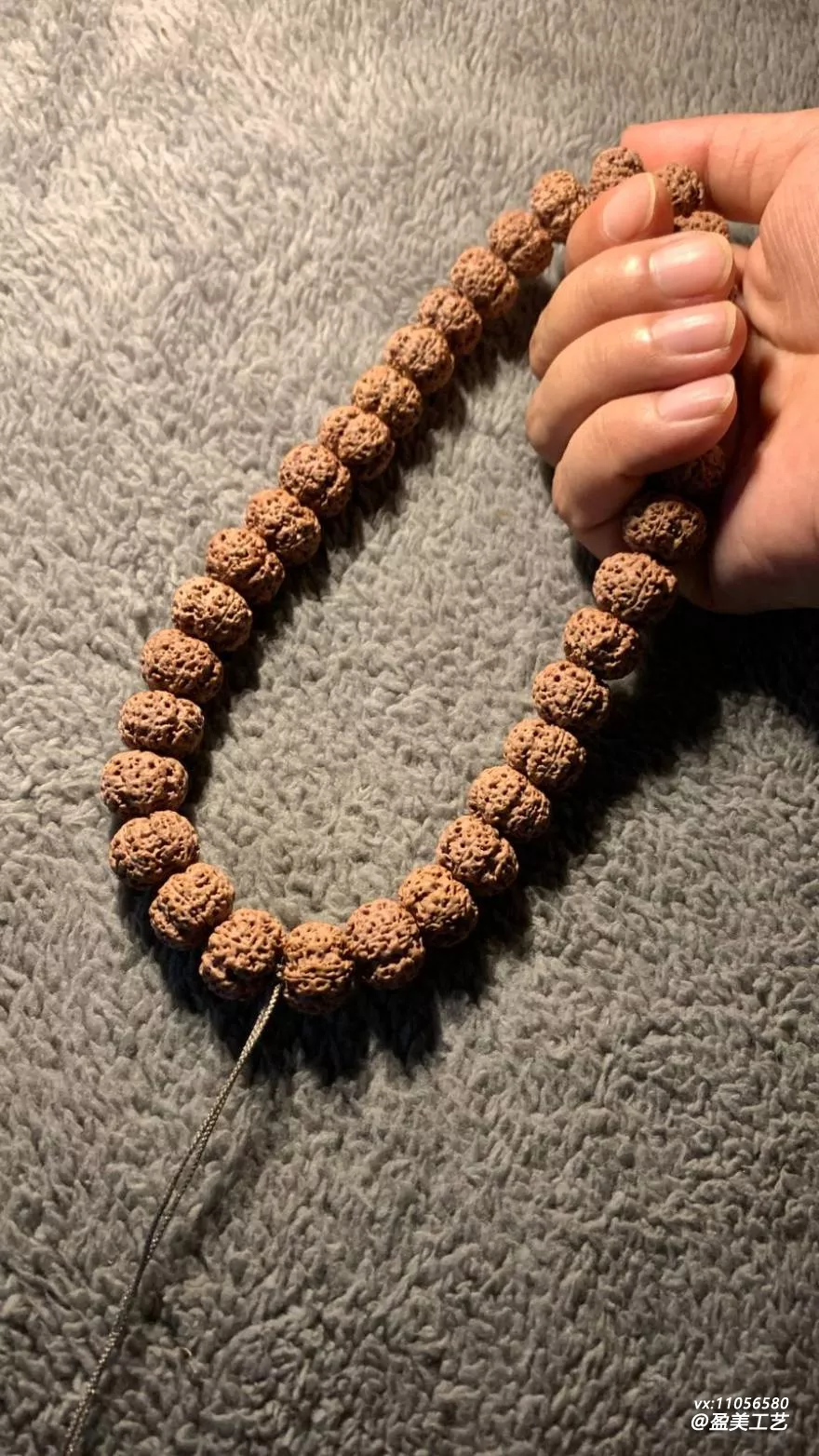
Some hobbyists said they want to see real changes during the breaking-in (patina process), not stock photos. So I will show you the whole process of my own mala from brand new to its current state, all photos are listed below.
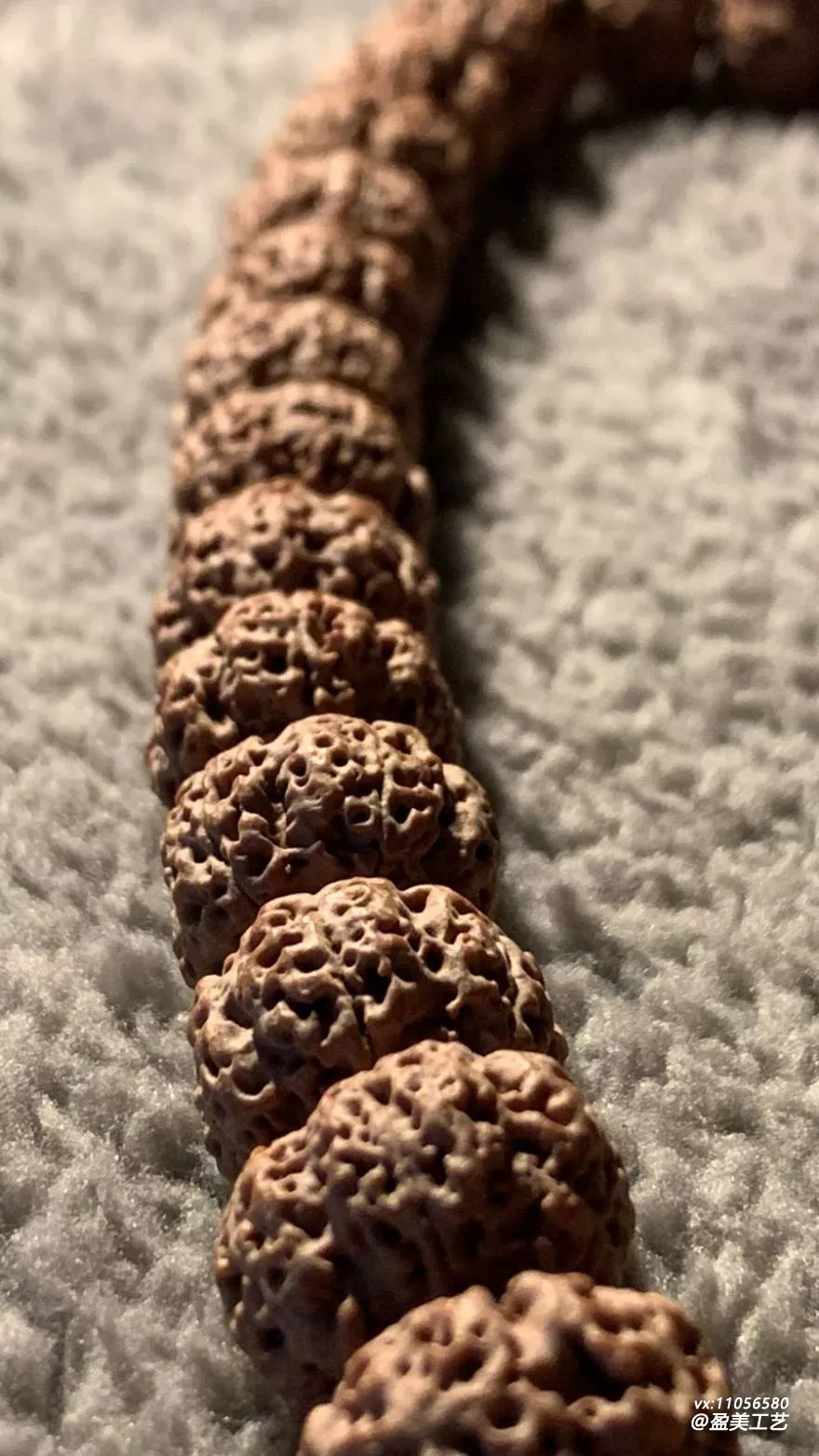
This mala was acquired several years ago. Back then, it was just an ordinary yellow-skinned Rudraksha (large) mala with decent grain / texture and good density, nothing particularly outstanding. I never expected that after such a long period of breaking-in, its current color and patina are far better than I anticipated.
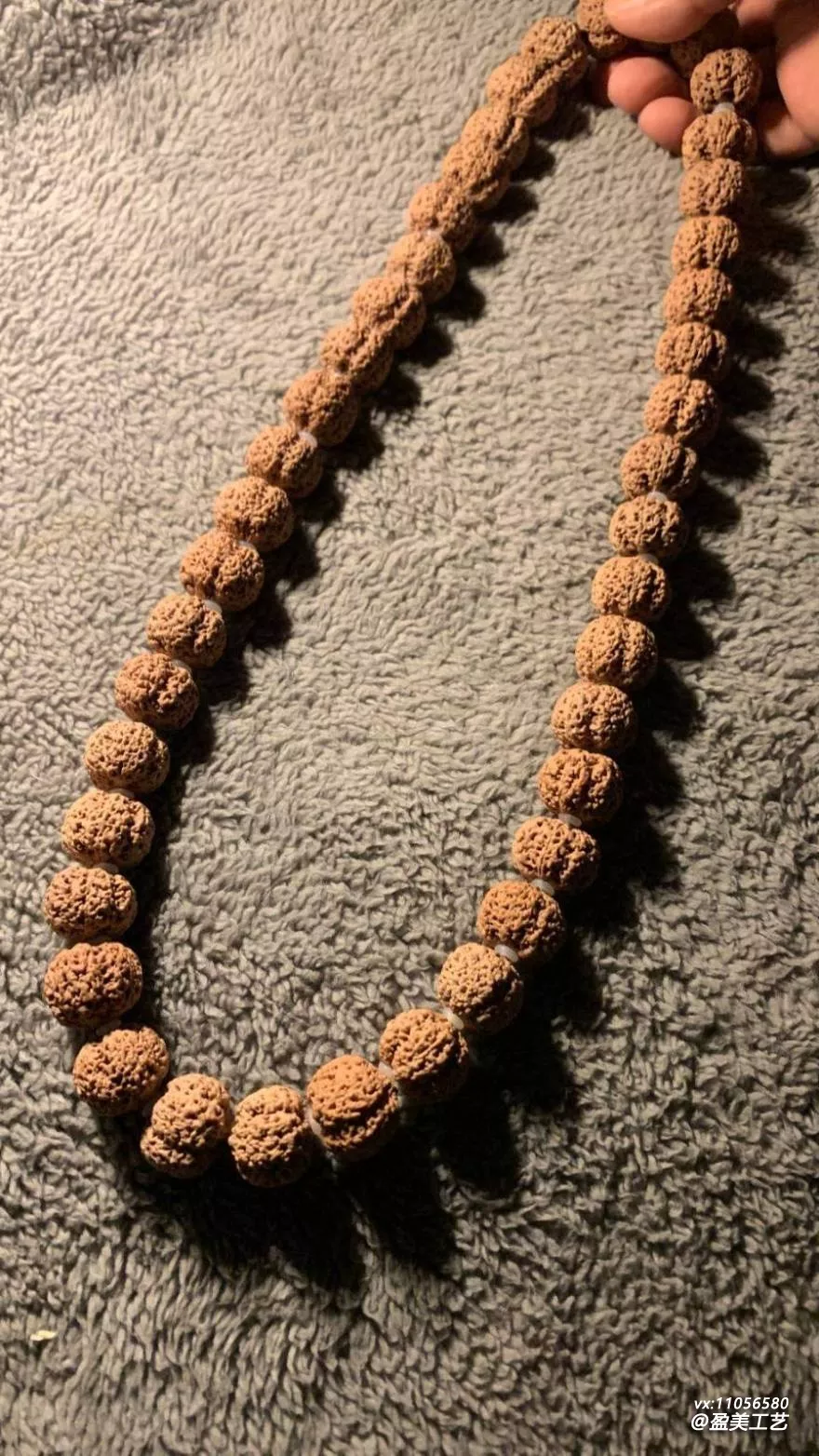
My First Rudraksha (Large) Breaking-in Record
When I first got the new seeds, they were very light in color and felt rough to the touch. Back then I didn't know any better, I thought just breaking-in more would work. After a week of breaking-in with no changes, I even thought the seeds were defective.
I looked up information and realized the priming step was insufficient. I switched to dry-brushing with a stiff brush for 20 minutes every day, for over a month. Once I cleaned off all the alkaline bloom from the surface and grain, the seeds started developing a matte finish.
After that, it was regular breaking-in. For the first three months, I stuck to brushing a lot; after getting a glossy sheen, I focused more on breaking-in. After about half a year, the color developed, shifting from light yellow to light brown, and the luster became more natural.
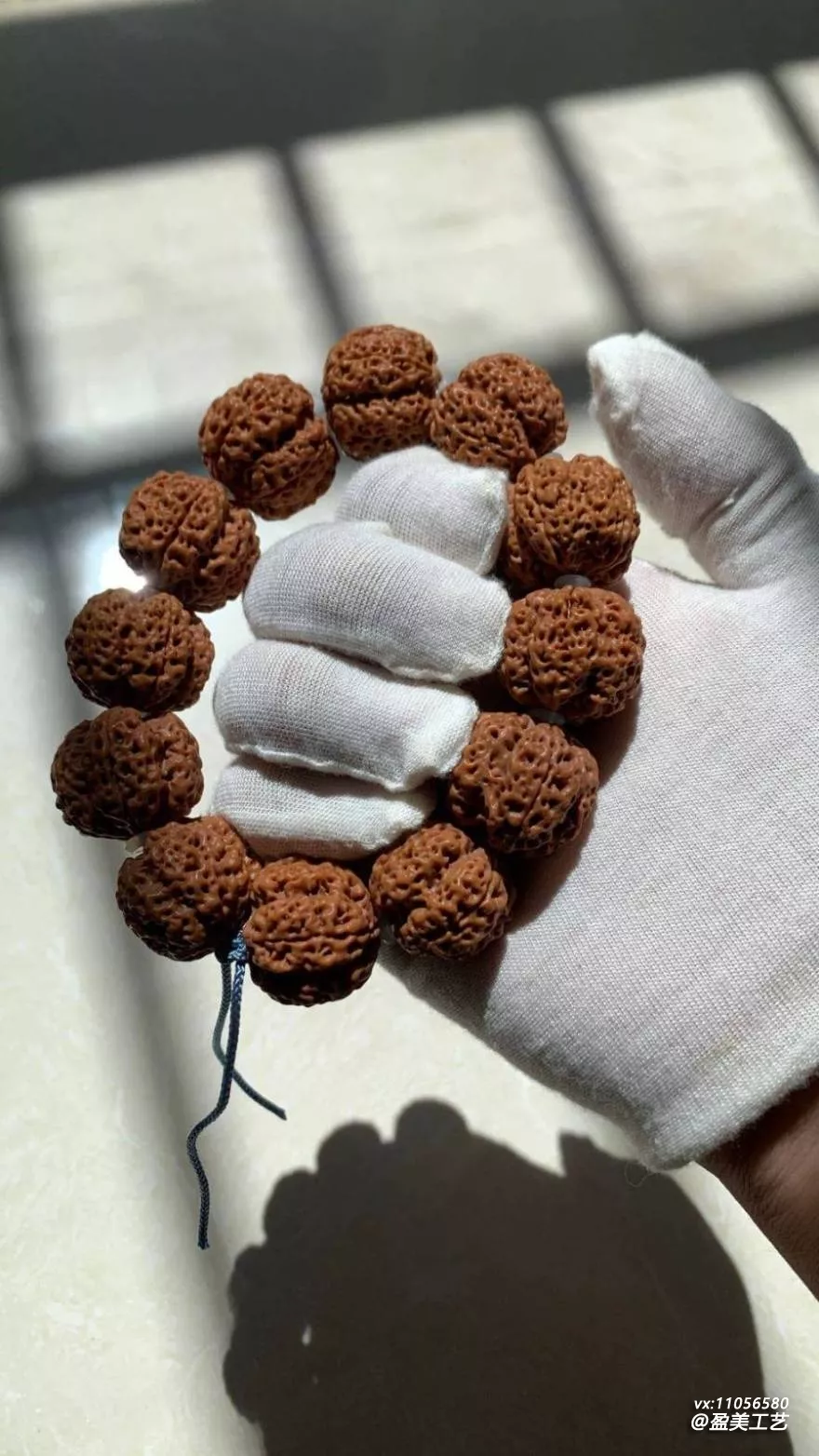
Current Appearance
Now this Rudraksha (Large) has a deep, rich red color, bright and translucent. It has a thick patina and strong jade-like texture. Under sunlight, each seed glows with a warm luster, the dragon-ridge lines are translucent, the grooves are slightly darker, and the grain has a very strong three-dimensional feel. It feels heavy in the hand and has a great texture.
My friend said this mala looks redder than his that he's had for three years, and asked for my secret. There really is no secret—just don't be lazy, don't use oil, and don't overdo it.
Looking back at the breaking-in process over these two years, there's actually no special secret—just patience. I break-in and brush every day, no rush, no over-manipulation. When I encountered problems, I looked up information and found solutions, never giving up. Over time, the mala naturally rewards you.
Postscript
Don't chase after things like 'Oxford Red' or 'Chicken Fat Yellow'—each mala has its own unique color. Reddening early isn't necessarily good, and reddening late isn't necessarily bad; naturally changing color is the most pleasing to the eye.
That's all for today. If you'd like to see other grain patterns or angles, just let me know in the comments.