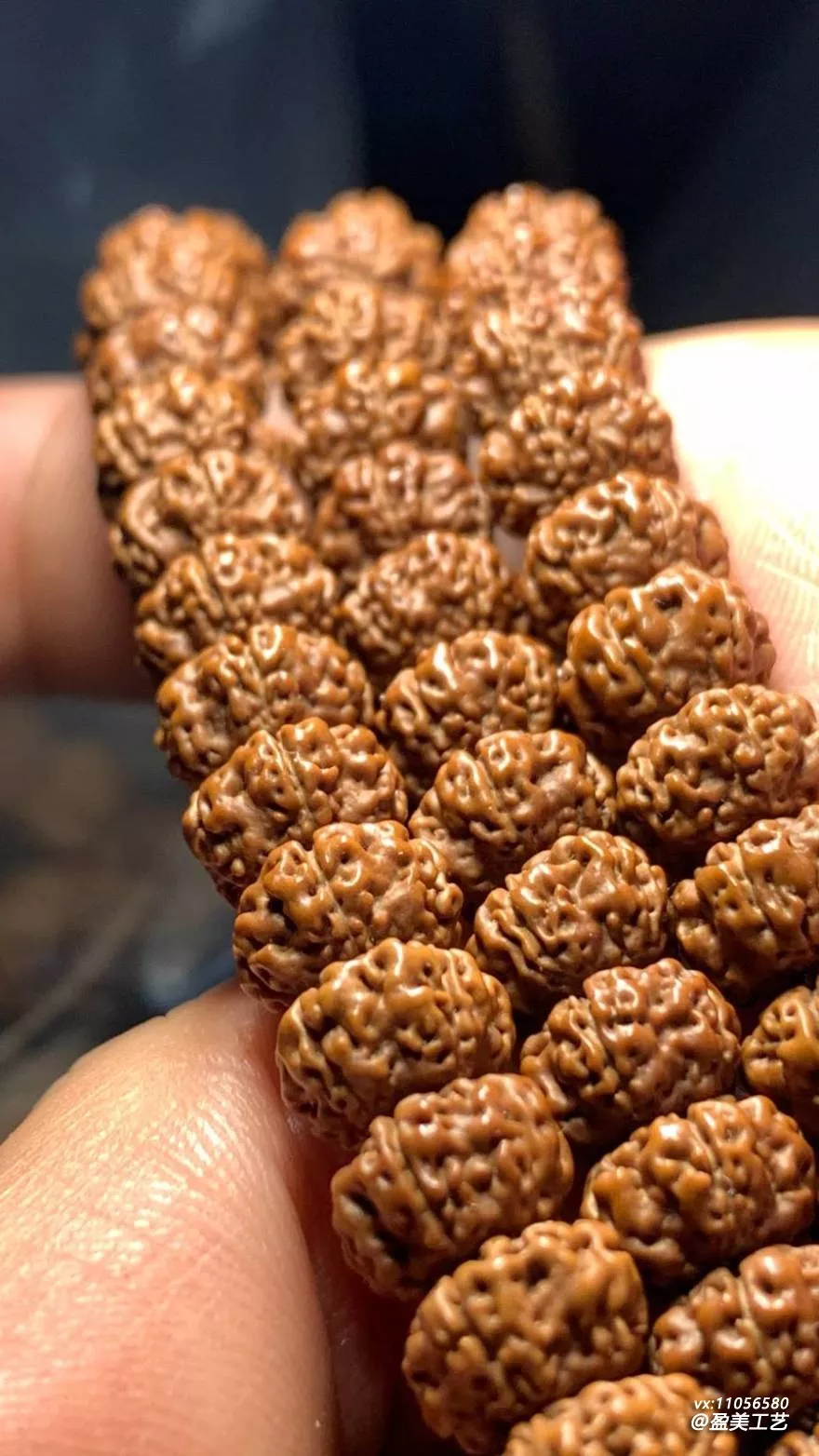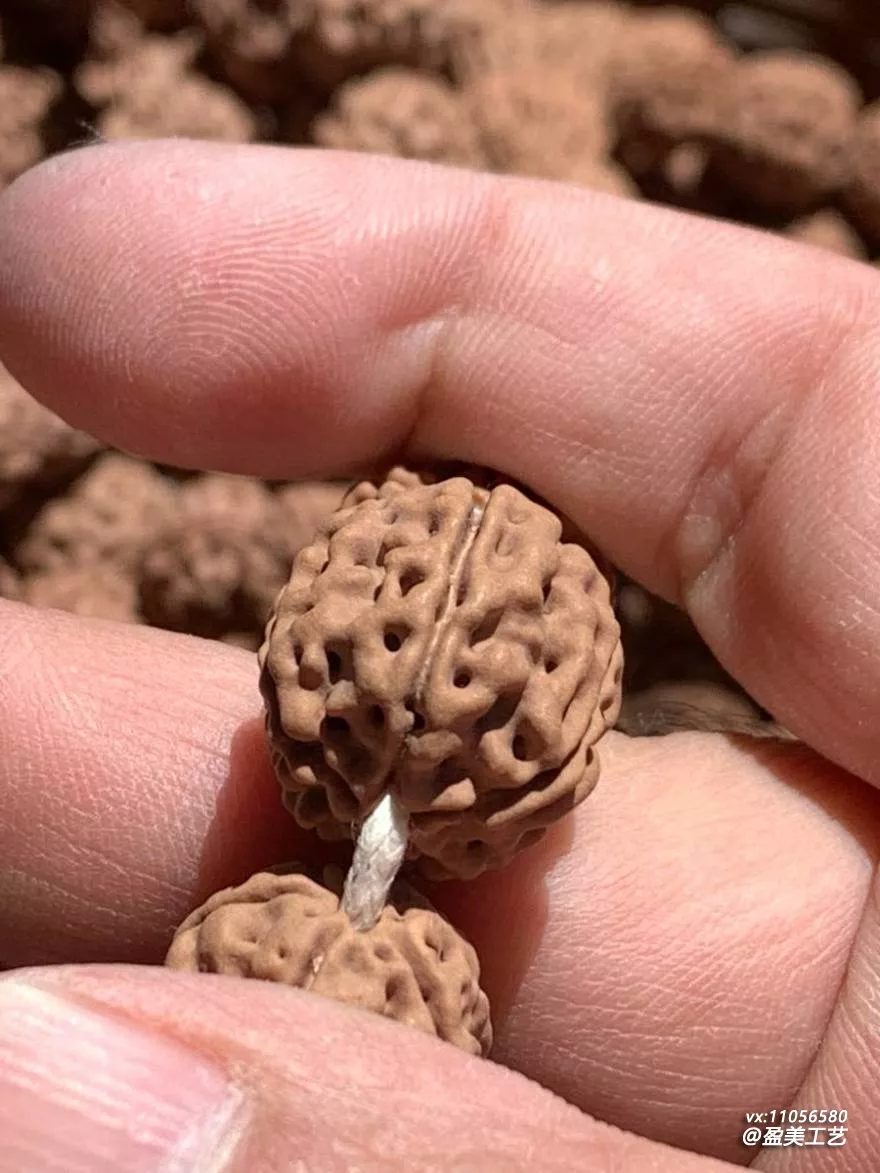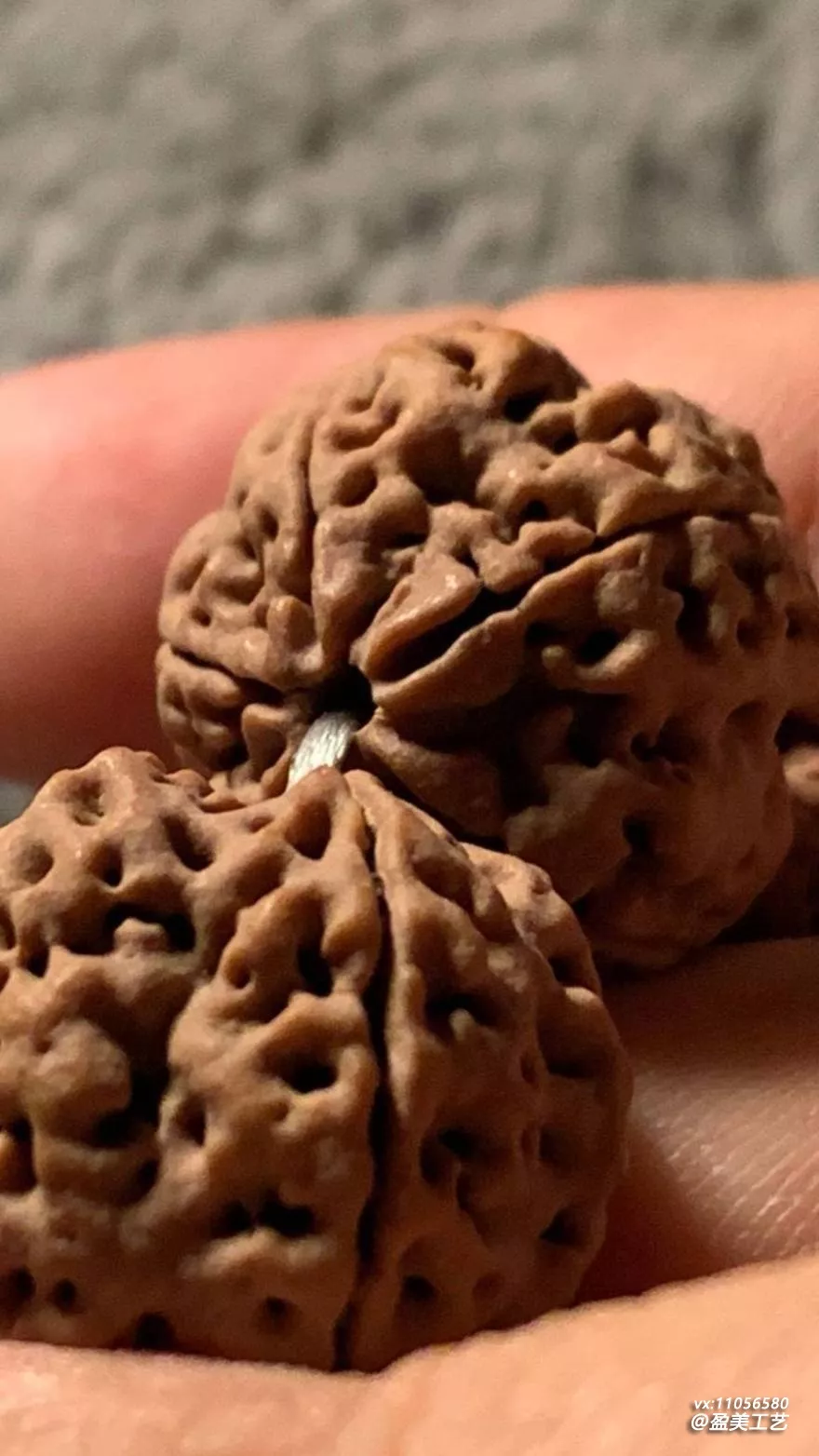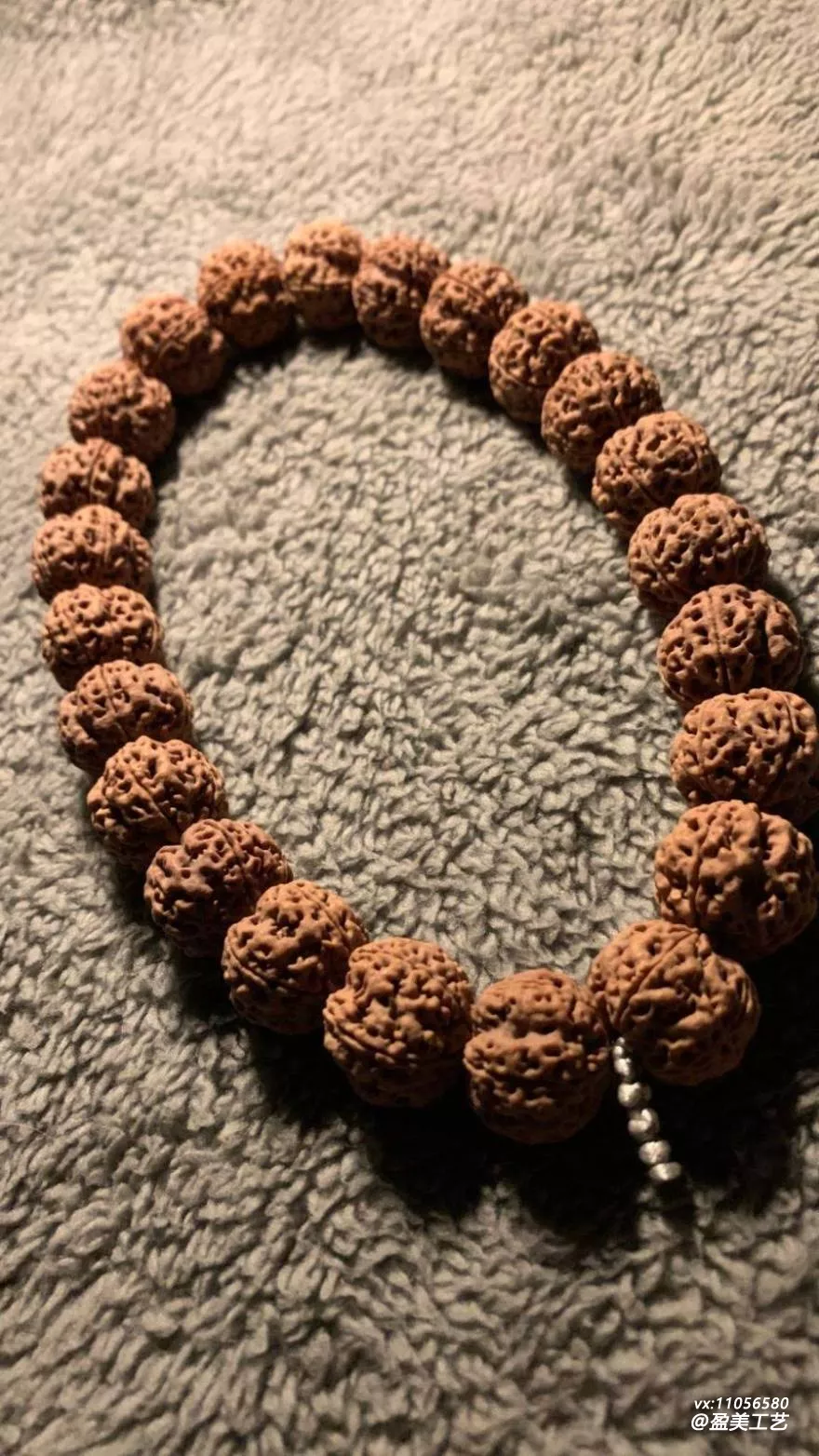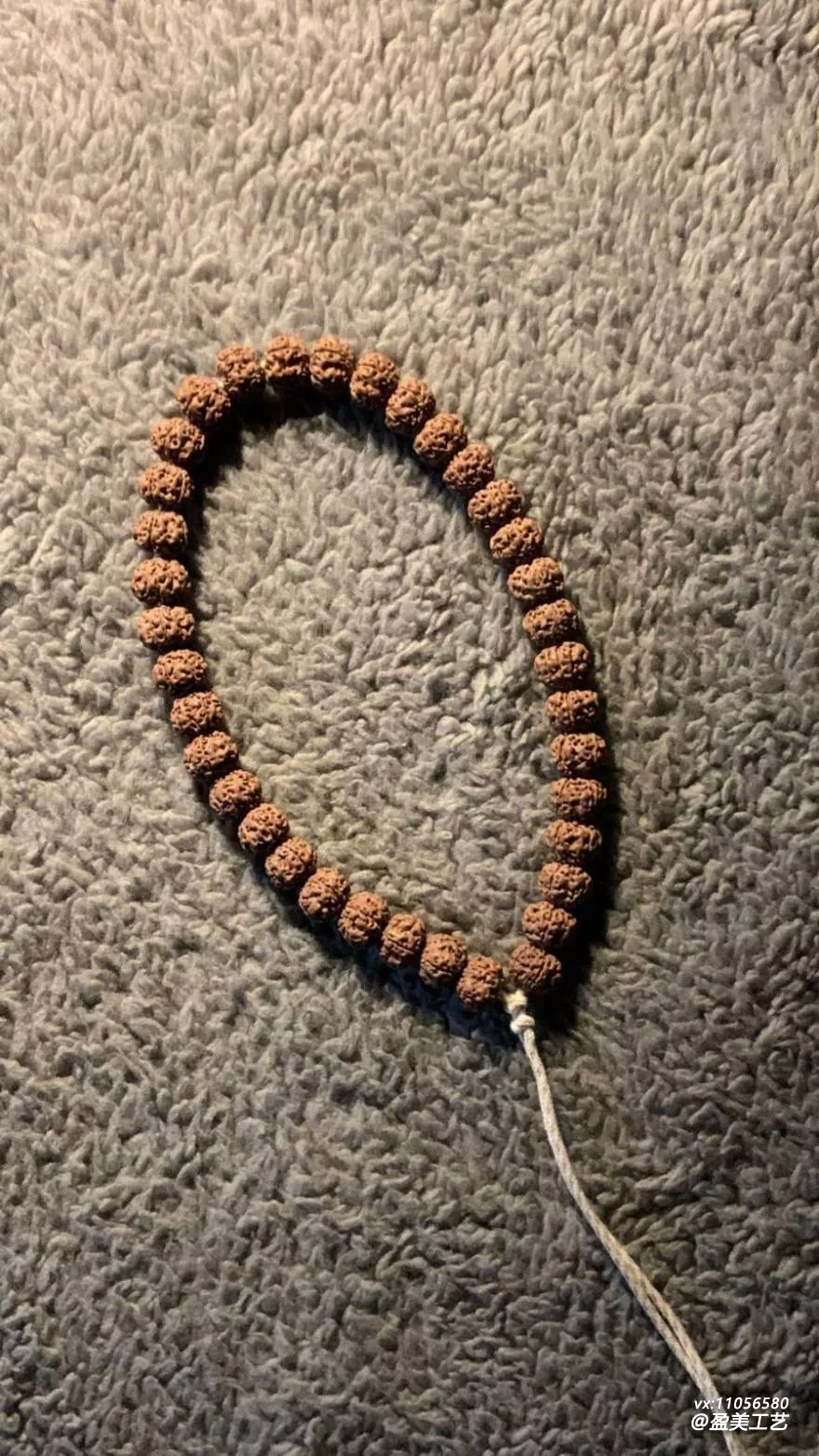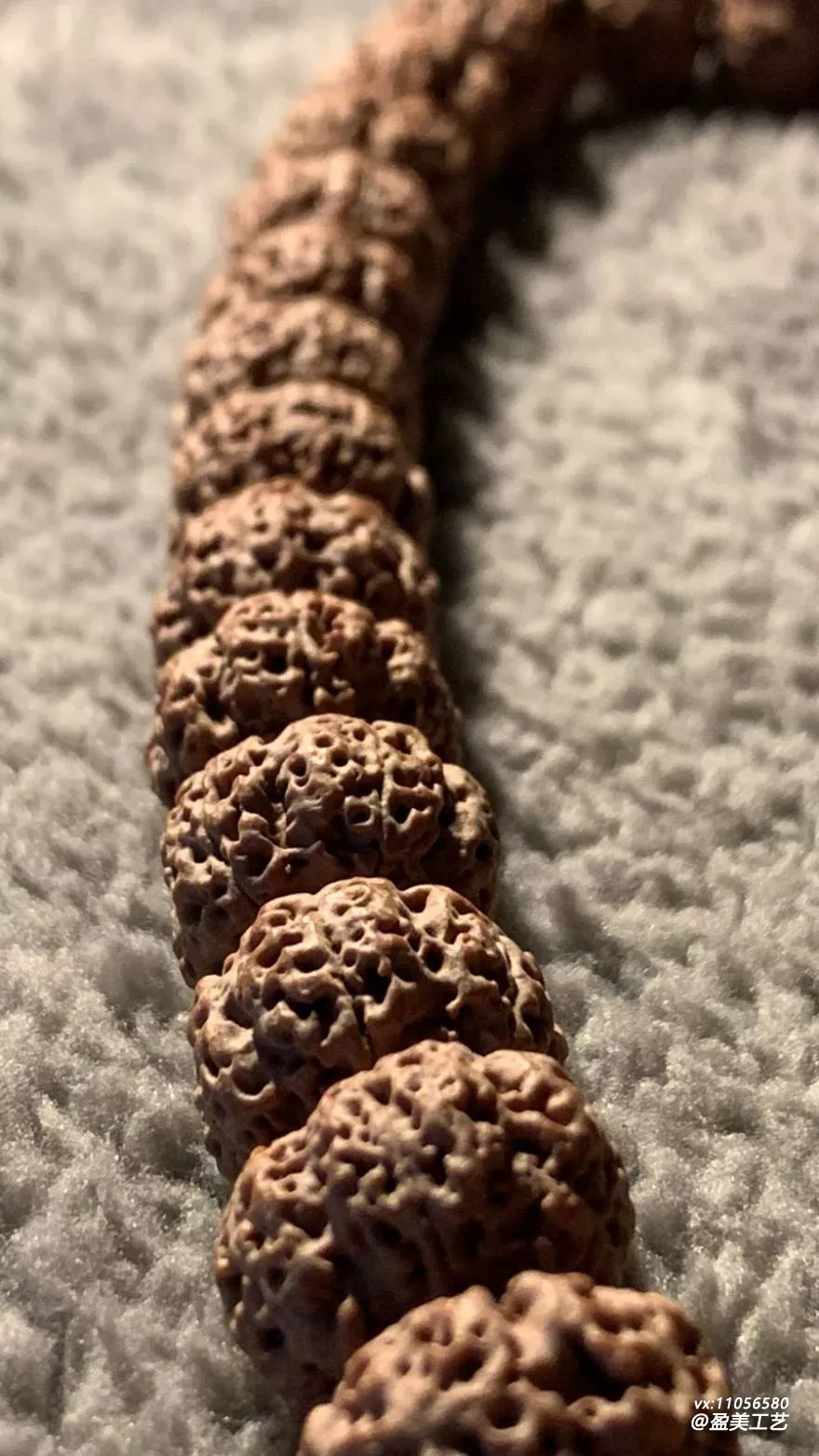
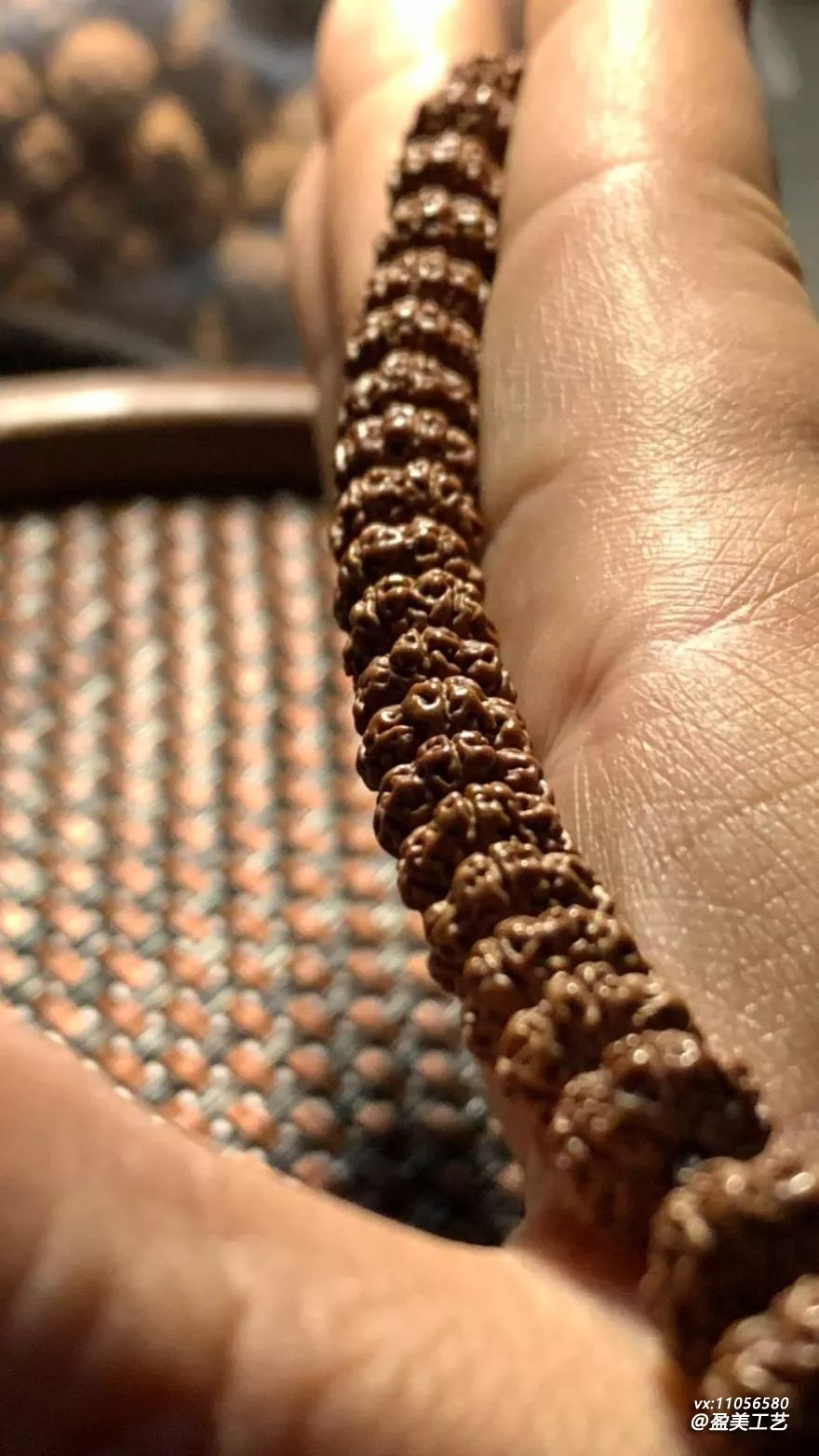
Double dragon-ridge grain transformation
This mala (prayer beads) was picked out from a pile of seeds back in the day, and I never expected it would break in like this. Took a set of photos today, and I'll briefly share my breaking-in (patina process) experience over these years.
I got this strand a few years ago—it was just an ordinary yellow-skin Rudraksha (large) at the time. The grain / texture was decent and the density was good, but nothing particularly outstanding. I never expected that after breaking it in for so long, the color and patina now are far better than I anticipated.
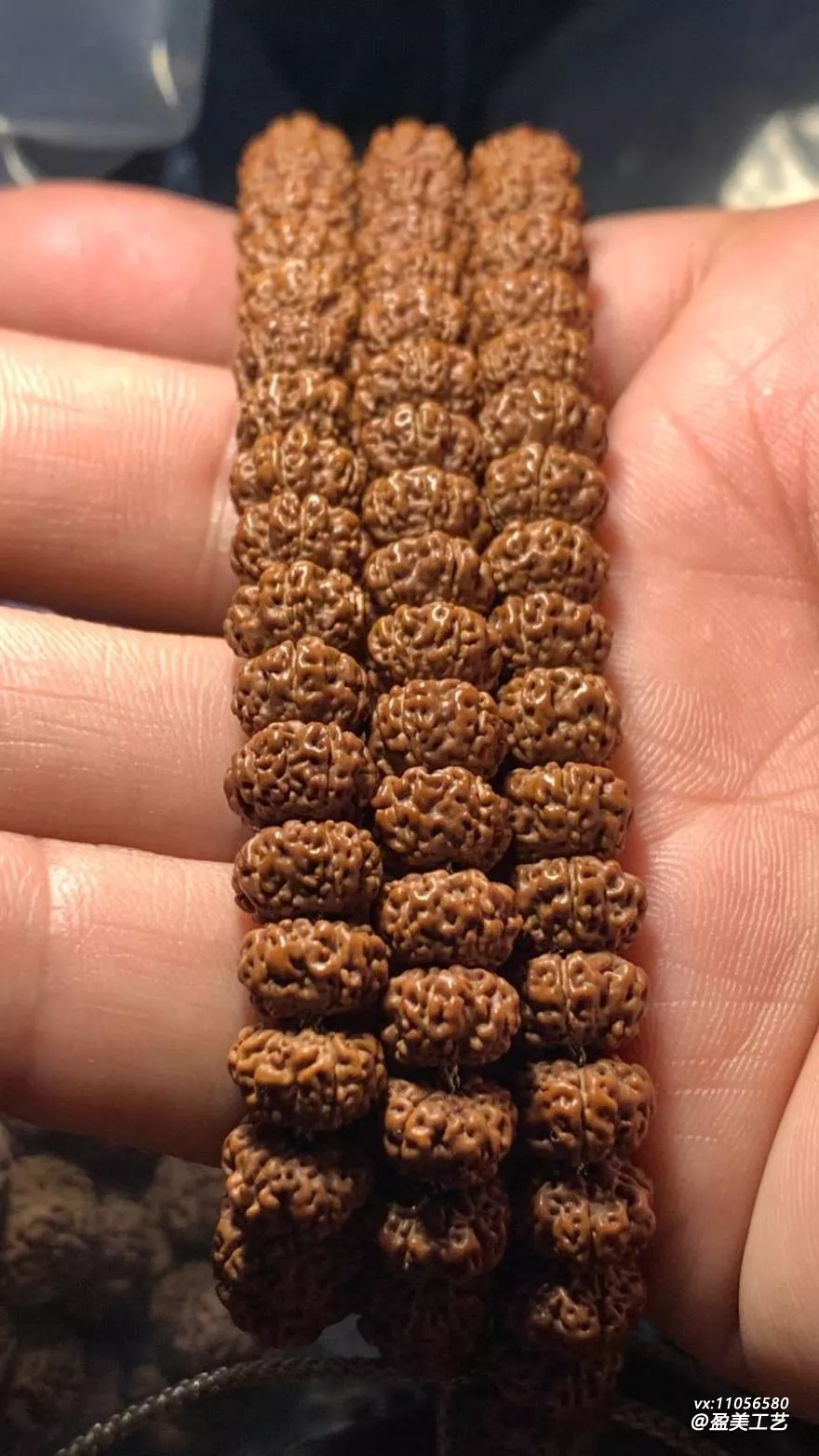
One and a half years of breaking-in (patina process) changes on a double dragon-ridge Rudraksha
When the new seed first arrived, the color was very light and it felt rough to the touch. Back then I didn't know any better and thought more handling would do the trick. After a week of handling with no change, I thought the seed was faulty.
Later I learned I had rushed into handling it before the surface residue was cleaned off. I restarted the base-cleaning, dry-brushing with a stiff brush for a month, brushing thoroughly every day to get all the residue out of the deep grooves. After that, the seed felt completely different to the touch.
After the base-cleaning, I followed a normal routine: more brushing and less handling for the first three months, then the reverse once a glossy sheen developed. Around six months in, the color deepened and the surface became increasingly smooth and lustrous—no need to chase any particular effect.
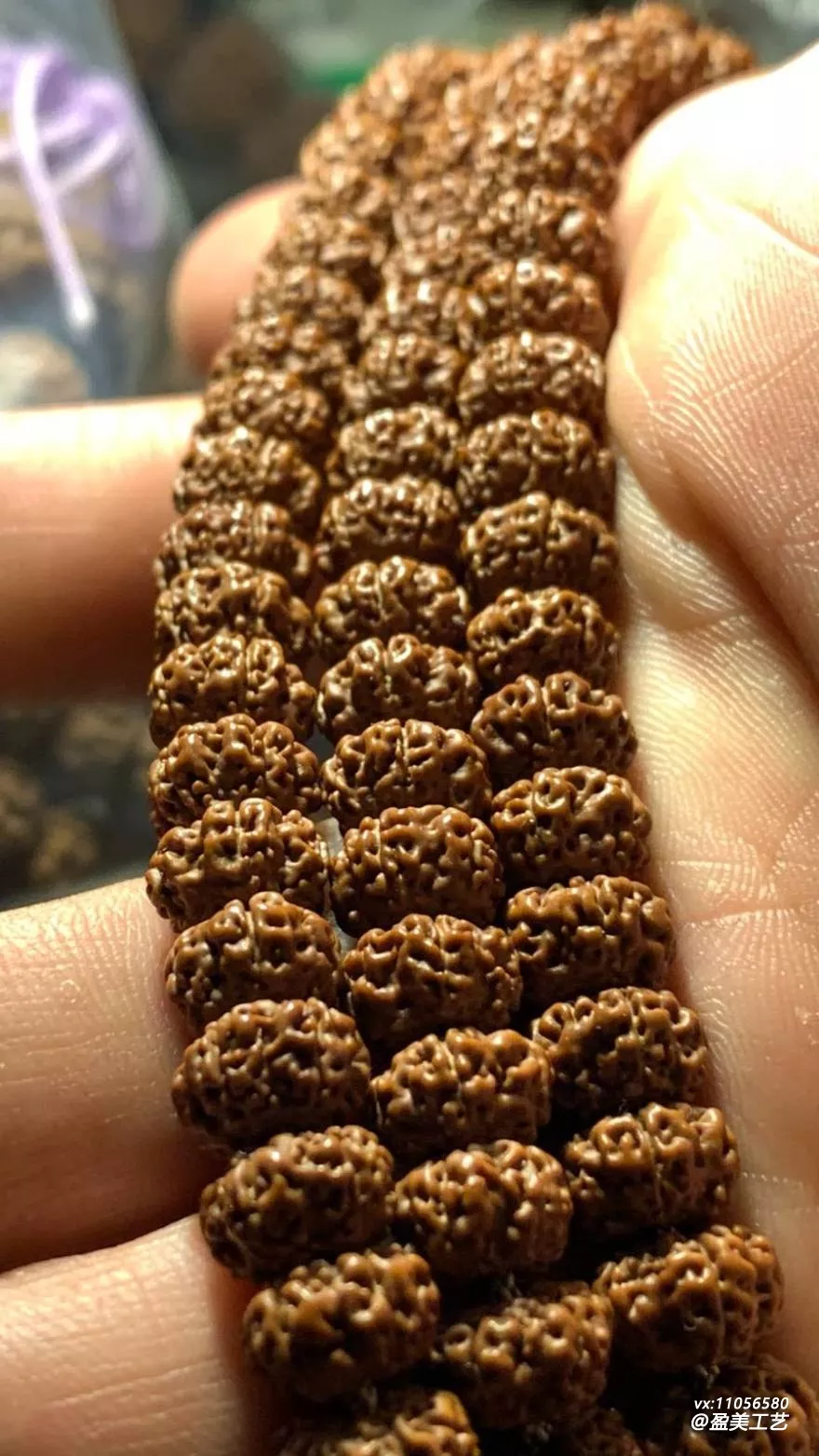
How it looks now
This Rudraksha is now a deep red color, translucent and glowing, with a thick patina and a strong jade-like quality. In sunlight, every bead gives off a warm, gentle luster; the dragon-ridge (ridge line) areas are translucent, the grooves slightly darker, and the grain / texture has a striking three-dimensional feel. It feels weighty in the hand—wonderful to hold.
A while ago a beginner saw this strand and asked if I had used some chemical treatment. Absolutely not—just plain hard work: twenty minutes with a brush every day, accumulated year after year.
Looking back on these two years of breaking-in (patina process), there's really no special secret—just patience. Handle it a bit and brush it a bit every day, without rushing or fussing. When problems come up, look up information and find solutions; don't give up. Given enough time, the strand will reward you naturally.
Random thoughts on playing with malas
After all this writing, it really comes down to one sentence: fuss less, brush more, and don't apply oil. The most common mistake beginners make is listening to too many folk remedies and ruining a perfectly good strand of seeds.
That's all for today's share. If you have a strand you're working on and run into something you're unsure about, ask in the comments—I'll reply to everything I know.