One and a Half Years of Results
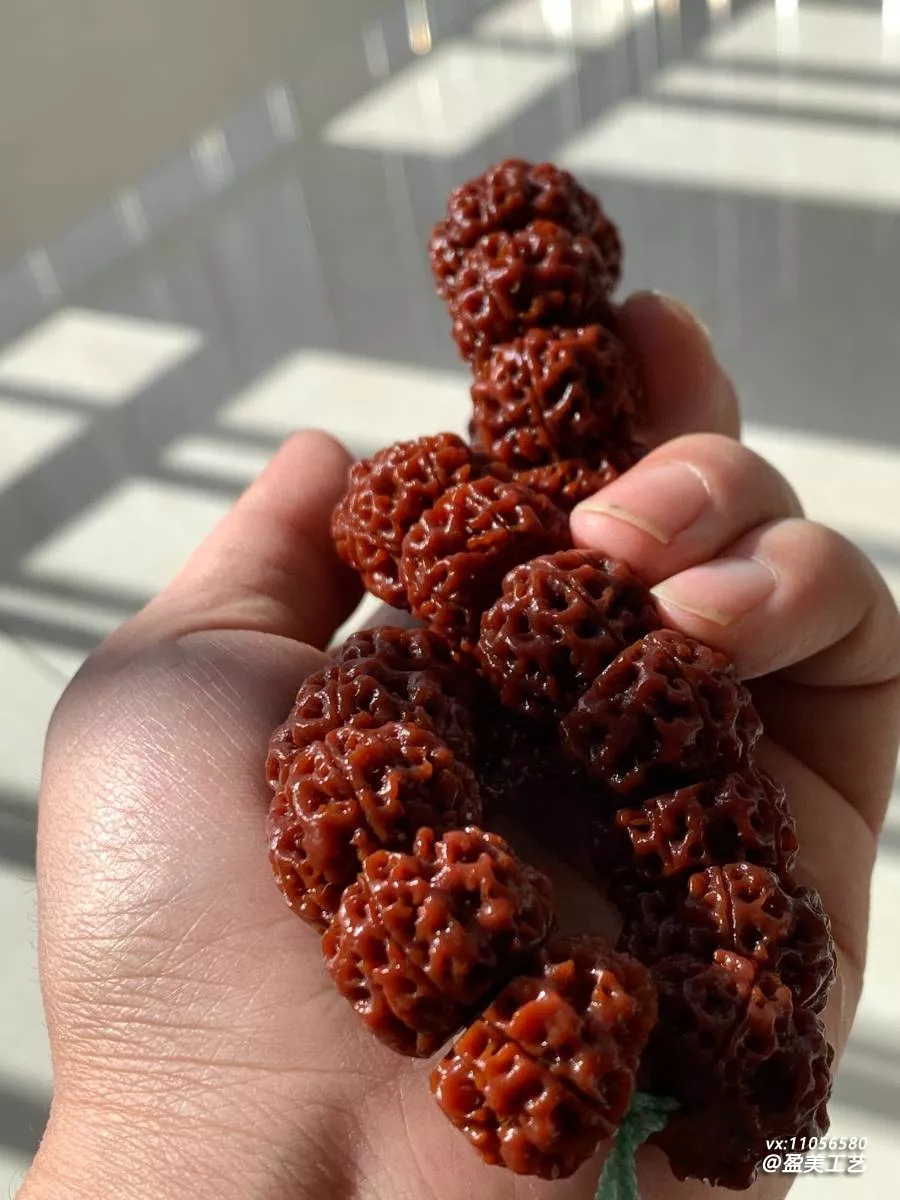
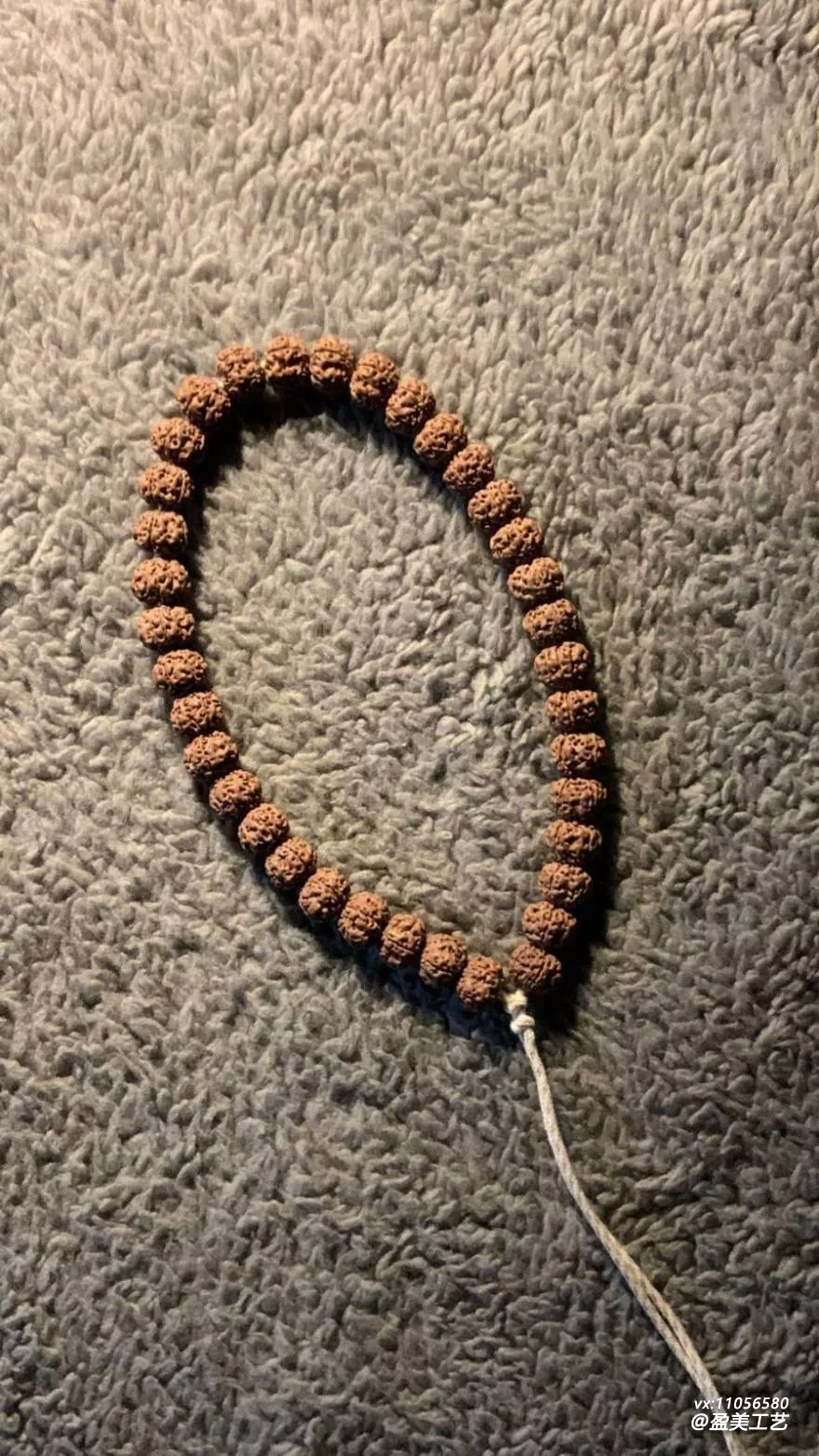
After playing with Rudraksha for so long, the one I'm most attached to is this mala in my hand. Nothing much to do today, so I took it out and snapped a few photos to show everyone its current state.
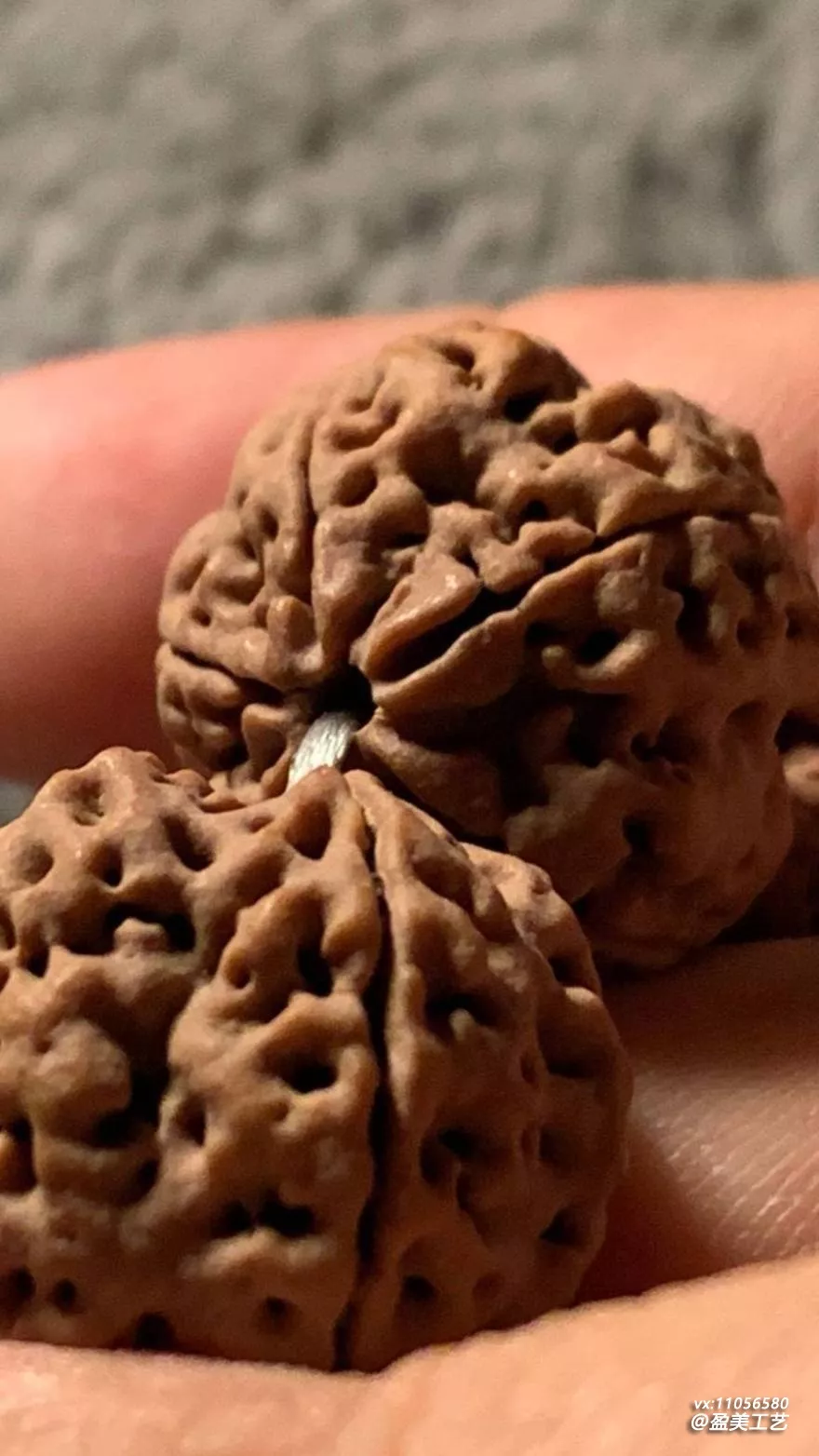
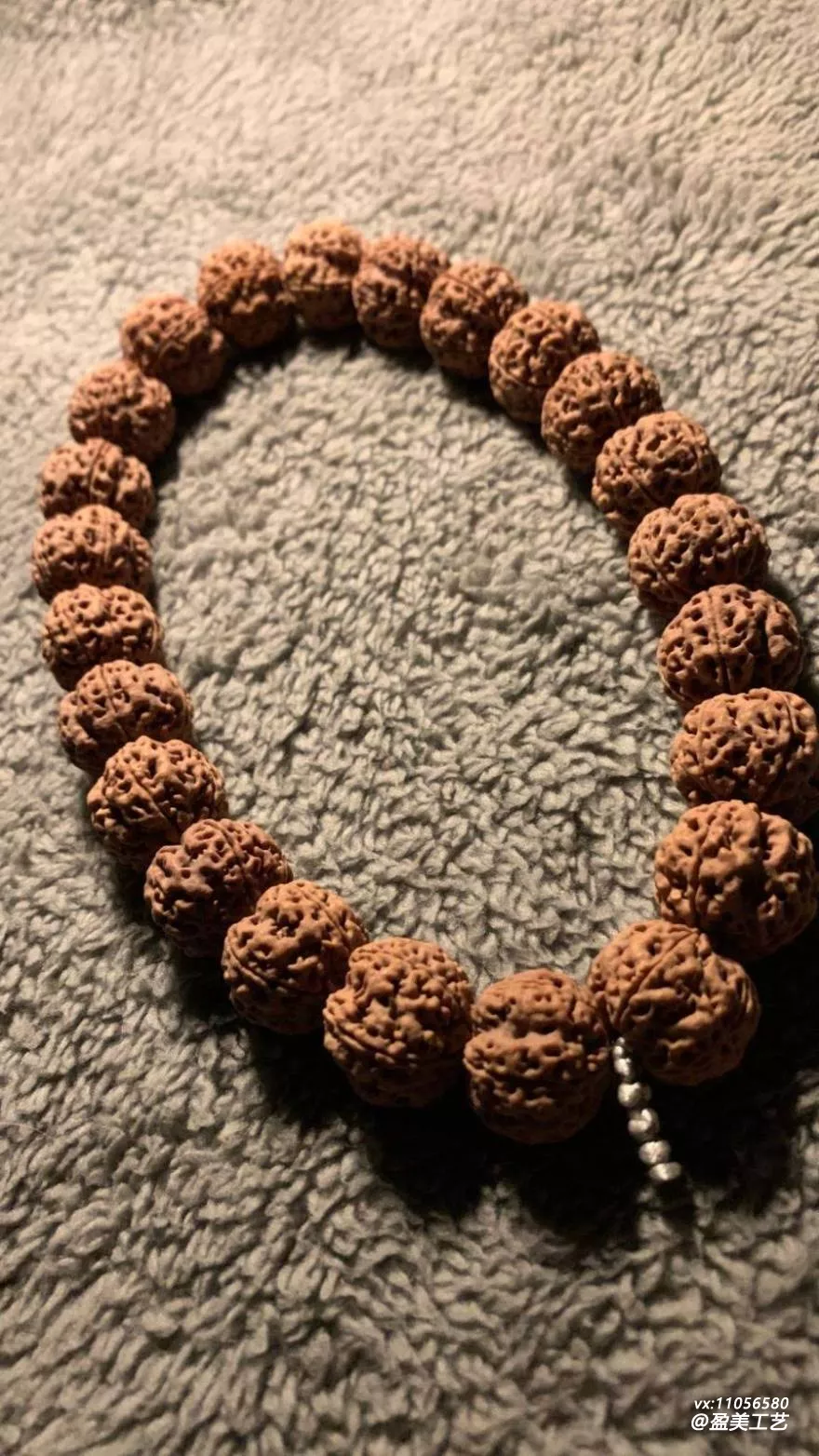
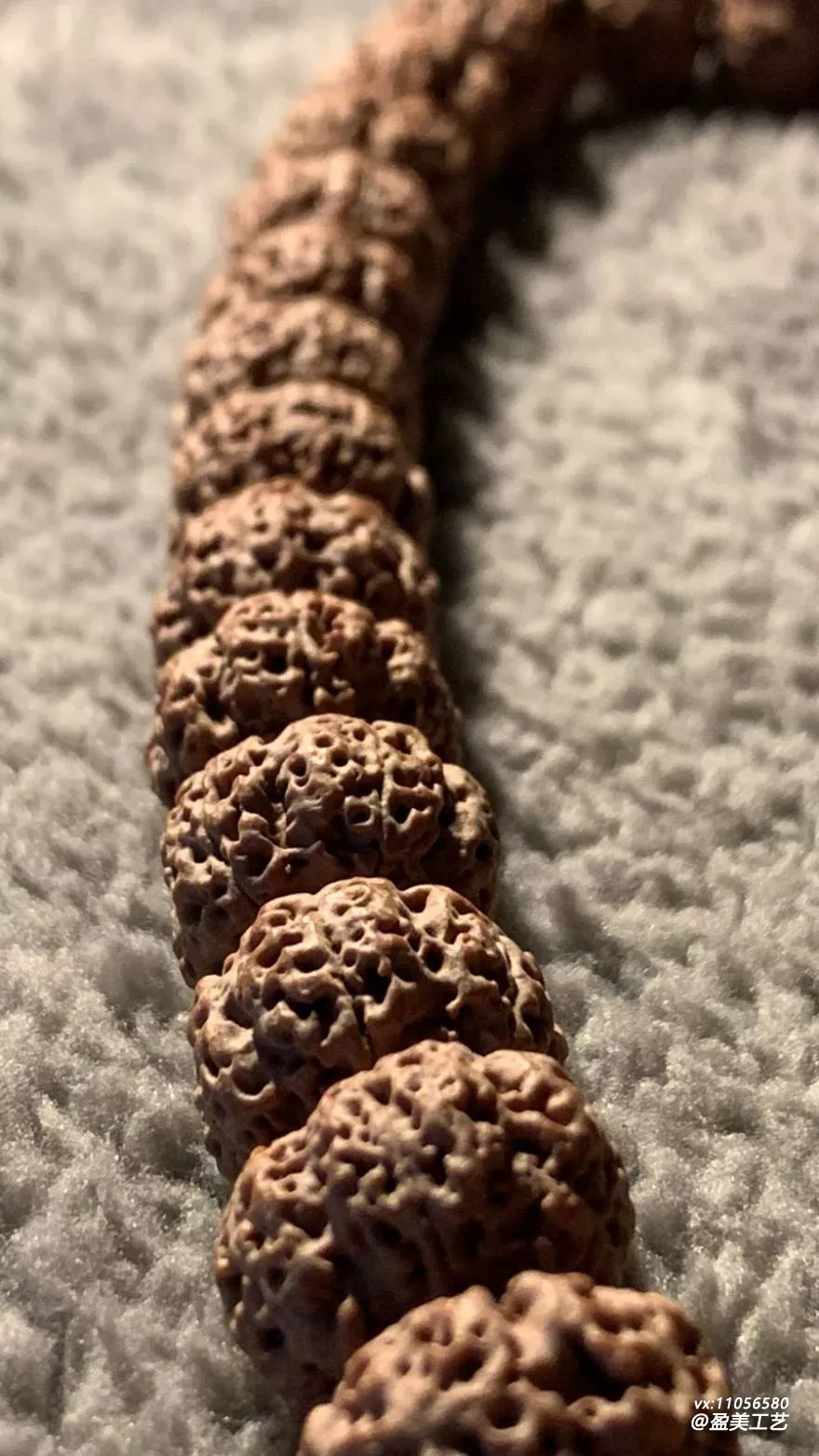
I acquired this mala a few years ago. At the time, it was just an ordinary Rudraksha (large) with yellow skin, decent grain / texture and good density—nothing particularly outstanding. I never expected that after all this time breaking it in, the color and patina would turn out far better than I'd hoped.
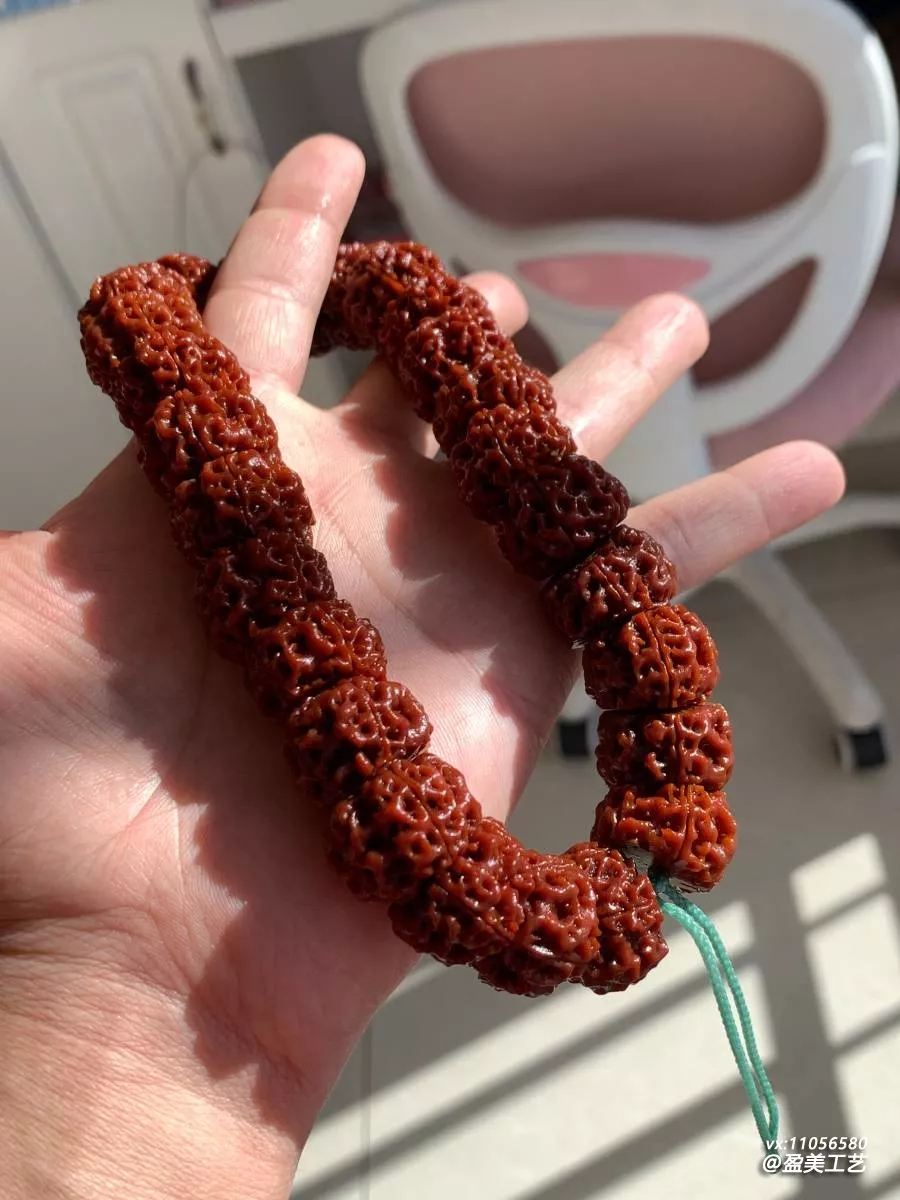
Honeycomb Rudraksha: One and a Half Years of Breaking-In Results
When the new beads first arrived, the color was very light and they felt rough to the touch. Back then I didn't know any better and thought just playing with them more would do the trick. After a week with no change, I even wondered if the beads were defective.
Later, after reading through quite a few posts, I figured out that the base cleaning hadn't been done properly—the alkaline bloom and fruit residue were still clinging to the surface. So I switched back to a stiff-bristled brush and brushed for twenty minutes every day. After about a month of that, all the dirt in the grain was cleared out, and a warm, matte sheen gradually appeared on the surface of the beads.
Once the base was properly cleaned, I started normal breaking-in. For the first three months, I focused mainly on brushing with some handling on the side—brushing twenty minutes and handling ten minutes each day. After three months, a glossy sheen developed and a thin layer of luster formed on the surface. From then on, I could handle more and brush less. Around the six-month mark, the color had visibly deepened, shifting from light brownish-yellow to light brown, and the surface luster grew increasingly pronounced.
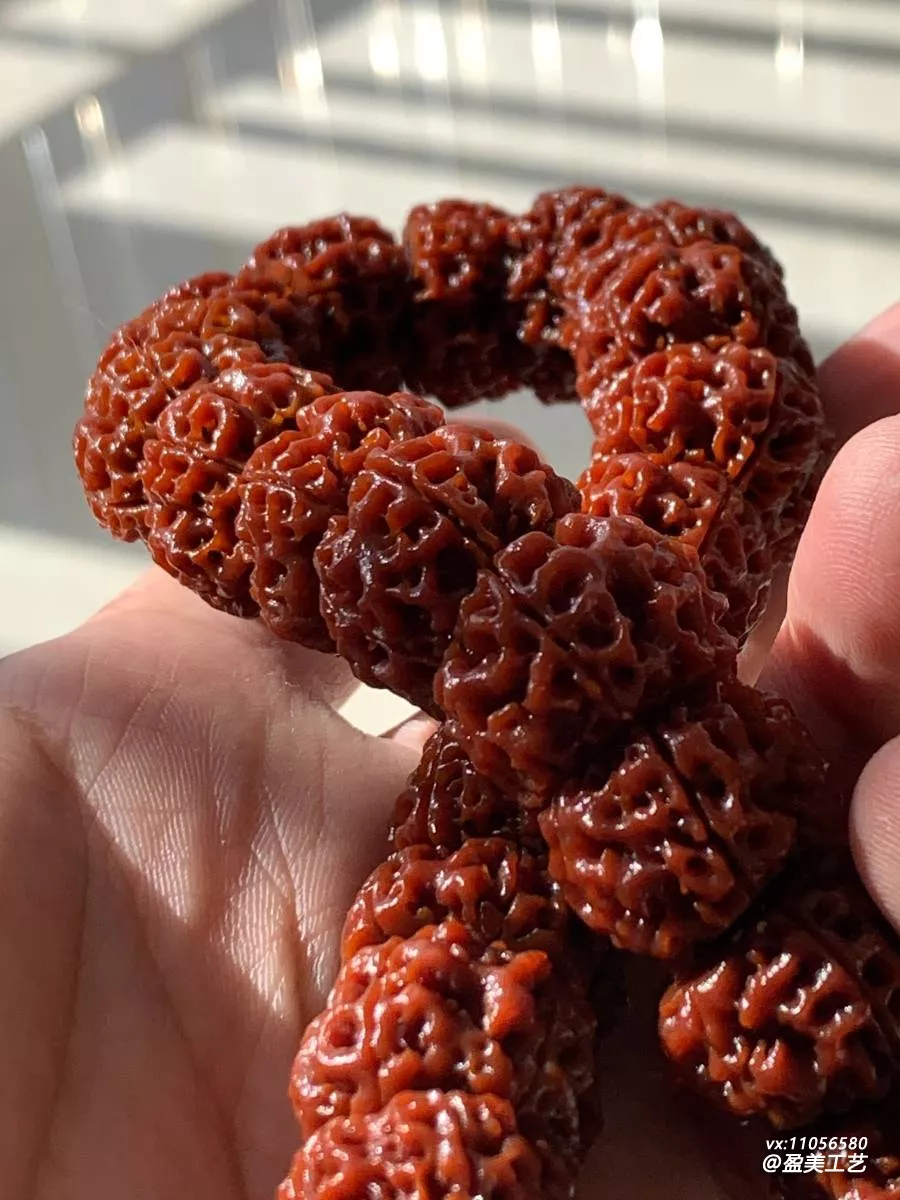
How It Looks Now
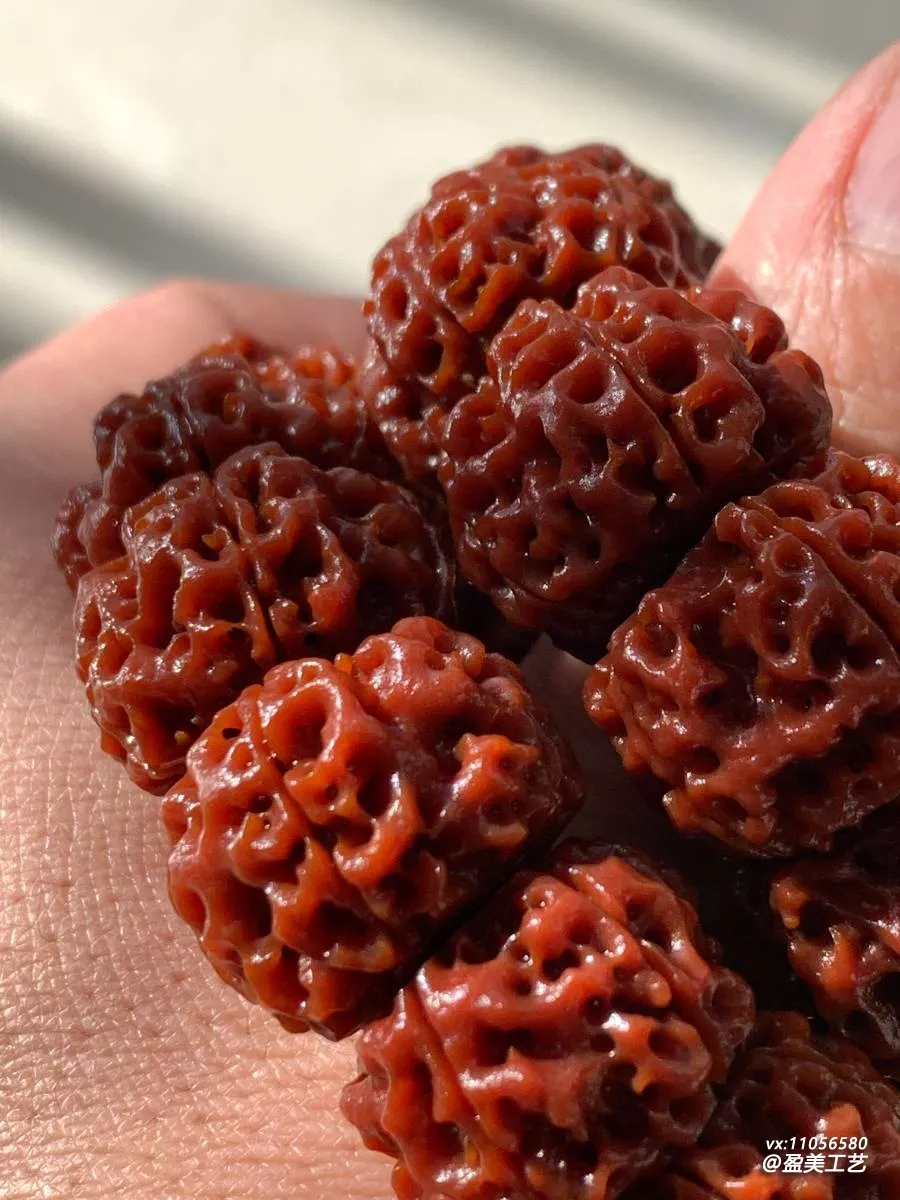
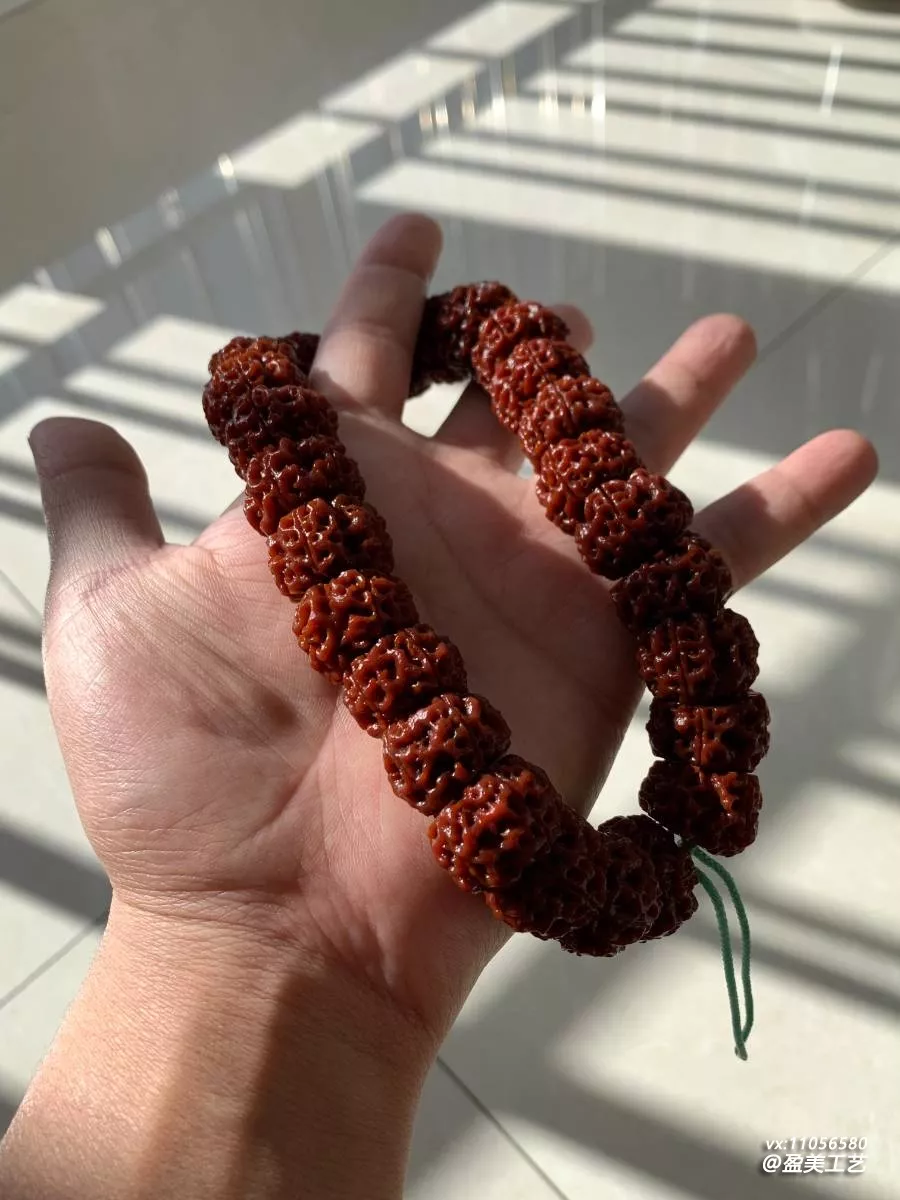
The current color of this Rudraksha mala is deep red, translucent and glossy. The patina is thick, and the jade-like texture is very strong. Under sunlight, every bead radiates a warm luster—the dragon-ridge (ridge line) areas are translucent, the grooves are slightly darker in color, and the three-dimensionality of the grain is especially striking. It feels heavy and solid in the hand, with an excellent tactile quality.
A friend said this mala looks even redder than his three-year-old one and asked me for my secret. There really is no secret—just don't be lazy, don't apply oil, and don't mess around unnecessarily.
Looking back on the breaking-in process over these past two years, there's really no special trick—just patience. Handle and brush a little every day, don't rush, don't fuss. When problems come up, look up information and find a way to solve them; don't give up. Over time, the mala will naturally reward you.
Summary
When it comes to playing with malas, in the end what you're really cultivating isn't the mala itself—it's your own temperament. You can't rush it, you can't be lazy, and you can't be lazy. Those twenty minutes each day, watching the beads slowly transform, also settles your mind little by little.
I'll leave the photos of this mala here for now, and I'll update again when there are new changes. Thanks to everyone who made it this far—see you in the next post.