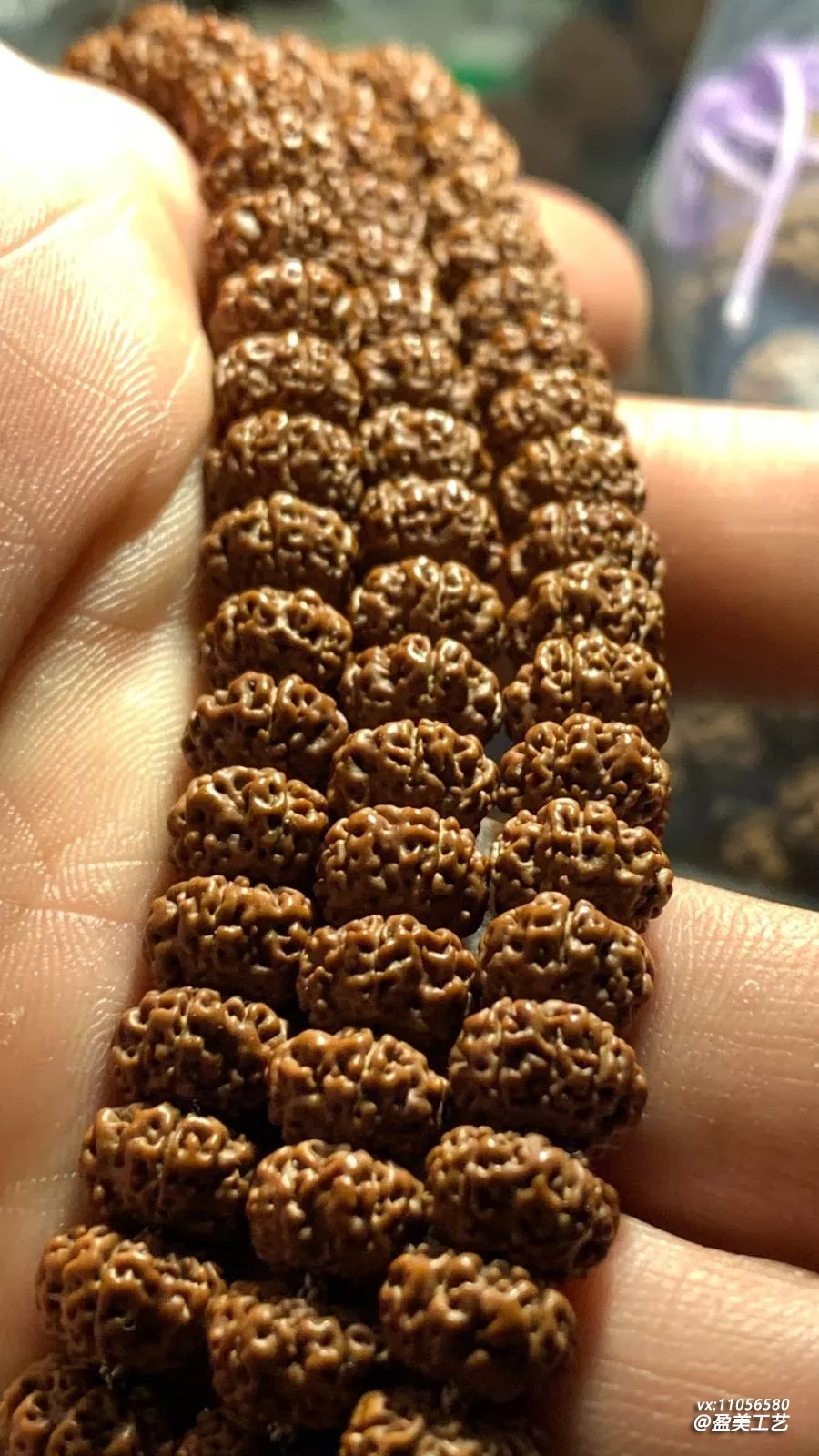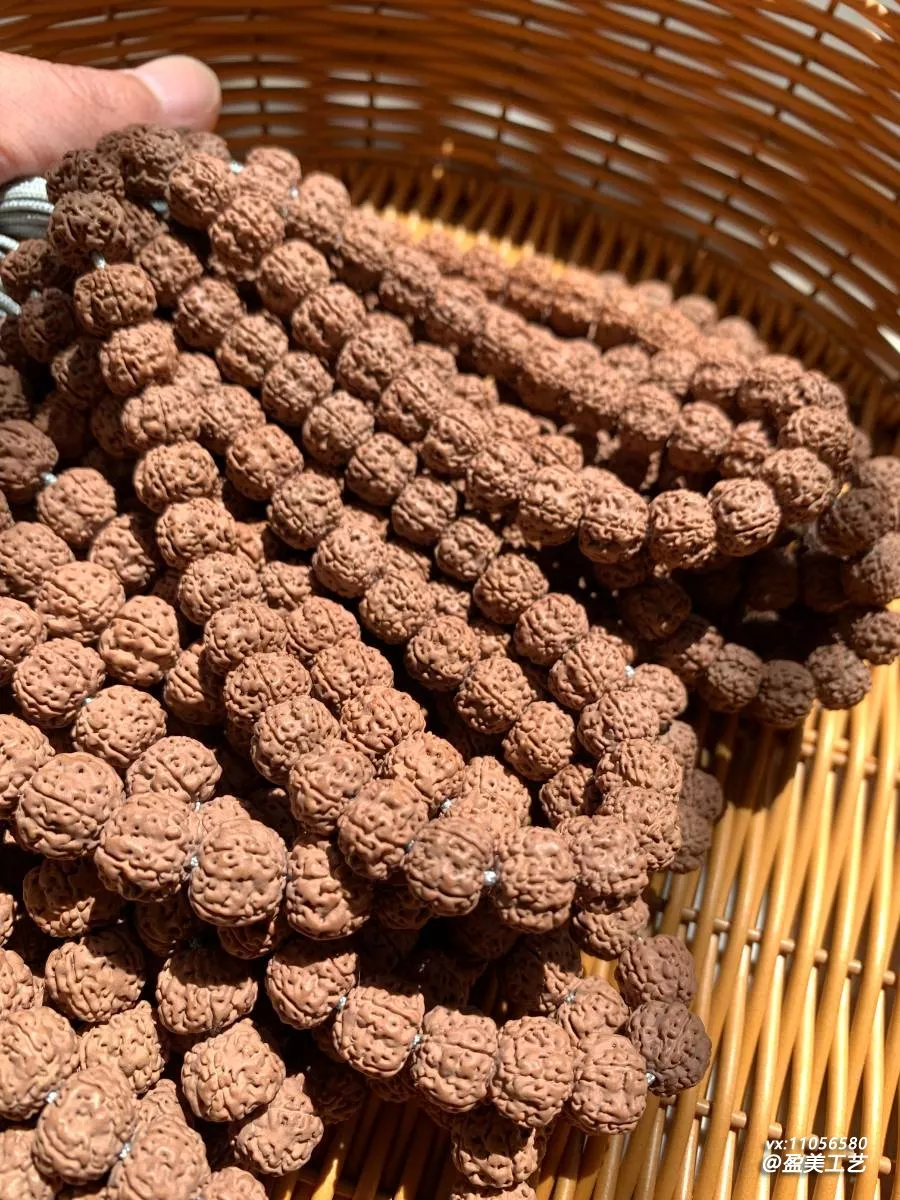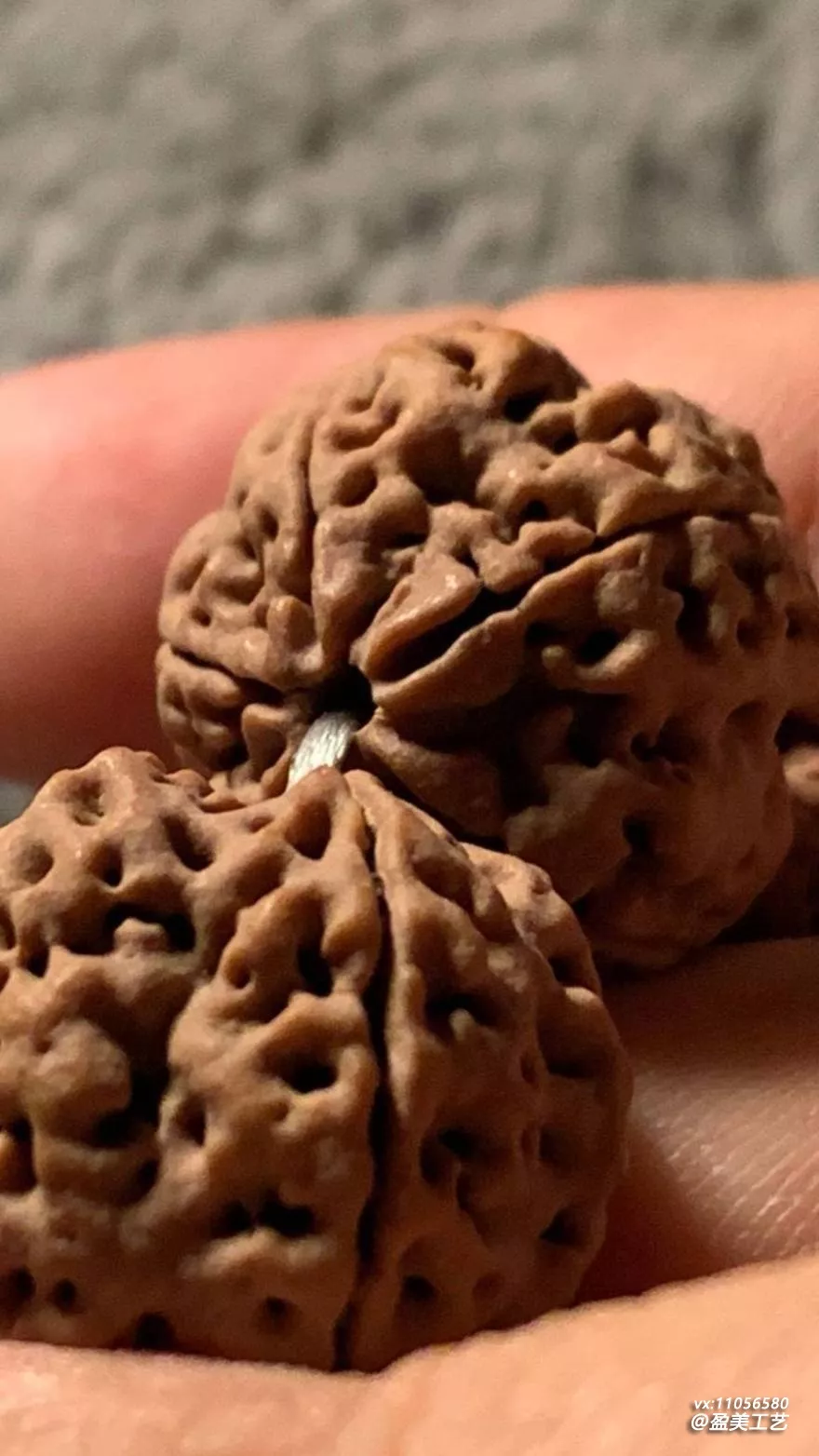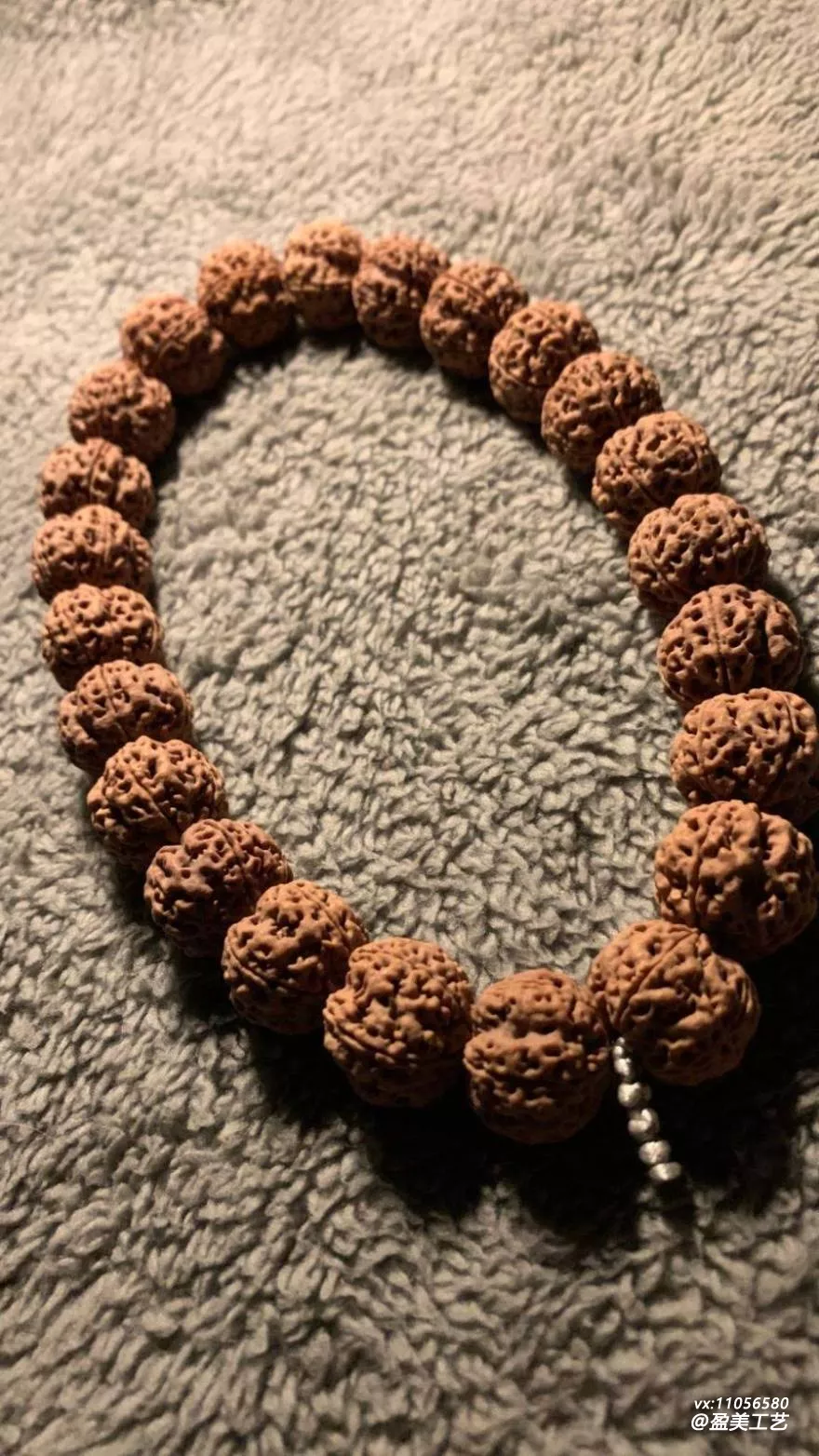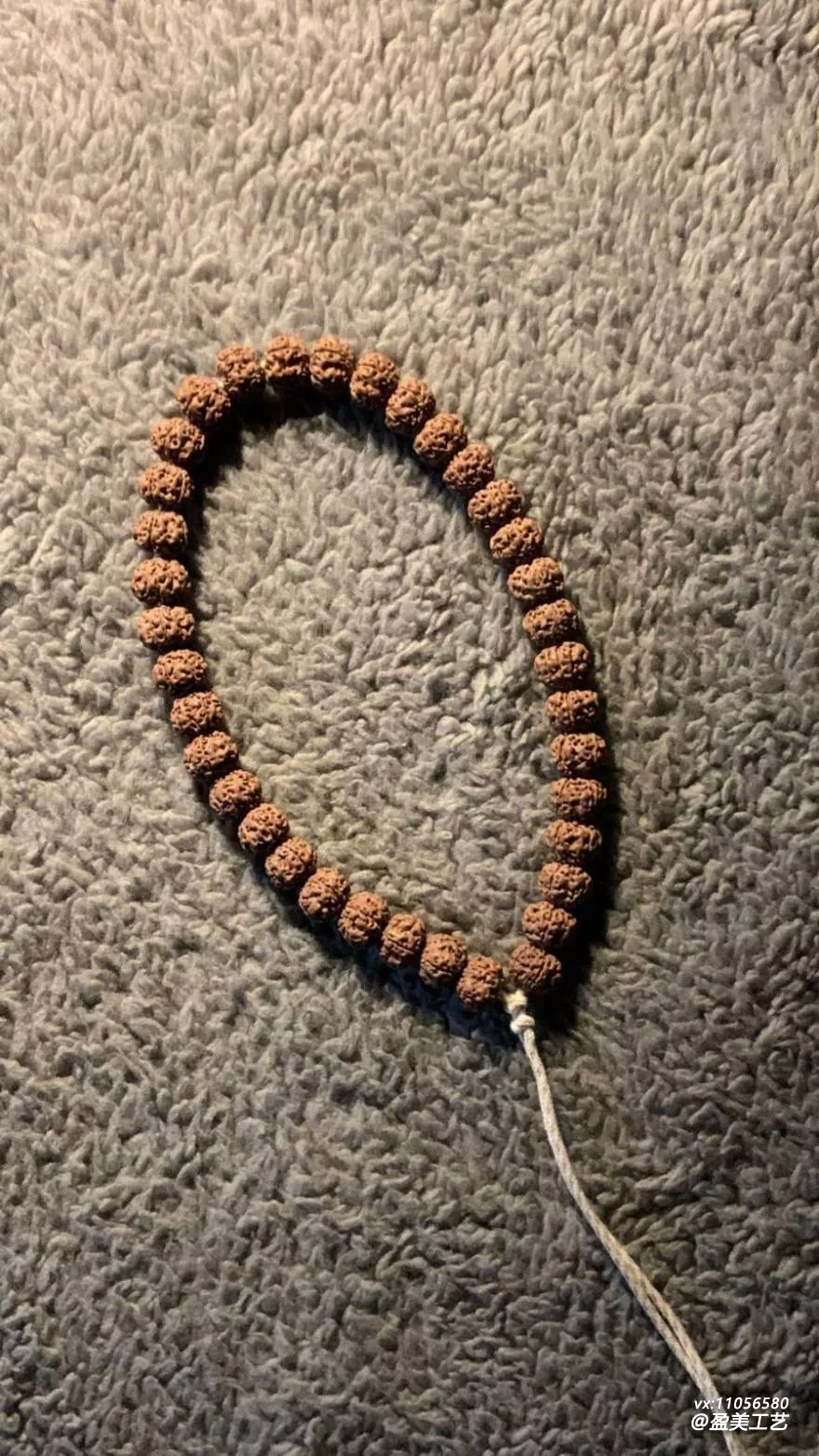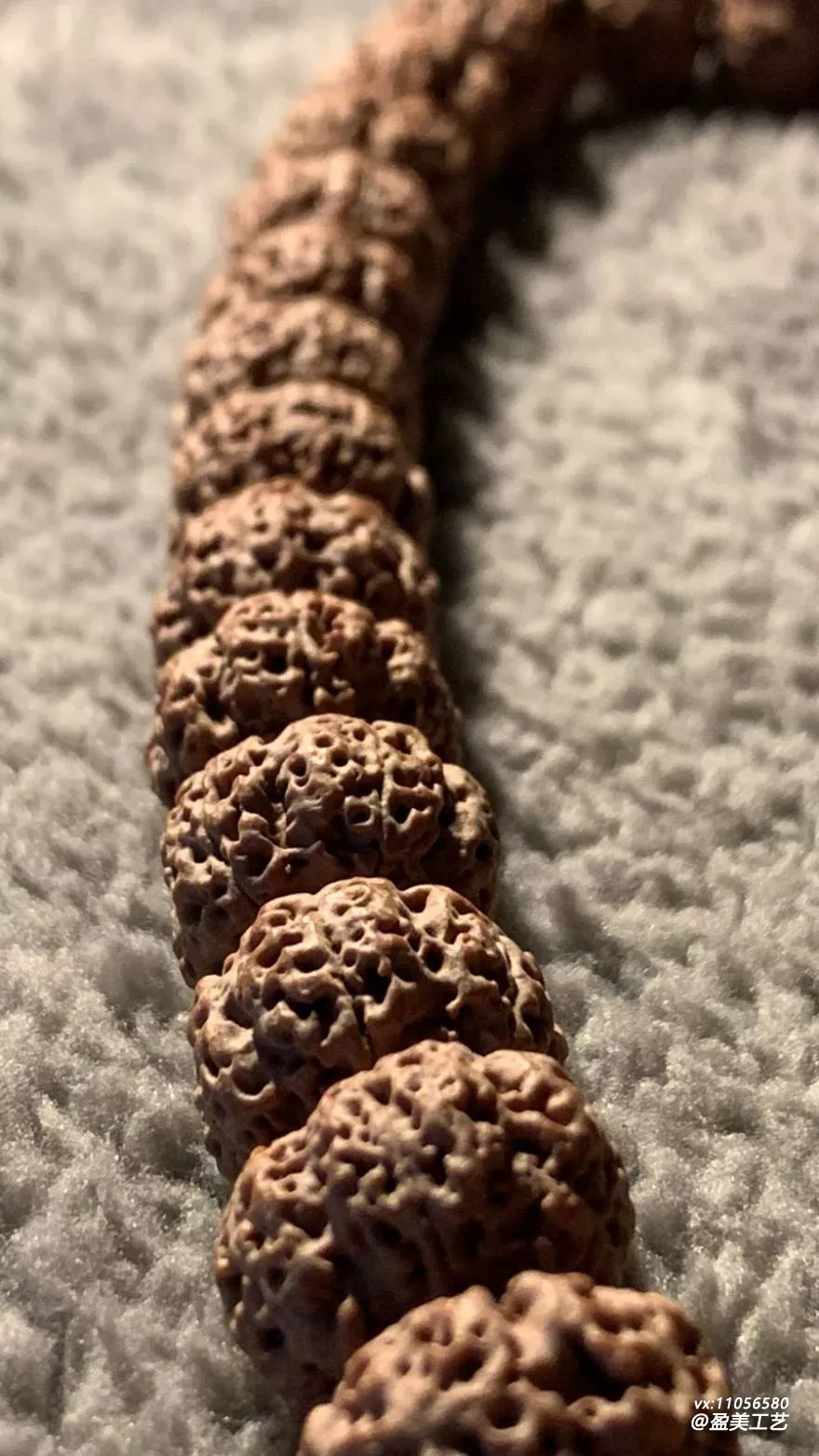
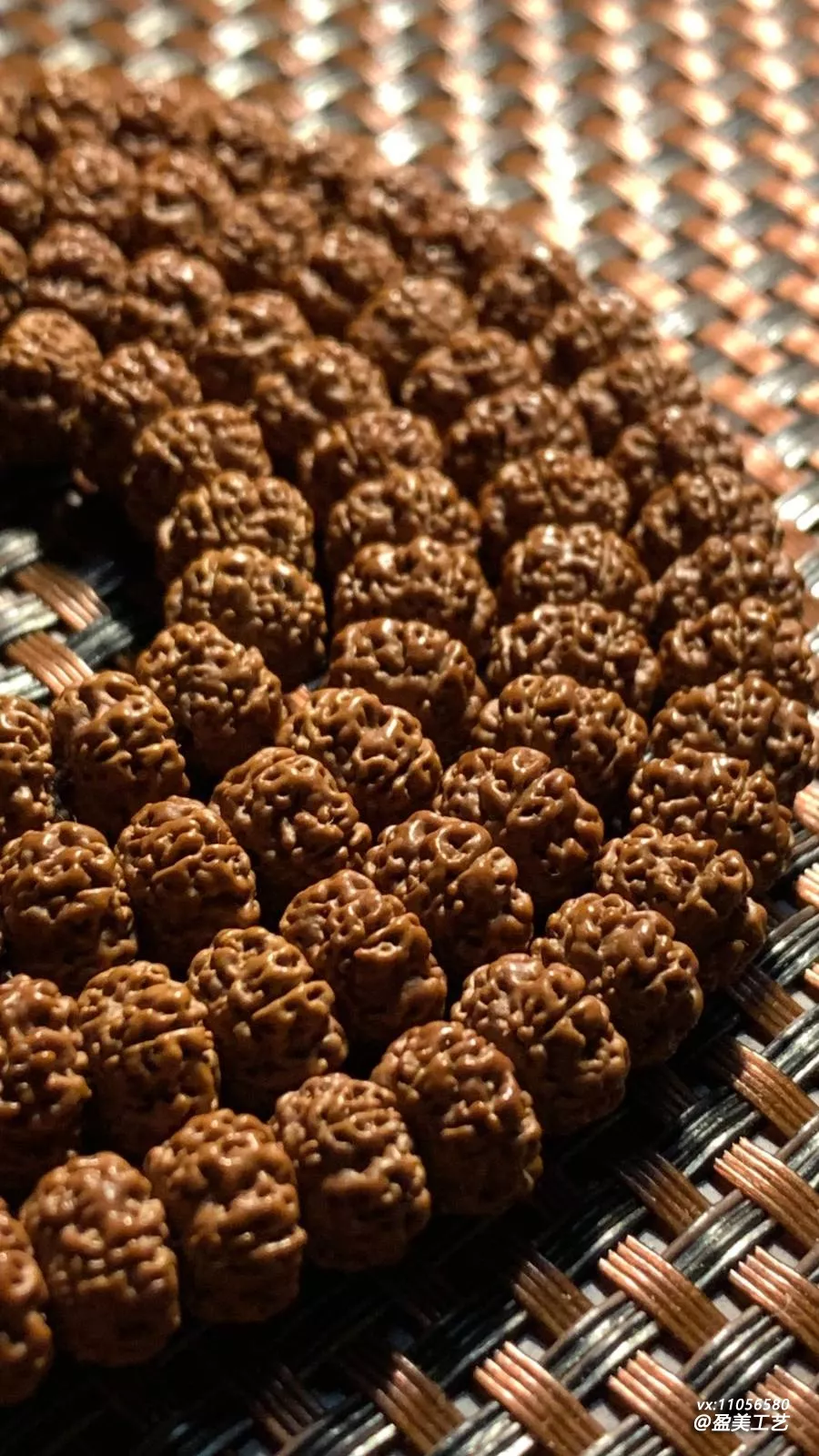
One and a half years of results
Lately, friends keep asking me how to start with a new mala, so I’ve put together the progression of this mala from new to well-worn. All the photos are below—you can see the changes for yourselves.
I got this mala two years ago. Back then, it was just a regular yellow-skinned Rudraksha (large) with decent texture and good density, nothing particularly eye-catching. I never expected that after breaking-in (patina process) for so long, its current color and patina would turn out far better than I’d anticipated.
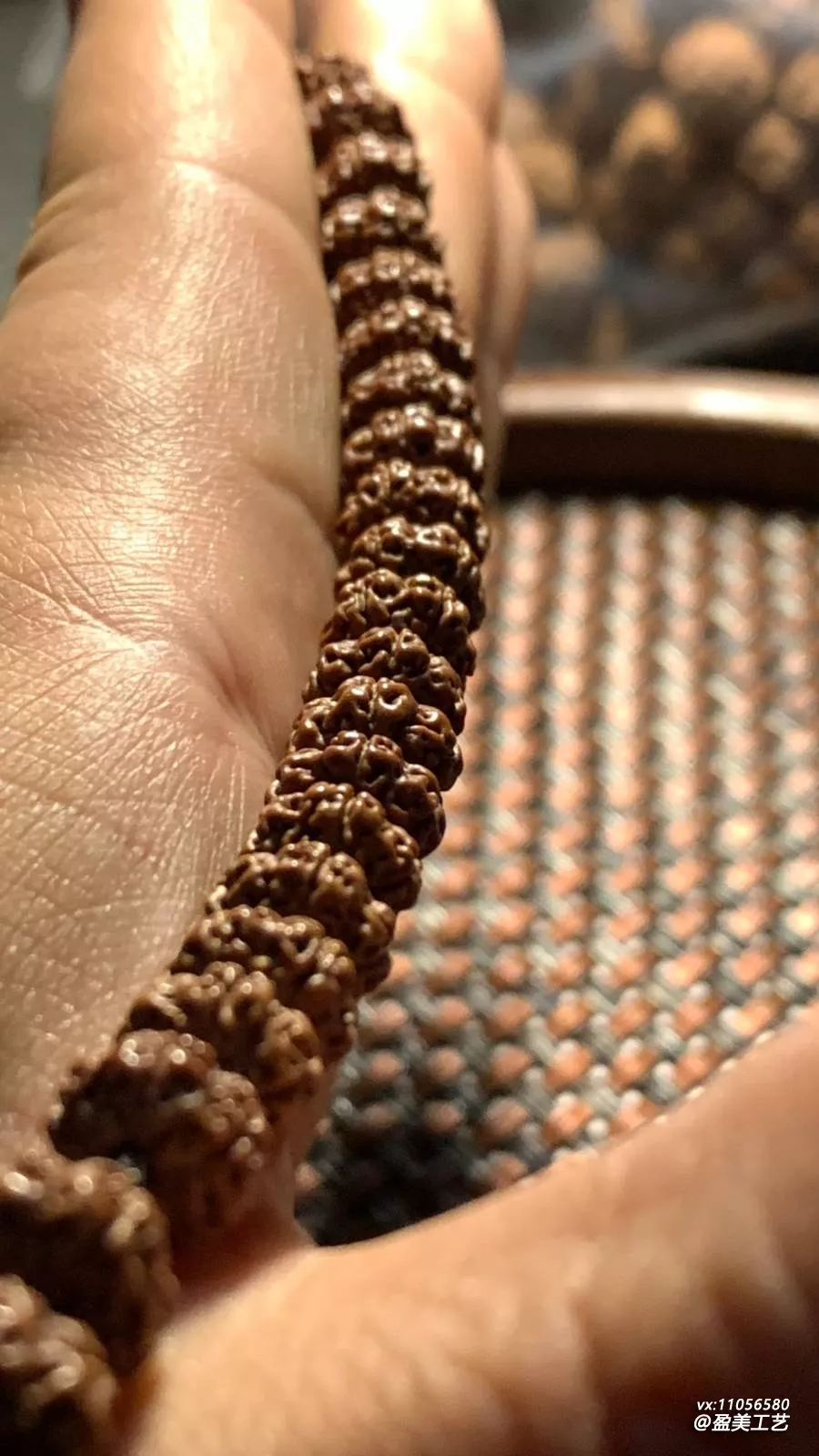
One and a half years of breaking-in (patina process) results for low-profile plum-blossom Rudraksha
When I first got it, the beads were pale in color, dry on the surface, and had no luster at all. I didn’t know anything back then, so I just picked it up and started breaking it in. After a week, I noticed the color hadn’t changed much—if anything, it looked duller, and I felt pretty unsure about it at the time.
Later I found out I’d started handling it too soon, before the surface debris was fully cleaned off. I re-did the base preparation: dry-brushing with a stiff bristle brush for a month, brushing thoroughly every day to work out all the residue deep in the texture. After that, the beads felt completely different to the touch.
Once the base prep was done, I moved on to regular breaking-in (patina process). For the first three months, I focused mainly on brushing and only handled the mala occasionally—brushing for 20 minutes and handling for 10 minutes each day. After three months, a glossy sheen developed, with a thin layer of luster on the surface; at that point, I could handle it more and brush less. Around the six-month mark, the color darkened noticeably, shifting from light brownish-yellow to light brown, and the surface luster became more and more prominent.
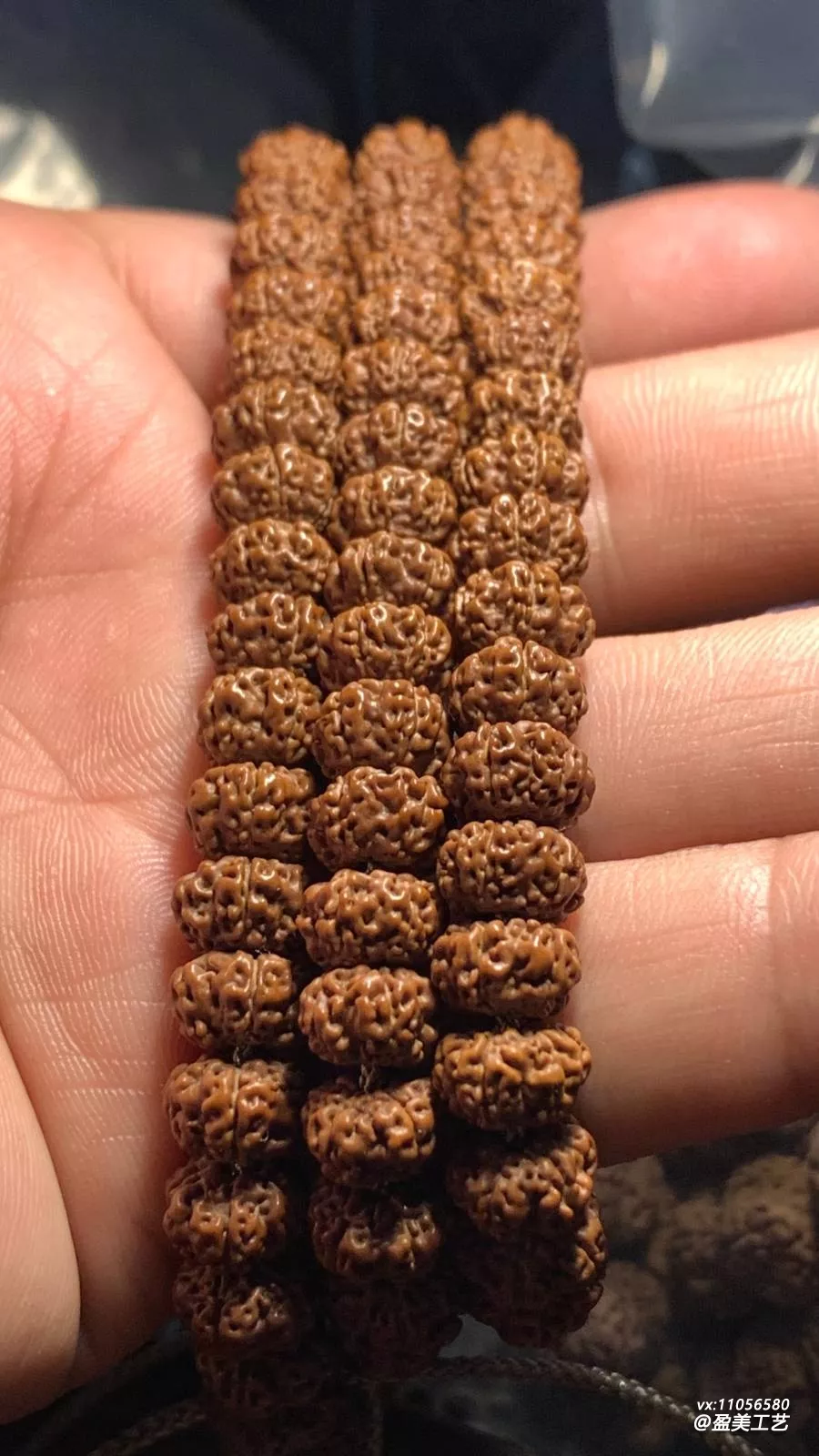
Current appearance
Right now, this Rudraksha mala is deep red, translucent, with a thick patina and a strong jade-like quality. In sunlight, every bead glows with a warm luster—the dragon-ridge (ridge line) areas are translucent, the grooves are slightly darker, and the texture has excellent three-dimensional definition. It feels substantial in the hand, with a really nice texture.
A few days ago I wore it to a tea gathering, and a friend snatched it right out of my hand to look at it for ages, saying the color was so even. To be honest, when I first started breaking it in, the color was really uneven, and no one thought much of it.
Looking back on these two years of breaking-in (patina process), there’s really no special secret—just patience. Handle and brush it a little every day, don’t rush, don’t overdo it. When problems come up, look up information and find ways to fix them, don’t give up. Given enough time, the mala will naturally reward you.
That’s all for this topic
To be honest, there’s no mysticism around Rudraksha. As long as the density is good, the skin quality is sound, and you brush it properly, it’ll naturally look great once enough time has passed. Those quick-fix tricks for turning it red in a year? Just listen to them for fun, don’t take them seriously.
That’s all for today. Next time I’ll show you newly photographed malas, or talk about other textures. If you found this useful, give it a like. See you in the next post.