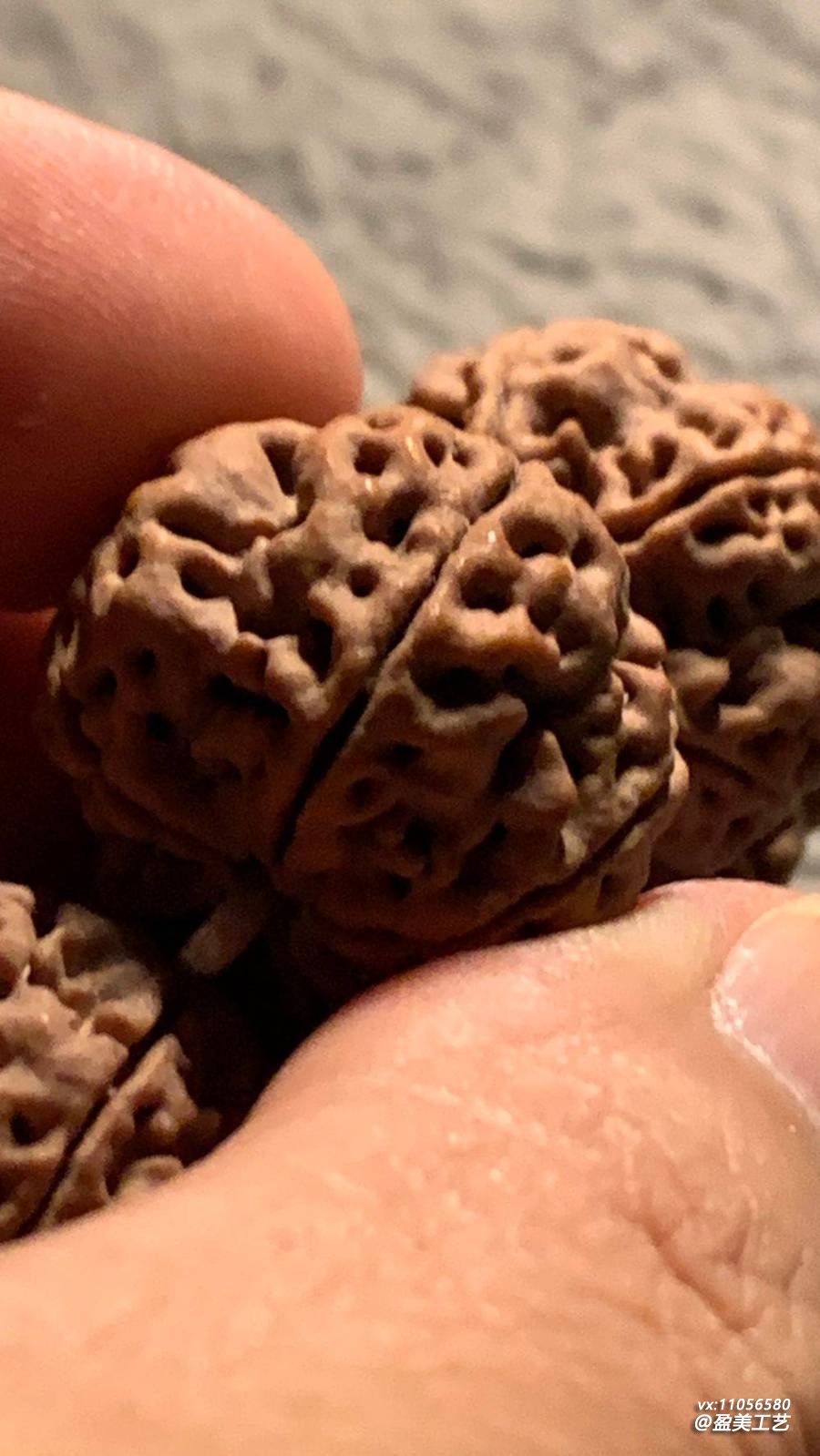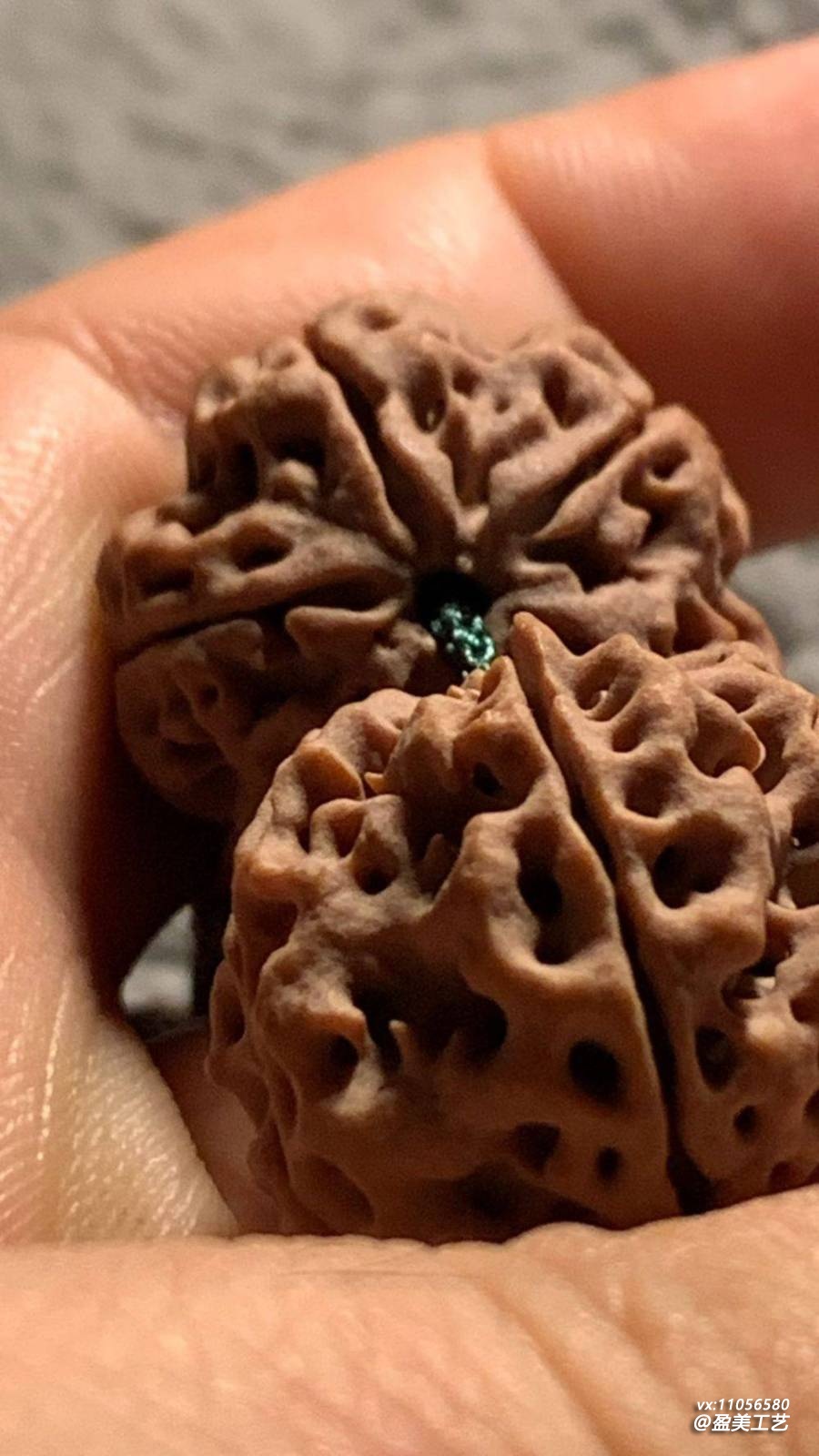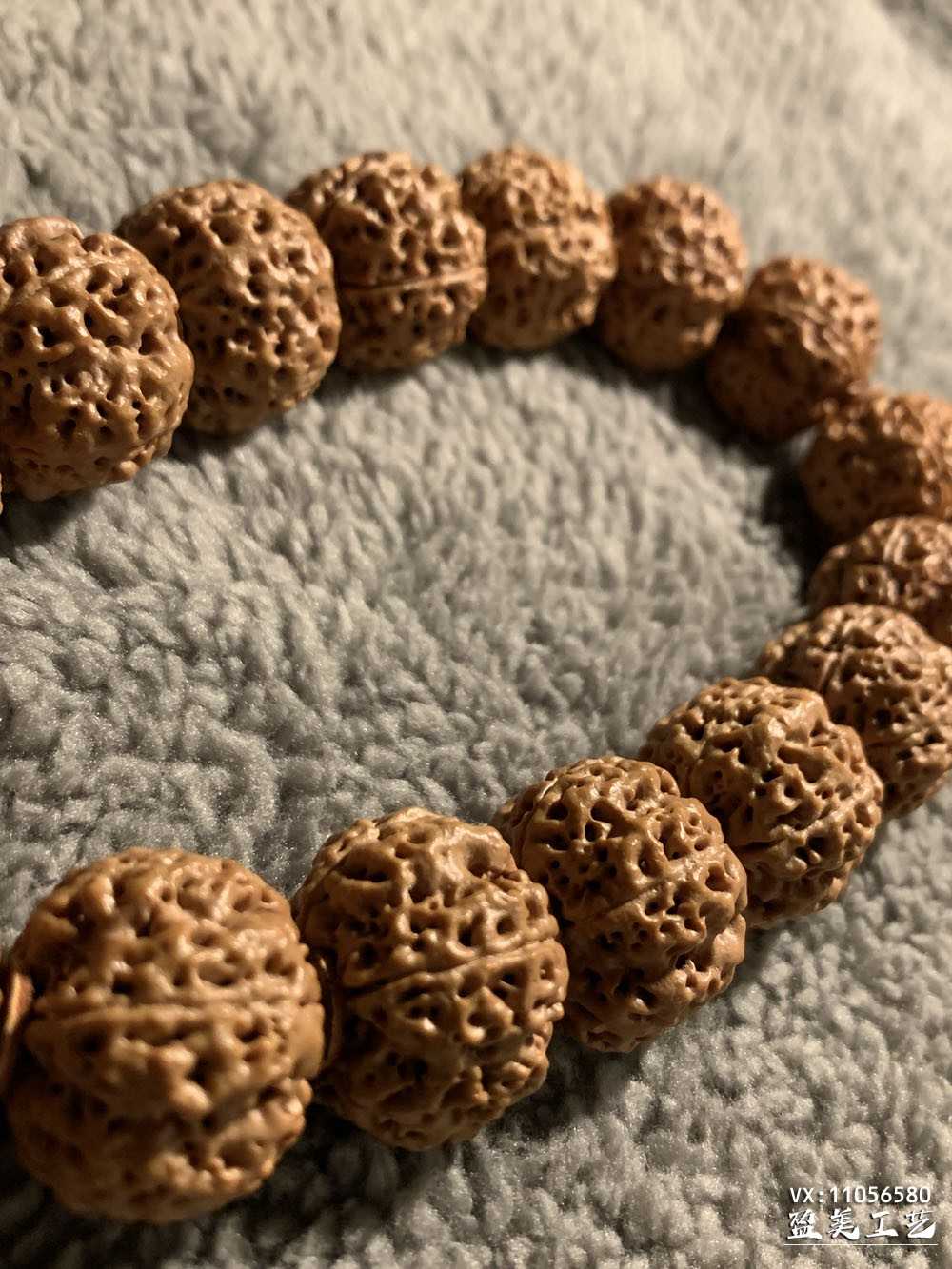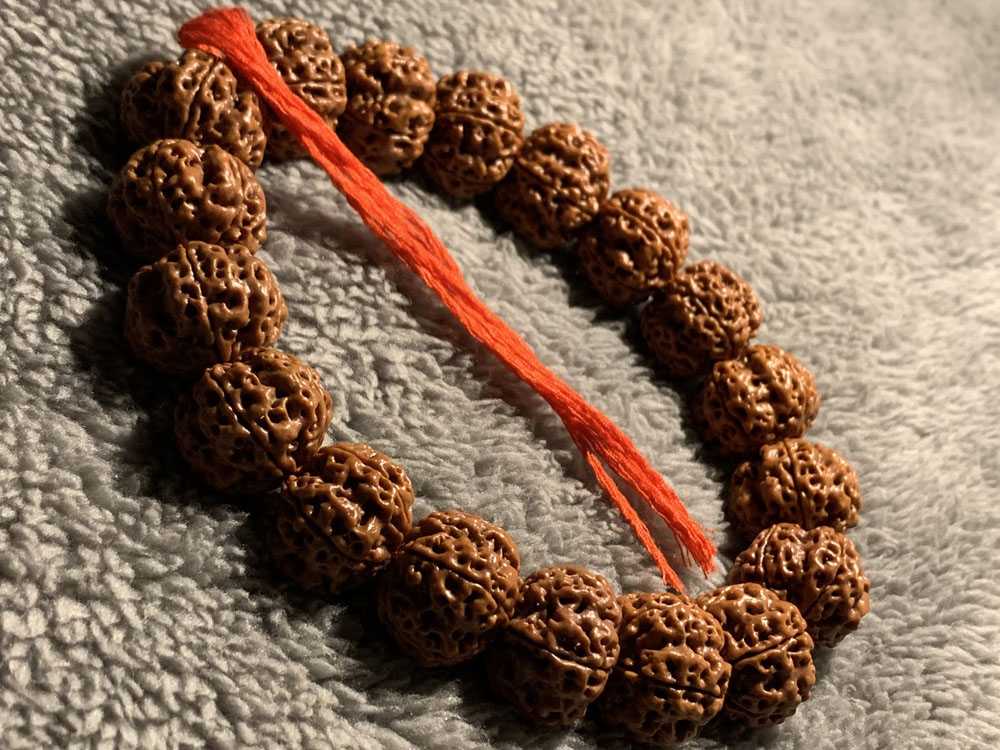
The Rudraksha (large) you just bought has alkaline bloom, don't panic—handle it like this. When you get a new mala (prayer beads), you excitedly prepare to break it in, only to find a layer of grayish-white on the seeds, thinking you bought a fake. In fact, this is alkaline bloom, a normal phenomenon for new seeds, and it's not difficult to handle.
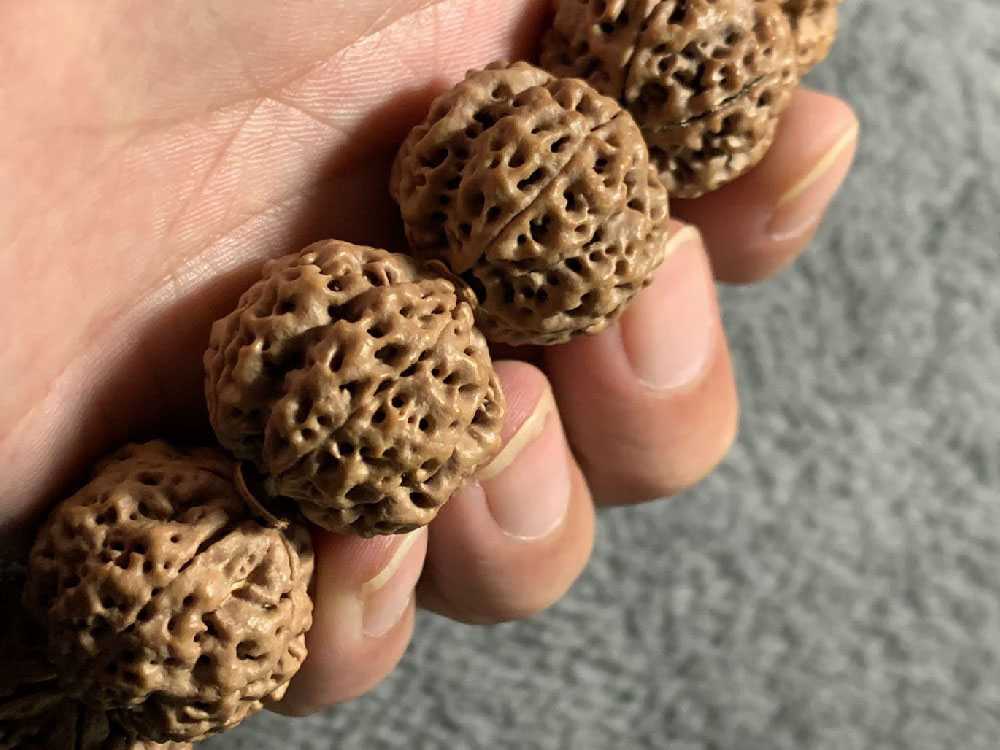
What is alkaline bloom
Alkaline bloom is a layer of substance precipitated on the surface of the seeds during the drying process, looking like alkali ash, mainly hidden in the grain and gaps. New seeds are prone to this, it's not a quality problem, and you don't need to ask the seller for a return. Understanding this calms you down halfway, and the rest is how to handle it.
Methods to handle alkaline bloom
To handle alkaline bloom, one word: brush. Use a hard brush to brush the gaps along the grain to bring out the grayish-white, then use a soft brush to sweep the surface. Brush for one or two hours every day, persist for one to two weeks, and the alkaline bloom will fade significantly. Don't wipe with a damp cloth, it will get muddier, and don't rush to apply oil—applying oil during the alkaline bloom period will seal dirt inside.
Notes during alkaline bloom period
Don't rush to break it in with your hands during the alkaline bloom period, first clean the base. Alkaline bloom is prone to recurring in a dry environment, after cleaning, put it in a sealed bag for two days to let the seeds stabilize. Alkaline bloom is part of the base preparation, once cleaned, the subsequent breaking-in process will go smoothly.
After the alkaline bloom is cleaned, the base of the mala (prayer beads) will be clear, and the subsequent breaking-in will be smooth. Alkaline bloom on new seeds is a common thing, if you know how to handle it, you won't panic.