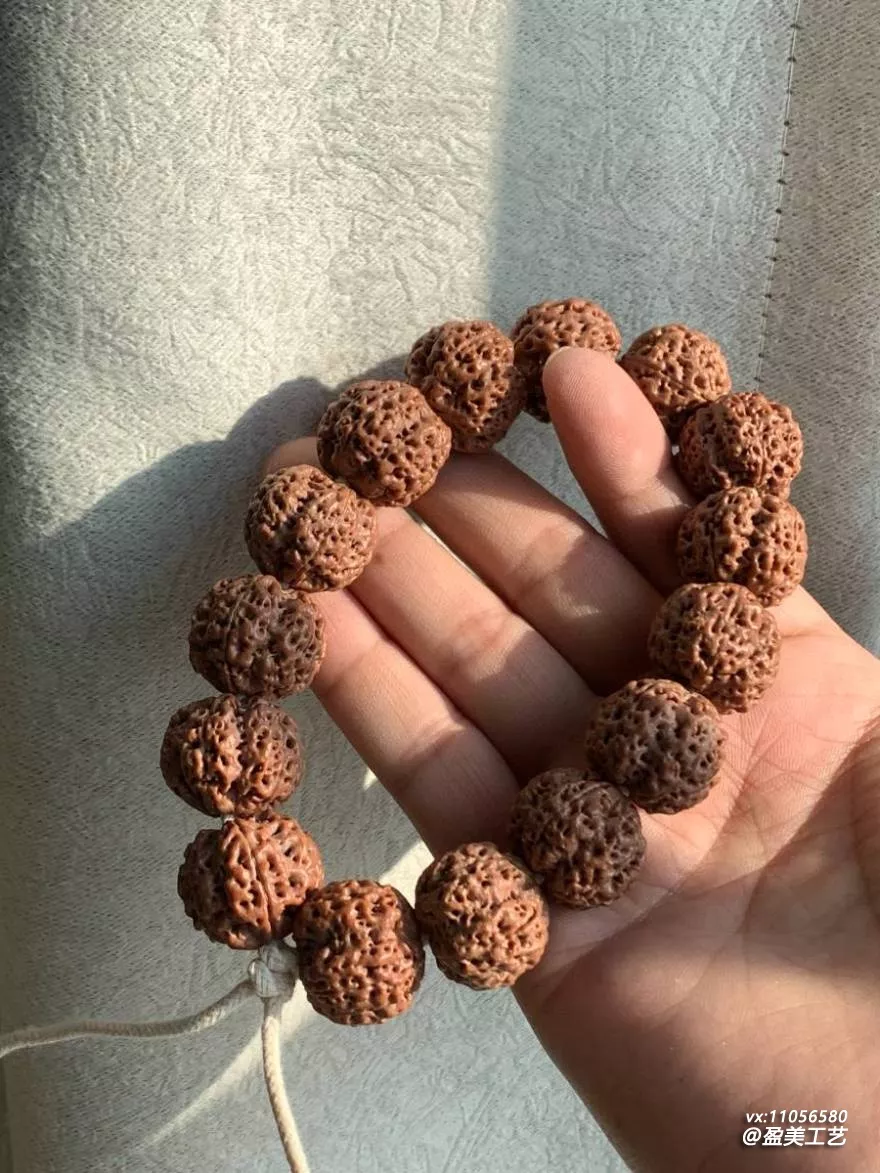
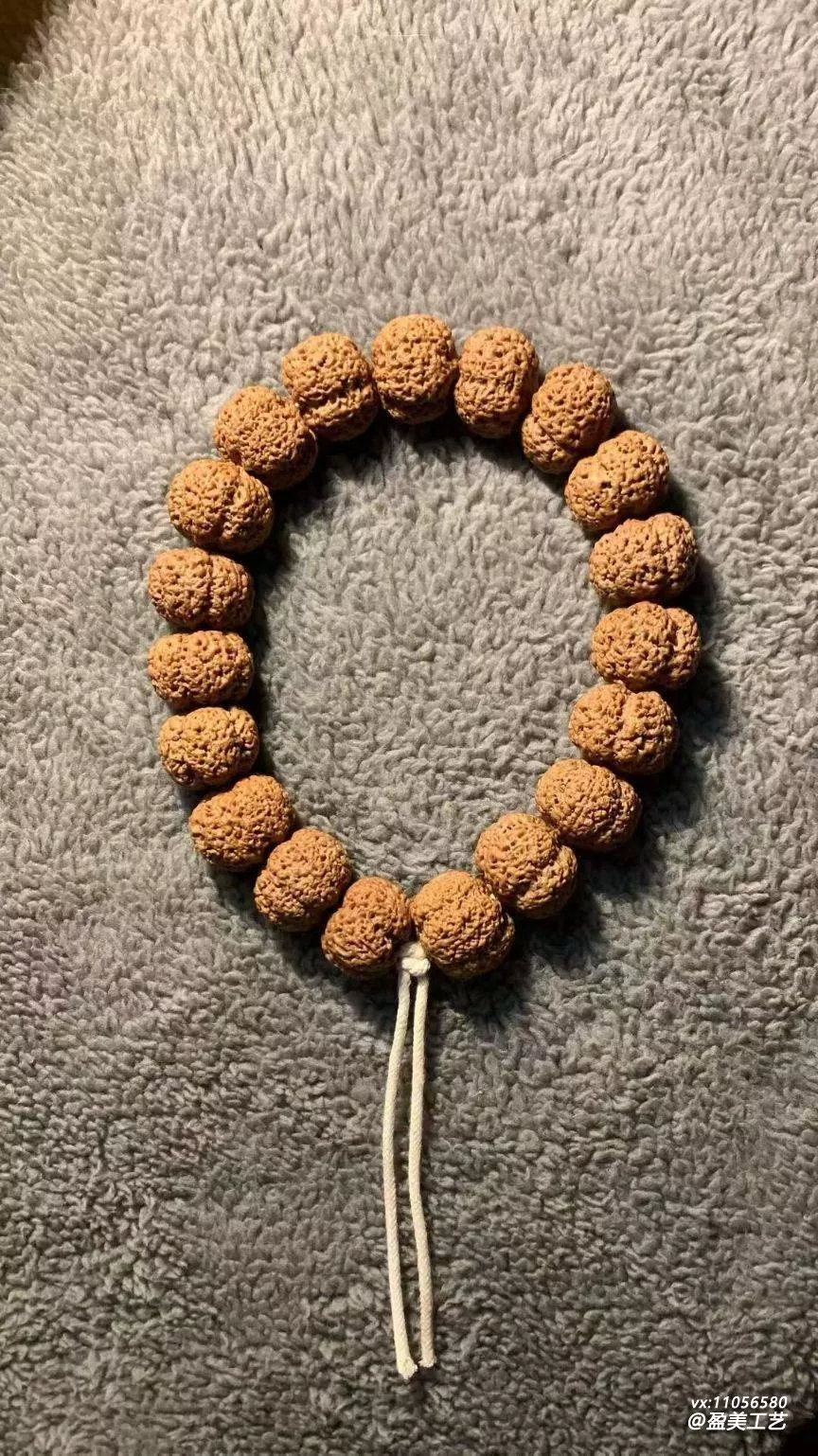
Friends often come to me for custom Rudraksha malas, and the first question is always "How much for one mala?" Every time, I have to explain that Rudraksha mala prices vary greatly—from tens to thousands—so price alone can't determine the value. Moreover, a high price doesn't guarantee good quality, and a low price doesn't mean it's bad; the key lies in the details. Today, let's talk about the five most important details to focus on when customizing a Rudraksha mala—they matter far more than price.
1. Density Is the Foundation
Density is the most fundamental aspect of Rudraksha. Seeds with insufficient density won't yield good results even after breaking-in. How to check density? The simplest way is to weigh them in your hand—for seeds of the same size, the heavier they feel, the higher the density. Light, airy seeds definitely lack density; they'll turn out dull and lack a satisfying heft.
Another method is checking the sink rate. High-density seeds sink straight to the bottom when placed in water, while low-density ones float on the surface. However, this method has a drawback: seeds must be dried promptly after getting wet, or they may crack. When I custom-make malas, I usually run the seeds through water first, discard the floaters, and keep the sinkers for use.
Seeds with high density generally have good skin quality too, producing a thick patina and even color during breaking-in. Low-density seeds, no matter how attractive the grain, will end up dull and lack a jade-like feel. So when customizing, density is the first thing to check—don't order just because the grain looks nice.
2. Skin Quality Determines Color Development
Skin quality is the second key point. Rudraksha skins come in yellow, red, and purplish-red types, each with different color development speeds and final hues.
Yellow skin develops color slowly, with little visible change early on, but later it turns into a translucent, beautiful red that's hard to darken. Red skin develops quickly, turning red fast in the early stages, but it tends to deepen later and can turn black if not cared for properly. Purplish-red skin develops the fastest but is also the easiest to darken, so it's not recommended for beginners.
Beyond skin color, check whether the skin is clean—look for dark patches, mottled areas, or traces of chemical soaking. Dark patches are dull, gray spots on the seed surface that will never even out, staying permanently blotchy. Chemically soaked seeds look overly clean with a whitish tint and a pungent smell; their skin has been damaged and won't develop well.
When I custom-make malas, I use yellow skin seeds more often—they develop slower but are stable, resist darkening, and yield great final results. If a client is eager to see changes, I'll recommend red skin but clearly explain what to watch out for later.
3. Grain Must Be Consistent
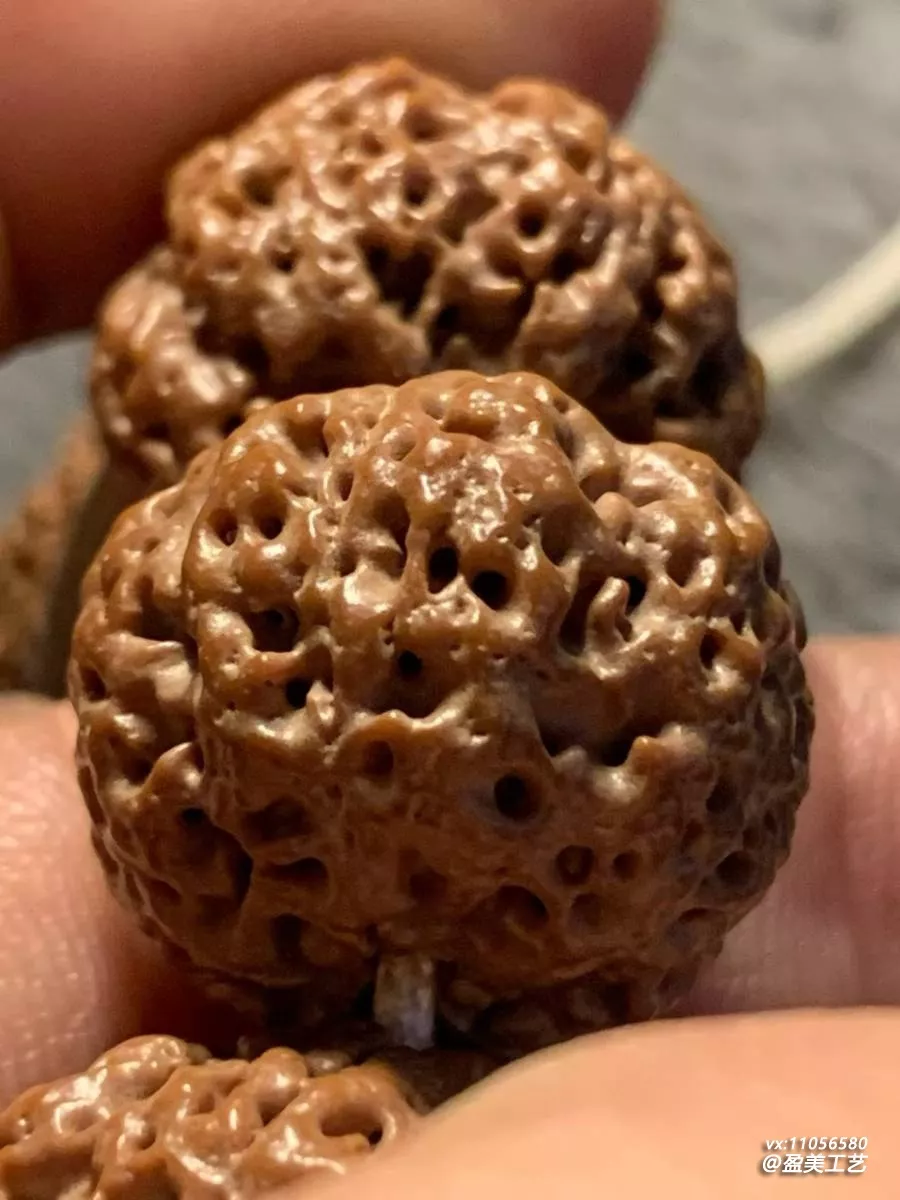
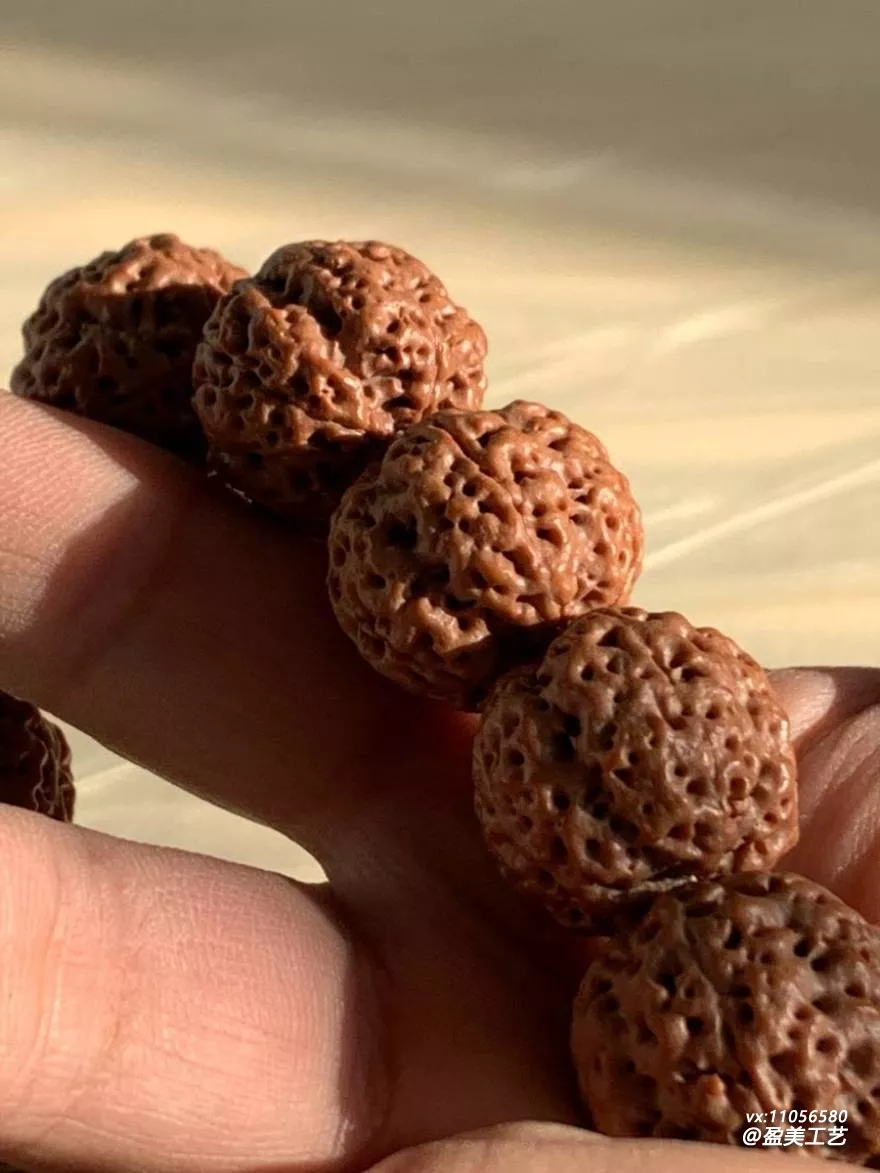
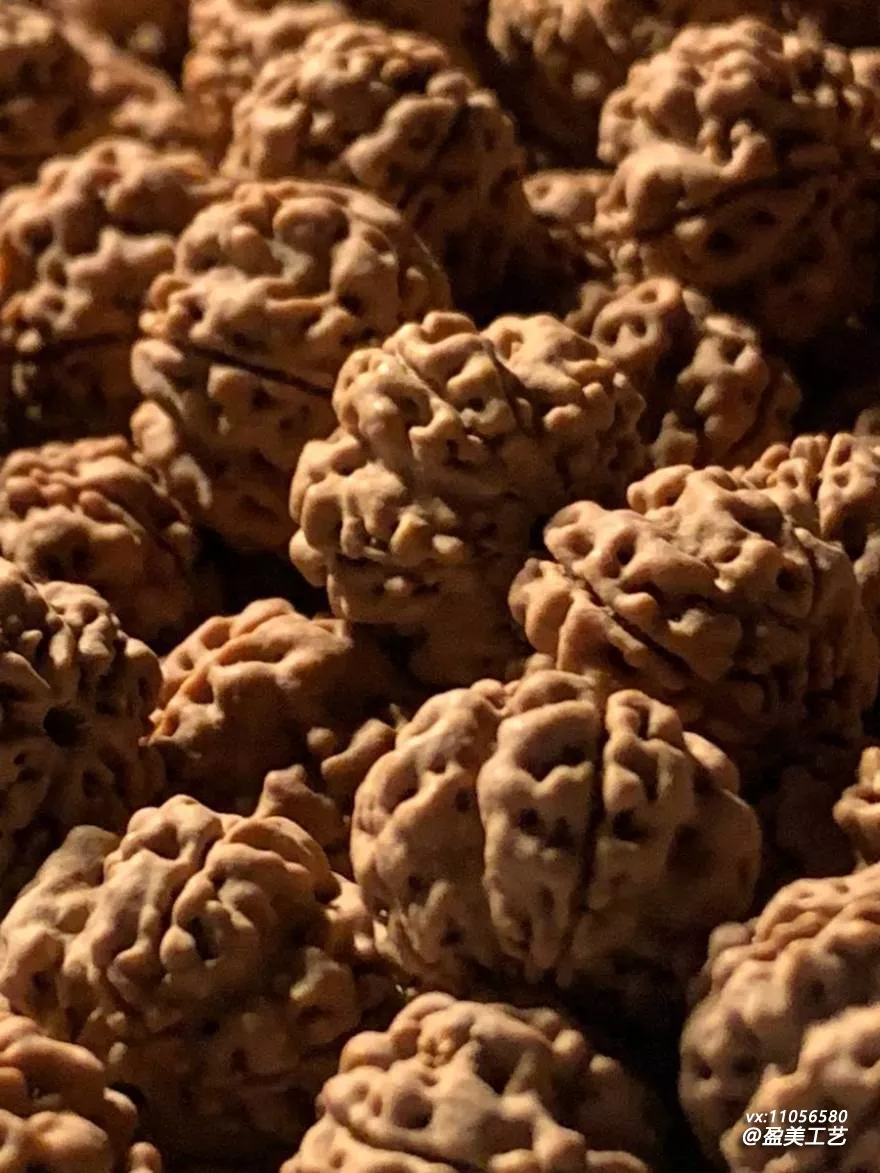
Grain is what many people care about most, but it's also the easiest to be misled by. Names like honeycomb, double-dragon, plum blossom, and coiled dragon are just fancy labels for grain shapes. Whether a grain looks good largely depends on personal taste, but one thing is universal: the grain across a mala must be consistent.
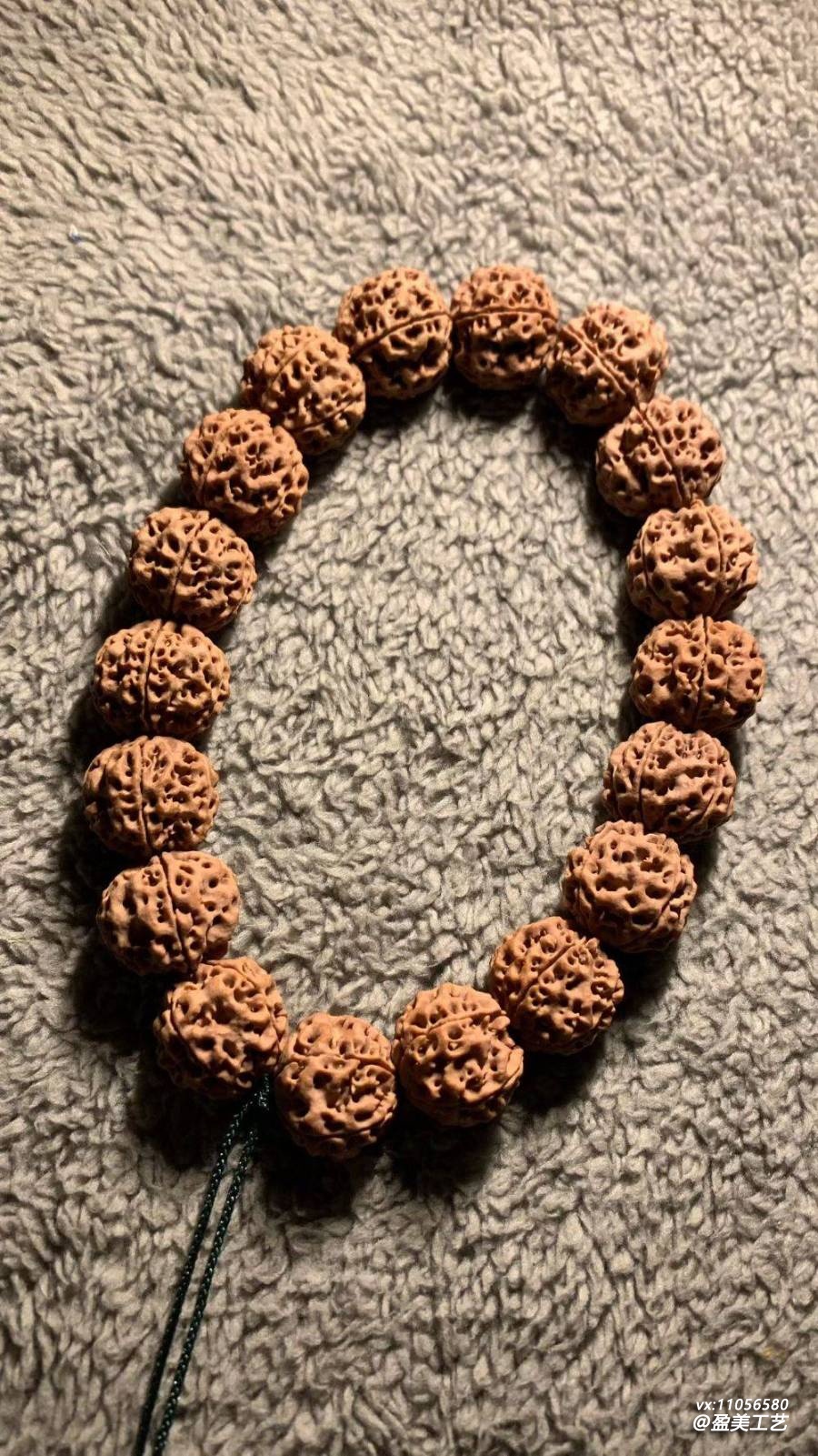
What does consistency mean? Each seed's grain style should be similar—you can't have one honeycomb and another coiled dragon mixed together, looking mismatched. Also, grain depth should be comparable; if some are very deep and others very shallow, color differences will be obvious after breaking-in.
Another point: deep-grain seeds look great but tend to trap dirt, requiring more brushing during the base stage. Shallow-grain seeds are easier to maintain but lack three-dimensionality. Each has pros and cons—it comes down to personal preference. I generally recommend based on the client's needs: deep grain for those who love strong texture, shallow grain for those who want low maintenance.
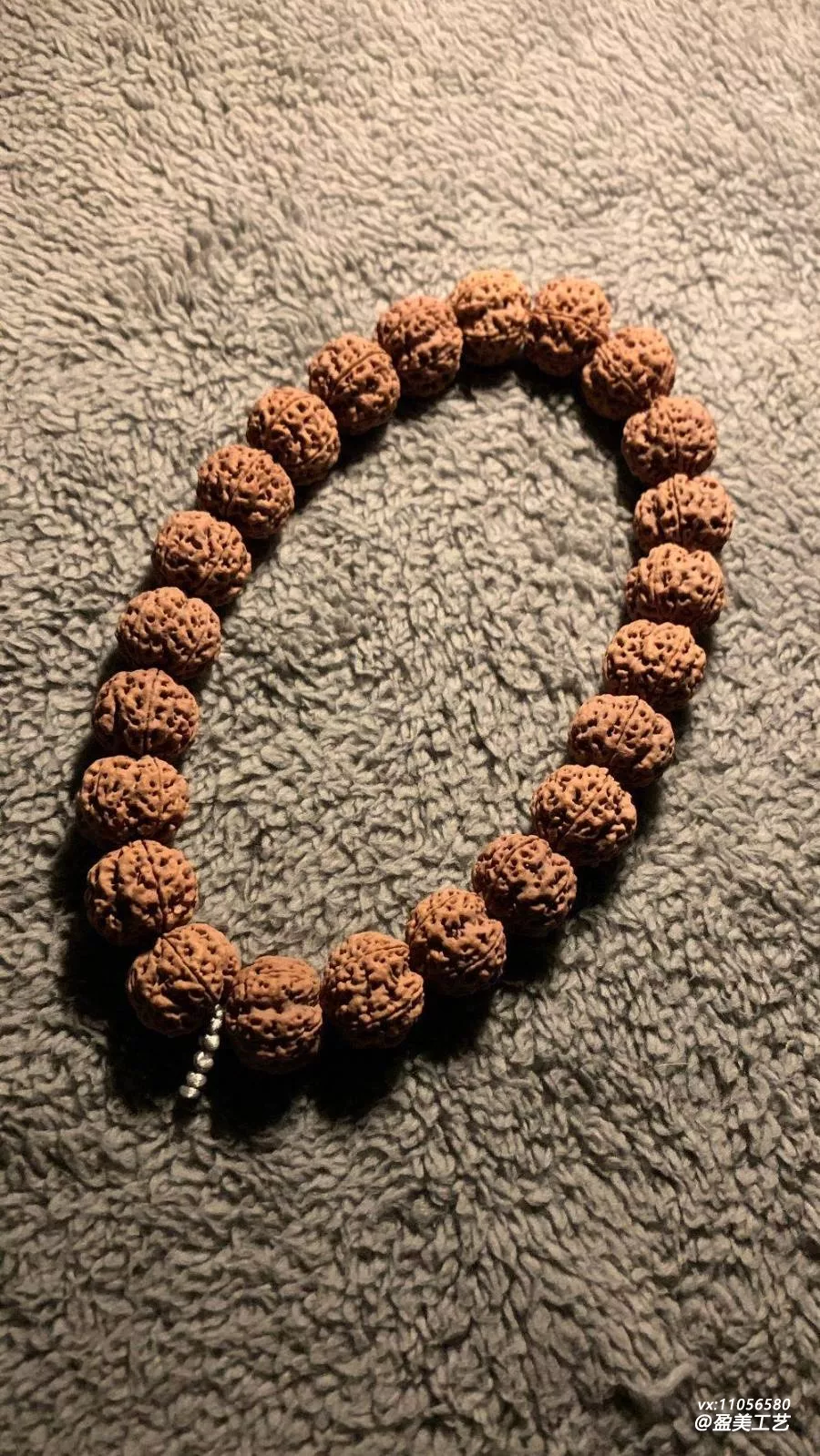
4. Shape Affects Feel
Shape refers to the seed's height. Tall, short, ingot, plum blossom—there are various terms. Shape affects not only appearance but also wearing comfort.
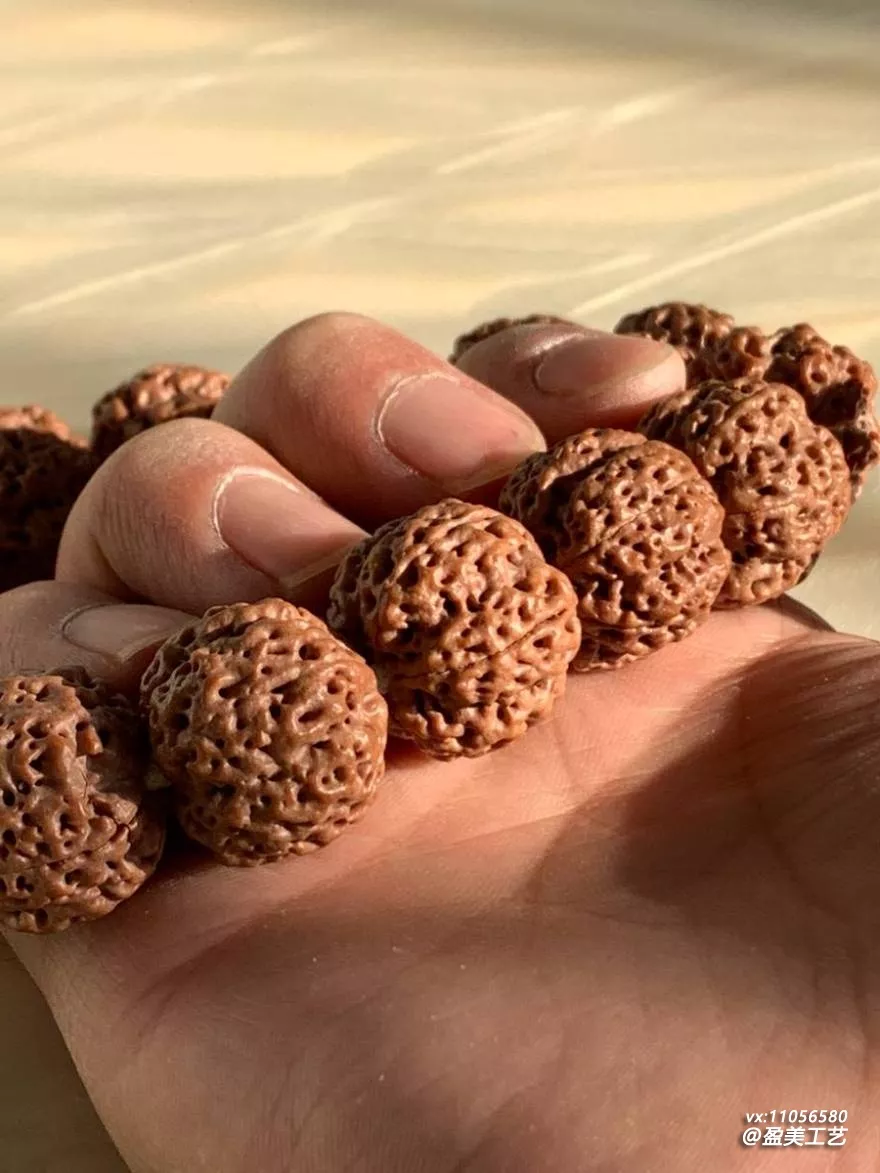
Short seeds sit close to the wrist, don't dig in, feel comfortable, and look rounder, making them more popular. Tall seeds can feel a bit uncomfortable on the wrist and look slimmer, so fewer people prefer them. However, tall seeds generally have deeper grain and stronger texture, and some people specifically favor them.
When customizing, shapes must be uniform—you can't have one tall and one short, resulting in a crooked mala. Also, adjust the bead count based on wrist size: short seeds need more beads, tall seeds fewer, so the mala fits properly.
I usually recommend short seeds—most people find them both attractive and comfortable. But if a client has a thicker wrist or prefers a unique style, I'll recommend tall seeds and clearly explain the feel difference upfront.
5. Craftsmanship Cannot Be Overlooked
The last point is craftsmanship, which many overlook but is actually crucial. It covers drilling, stringing, and finishing details.
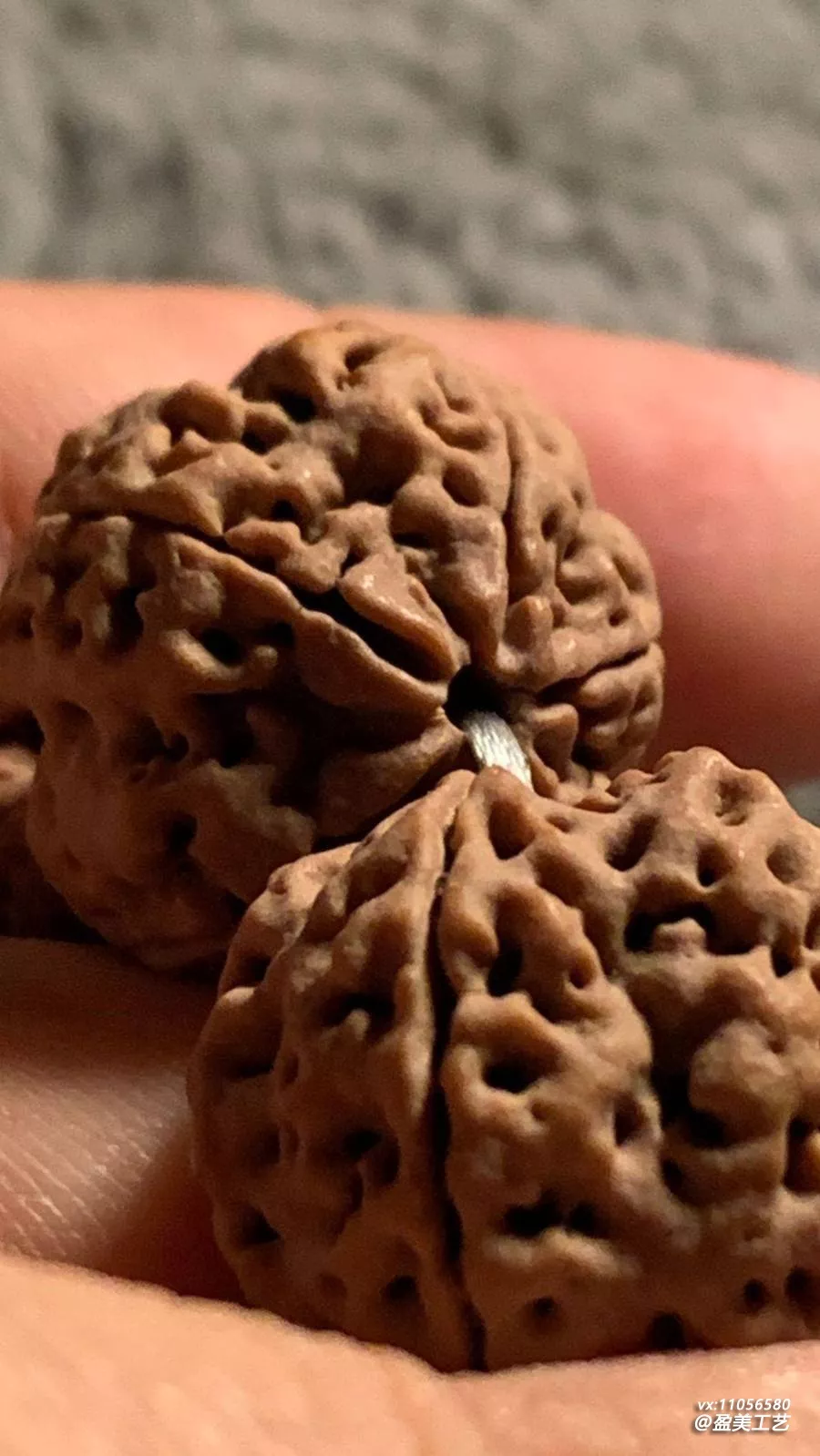
Drilling must be straight, not crooked. Seeds with crooked holes string up twisted, and each seed looks off when rotated—very unsightly. The hole should also be smooth with no burrs, or the cord may fray and break. Drilling speed shouldn't be too fast, or the seed may crack.
When stringing, each seed's orientation must be consistent, with the front facing outward and the dragon-ridge direction aligned, so the mala looks neat when rotated. Tightness should be just right—not too loose, or seeds will spin randomly, and not too tight, or it won't fit on the wrist.
The finishing knot must be pulled tight and tucked into the hole, not left exposed. Elastic cord needs two dead knots; jade cord should be tied in snake knots or Rudraksha knots, with the ends melted and sealed. When these details are done right, the mala is durable and won't easily come apart.
A Few Thoughts
After all this, when customizing a Rudraksha mala, price really isn't the most important factor. Density, skin quality, grain, shape, and craftsmanship—if these five details are done well, the mala's quality will be solid. A high price with poor details is a rip-off; a reasonable price with meticulous details is true value.
If any friend wants to customize, don't ask about price right away. First share your needs—wrist size, preferred grain, rough budget—and I'll recommend suitable seeds based on your requirements, handling every detail properly. In the world of prayer beads, you get what you pay for, but only if the money goes toward quality, not just a fancy name.