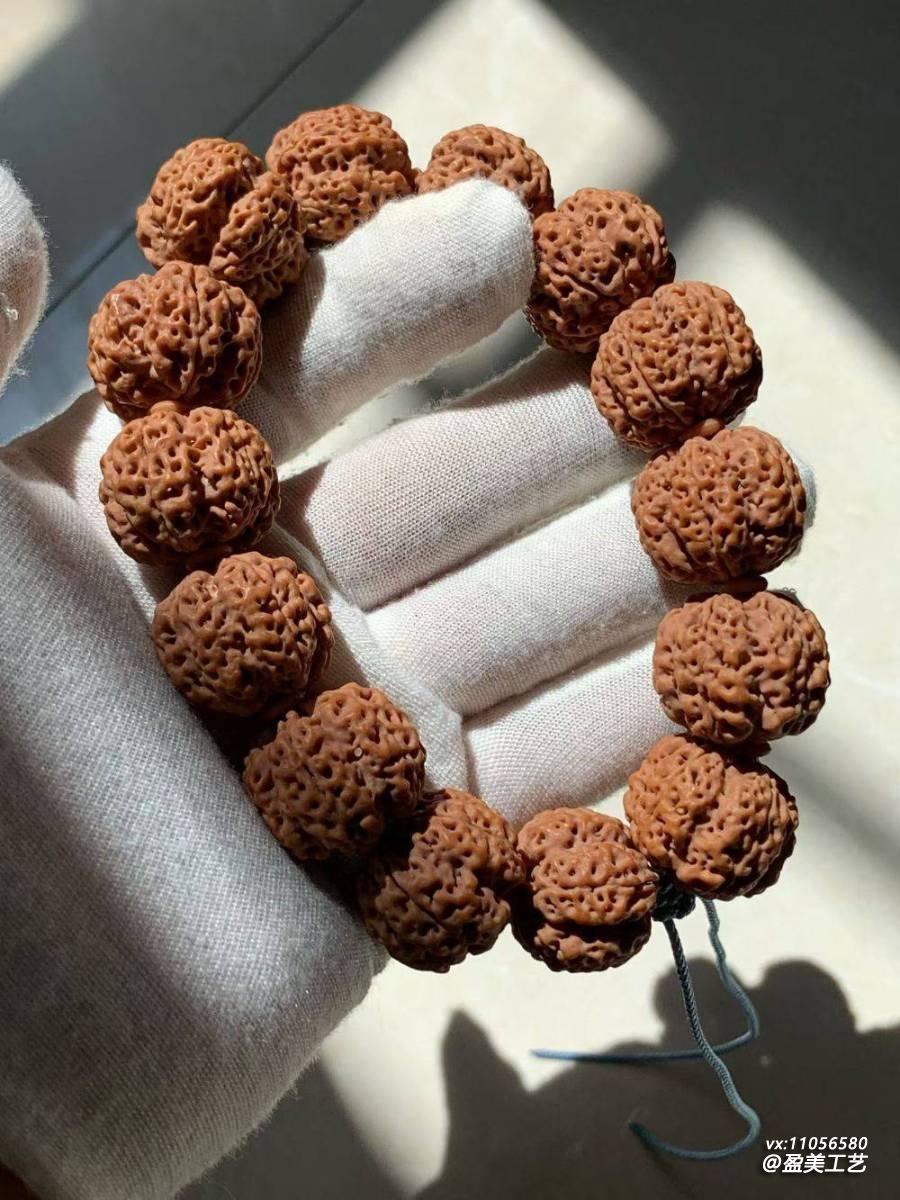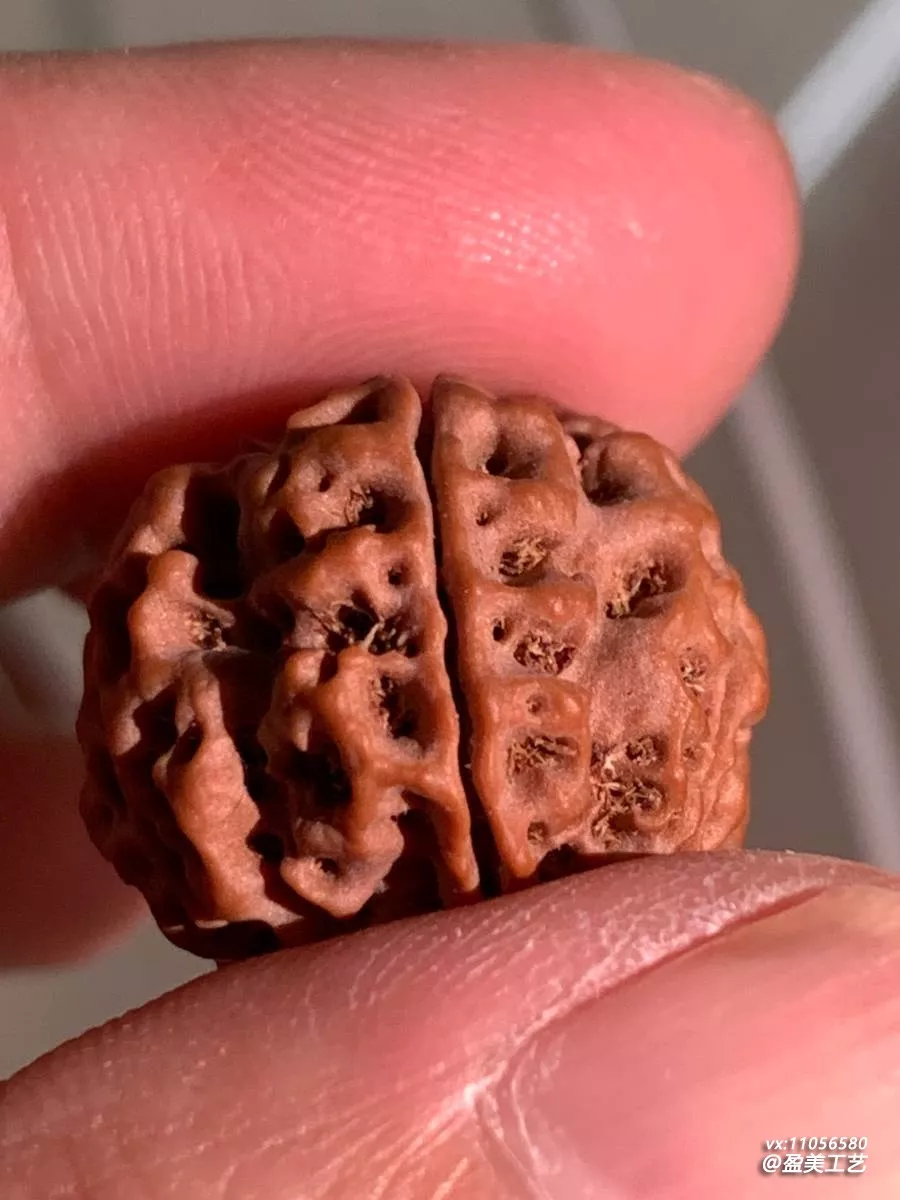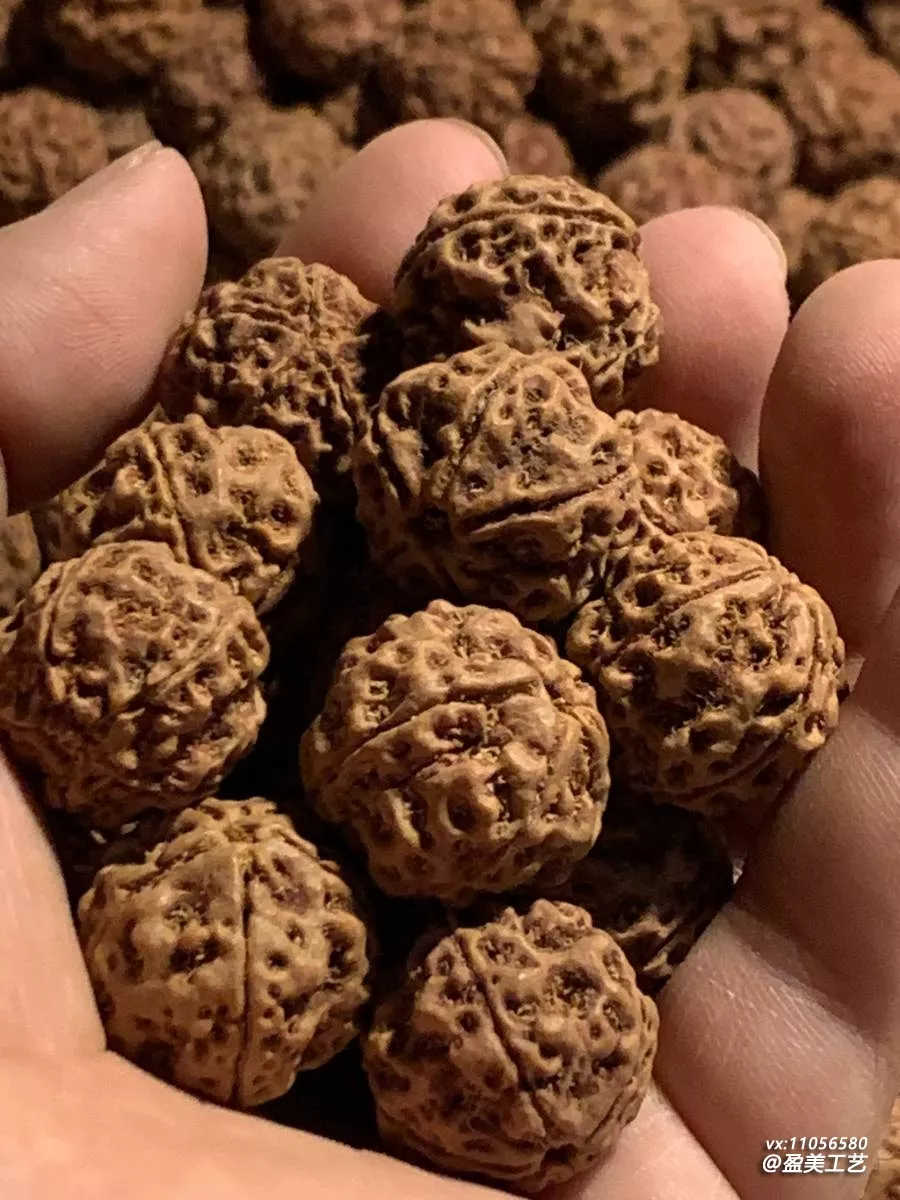
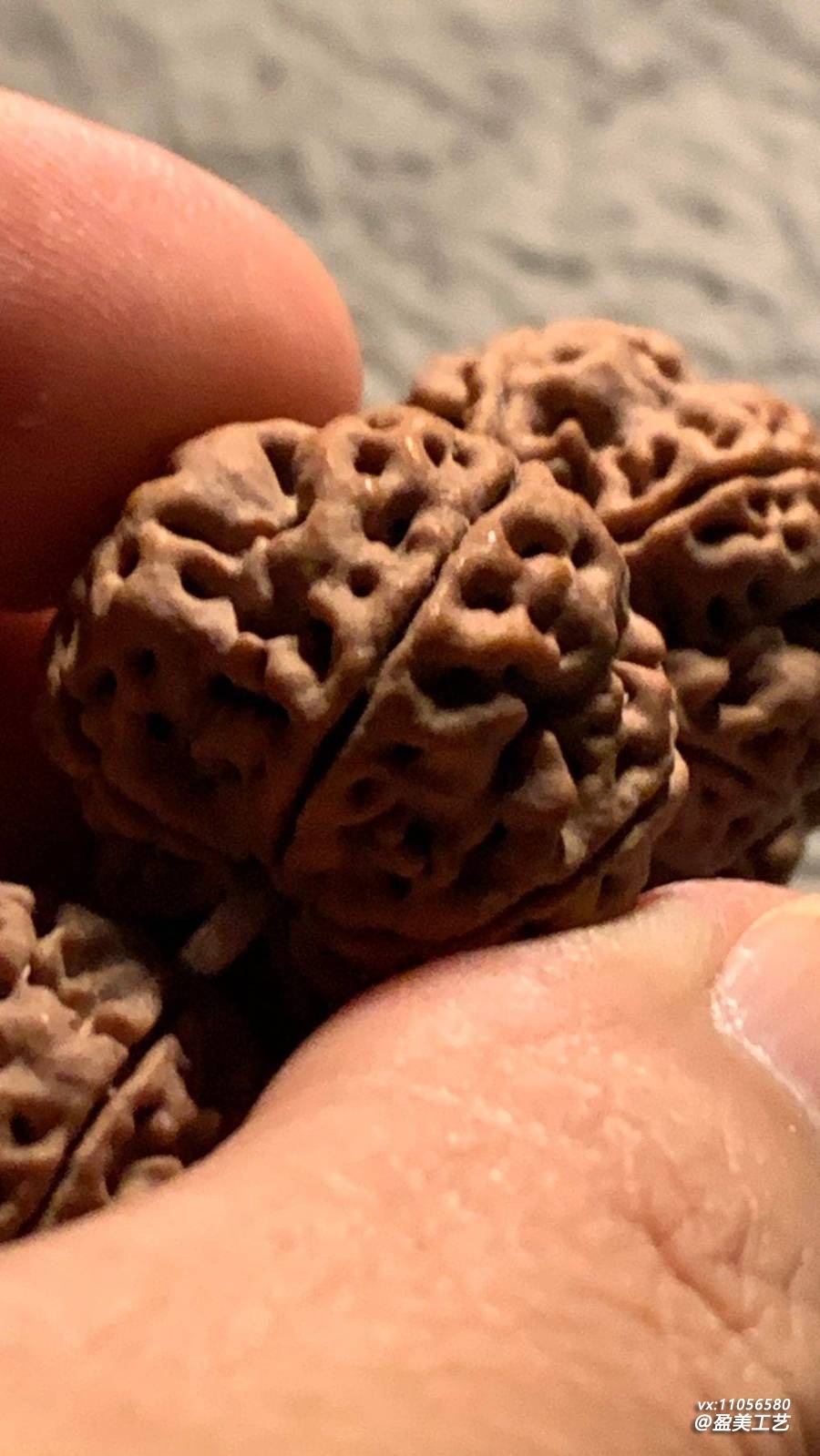
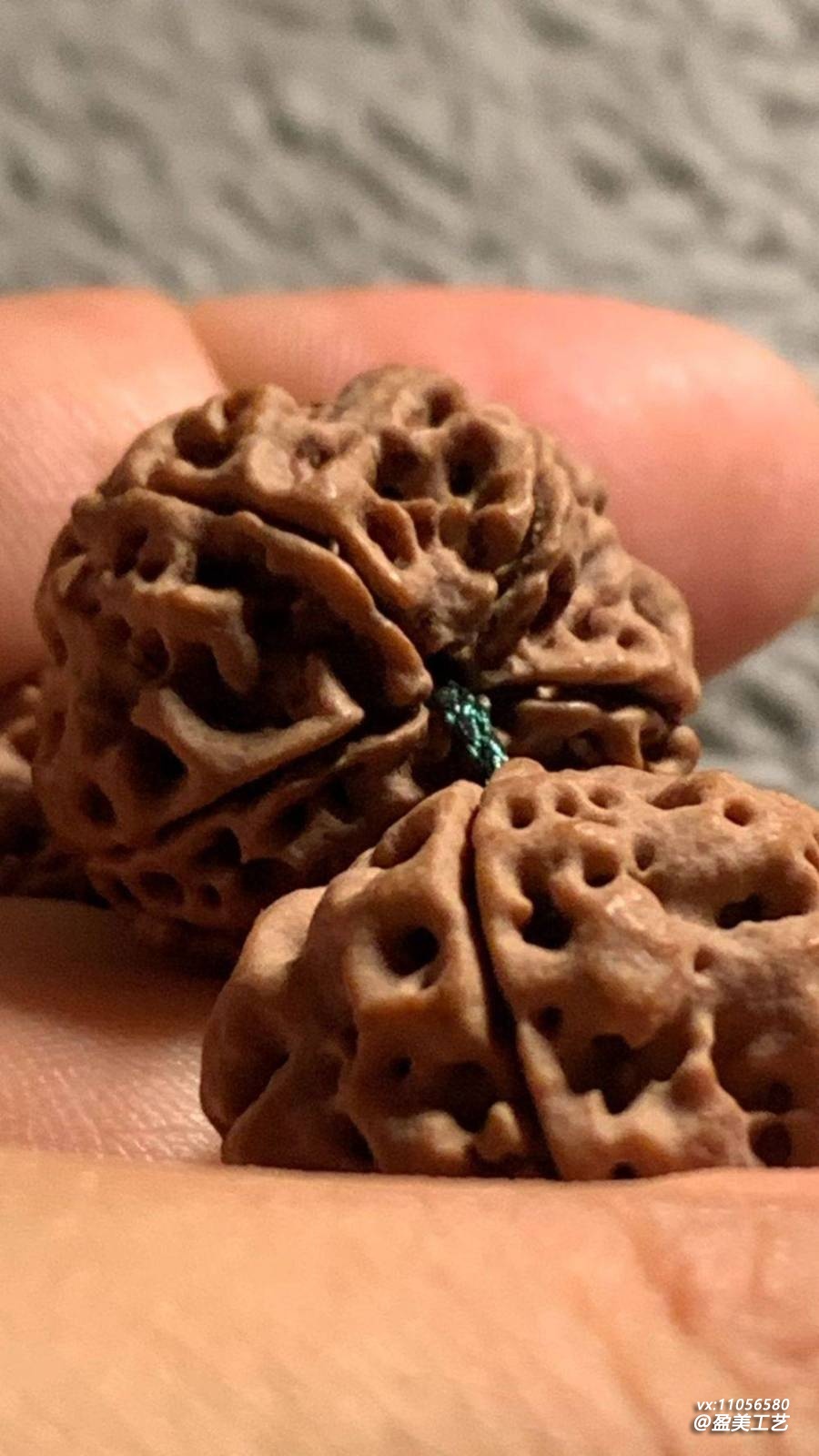
This Rudraksha (large) mala was strung from a batch of seeds I picked out a while back. The first thing you notice when you hold it is the weight. Nepal material, dense enough, heavy in the hand—not one of those light, floaty seeds. The grain is honeycomb plus double dragon-ridge, the shape leans short, and the whole strand is fairly uniform. I shot a few sets of detail photos today to share with everyone.
1. Grain Details
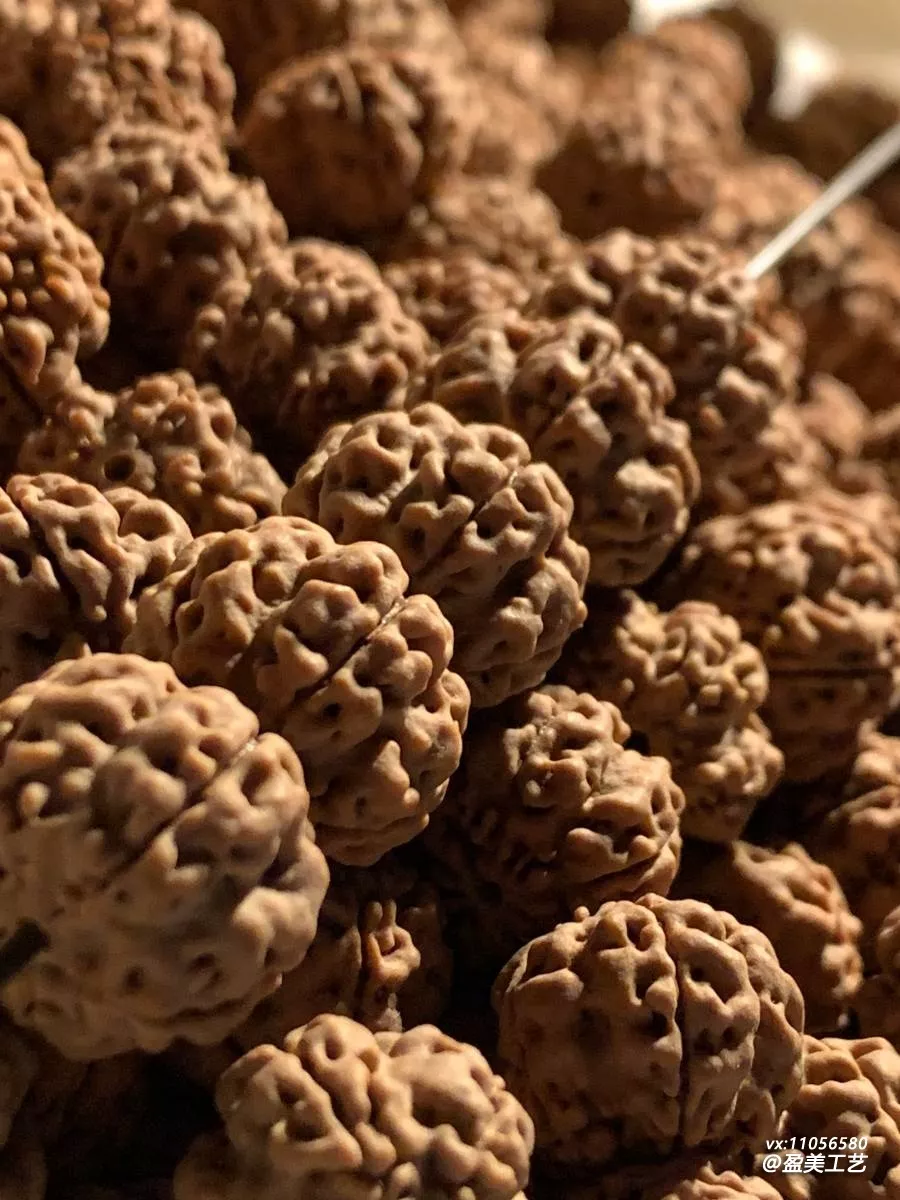
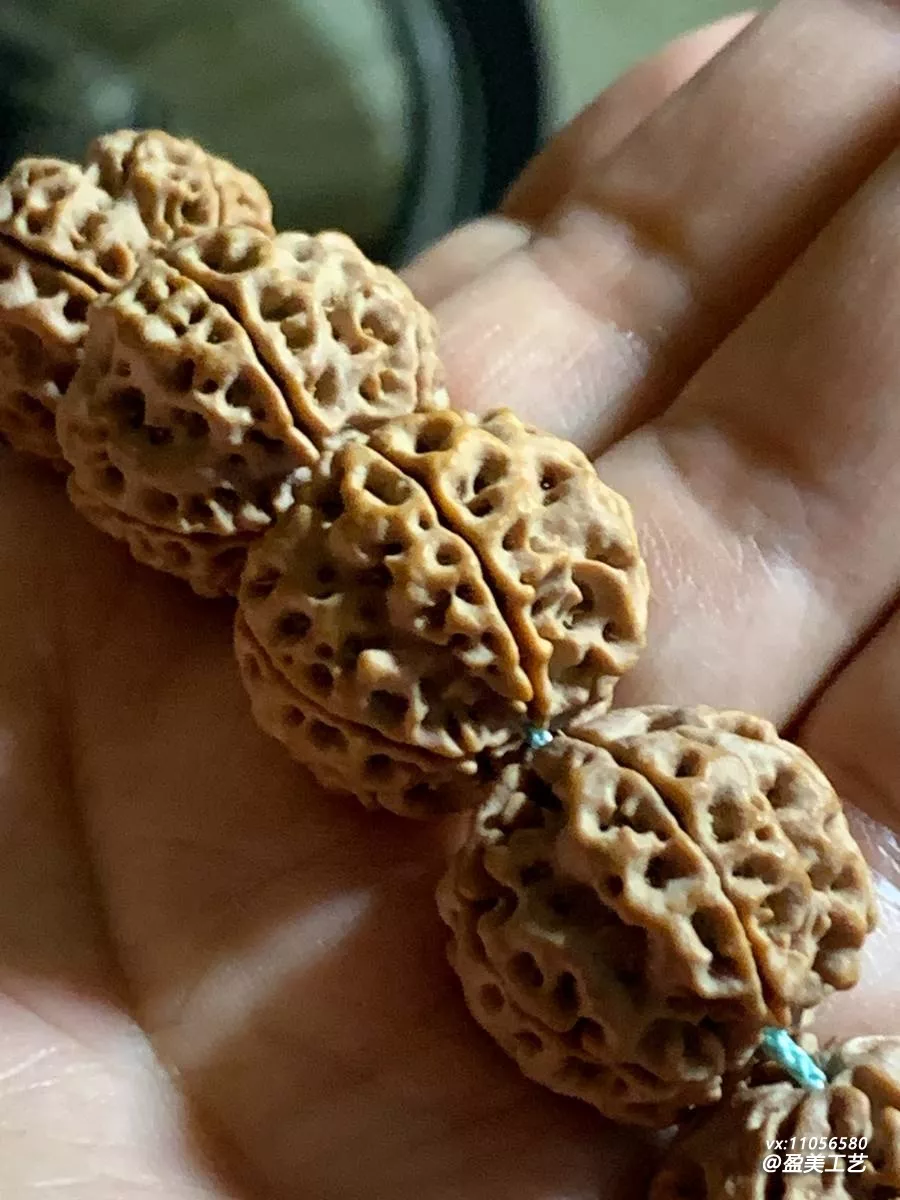
First, the honeycomb. The honeycomb grain on this strand is fairly deep, with evenly distributed pits on the surface—not the kind that grows scattered here and there. Run a fingernail across it and you can clearly feel the resistance of the pits, which means the grain has depth, not just a shallow layer, and it won't be brushed flat easily during breaking-in (patina process) later on.
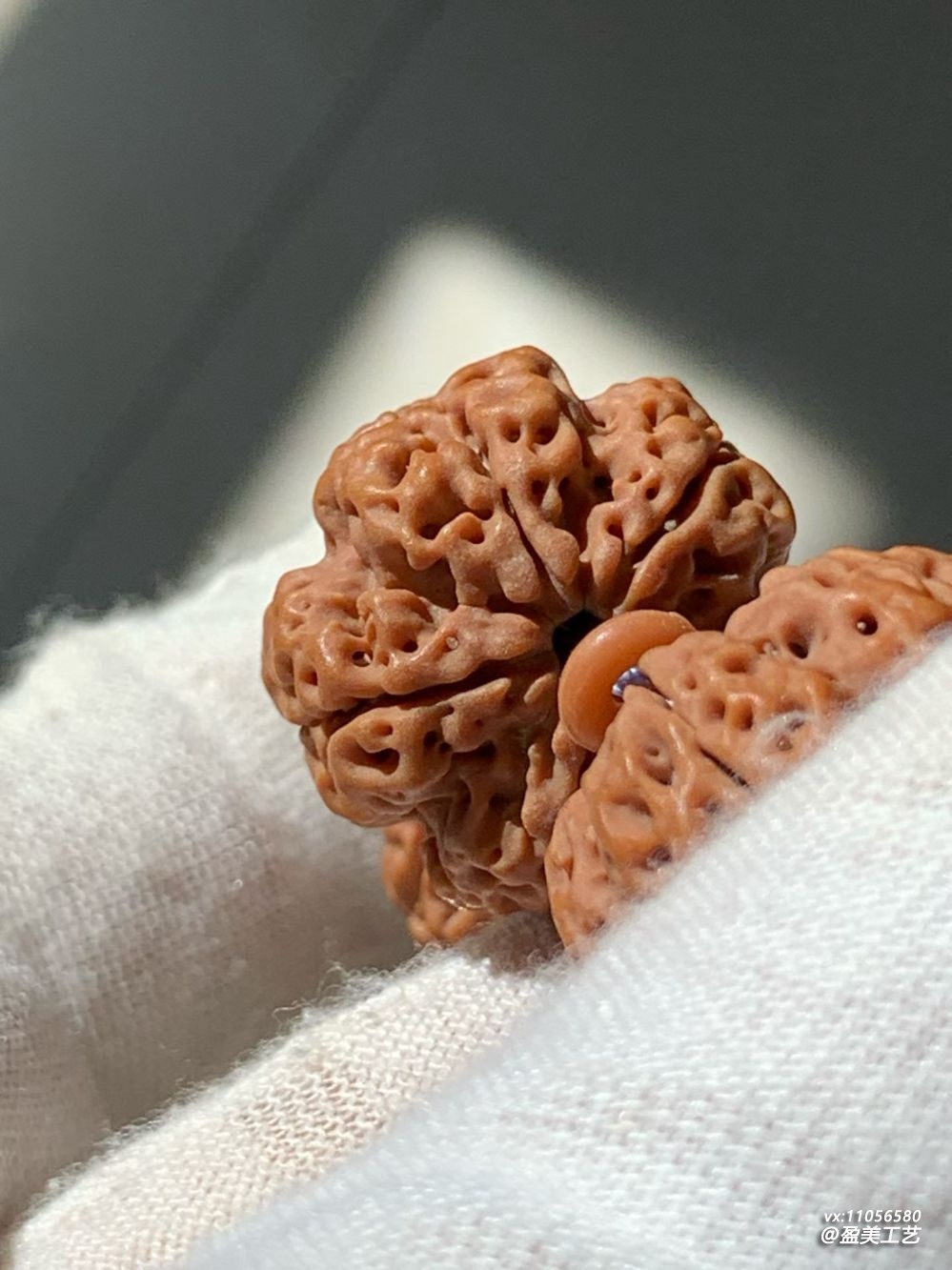
The double dragon-ridge is decent too. On each seed, two dragon-ridges run from top to bottom without any breaks. The raised height is about the same, so when you turn the strand and look at it, the dragon-ridge lines are continuous—you won't get one seed high and another low.
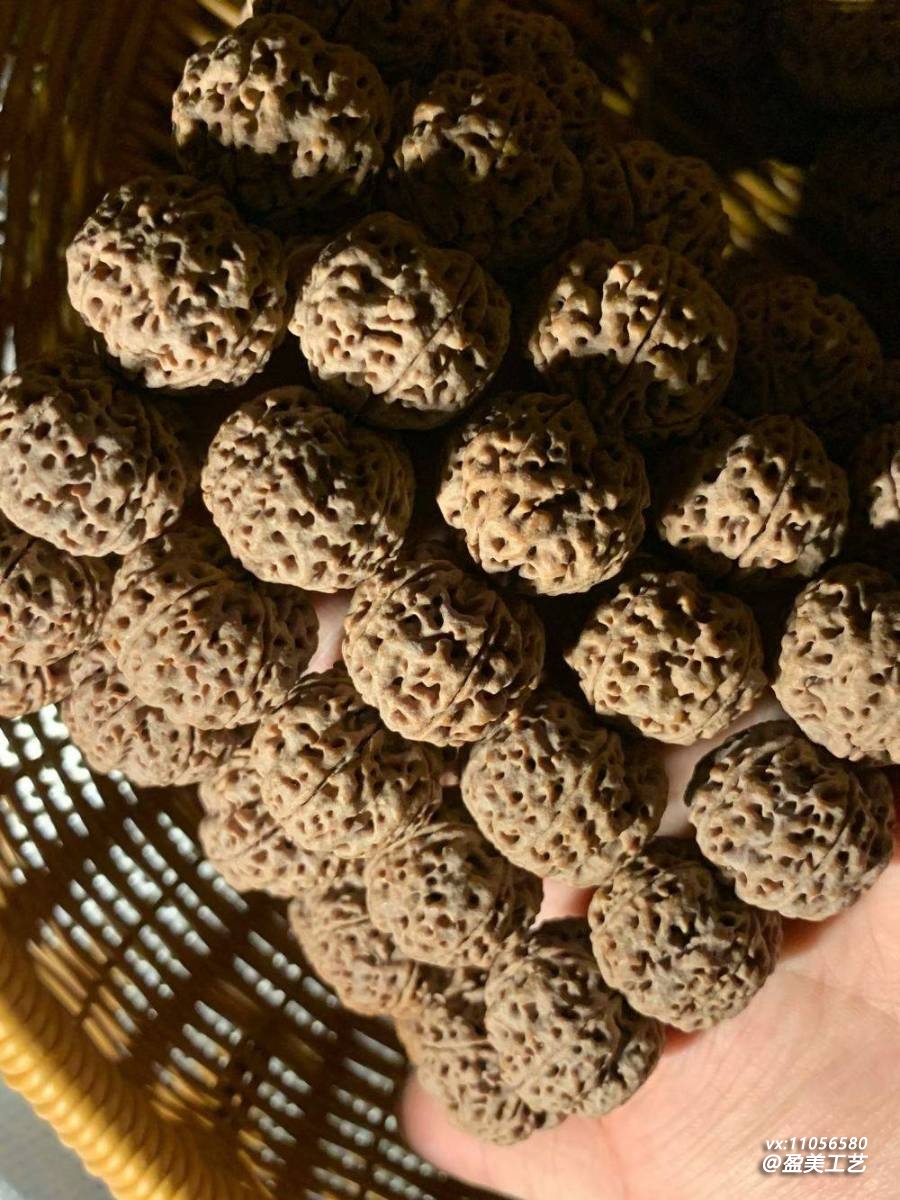
2. Shape and Fleshiness
The shape is short. From the side it's not the tall, slim kind but rather flat and stocky. This shape sits close to the hand once strung into a mala (prayer beads), doesn't dig into the wrist, and the short-shape Rudraksha (large) looks rounder overall with a better feel.
Fleshiness is what I'm fairly satisfied with on this strand. Between the lobe lines of each seed, the flesh is full—no skinny, woody seeds. Between the honeycomb pits, the fleshy bumps pile one on another, not hollow. Seeds with this kind of fleshiness feel good when broken in, and after patina the grain's three-dimensionality is stronger too.
When selecting seeds I went one by one, keeping size within plus or minus 0.1 inch as much as possible, and keeping the height difference small too. Though it can't be completely identical, the strand looks uniform overall—no single seed sticking out awkwardly.
3. Breaking-in Expectations
The skin on these seeds is yellow skin, so the color will change slowly, but in the end it comes out a translucent red, not a dull black-red. In the early stage, be patient with the base work—use a stiff-bristle brush to really get into the deep honeycomb and clean out the alkaline bloom and residue. Once the base is done well, the later breaking-in is much easier.
From my experience, with seeds of this density, the first three months should be mainly brushing, about twenty minutes a day, with less time spent handling. After three months, once the glossy sheen appears, you can handle more and brush less. At that point the color starts to deepen gradually—the dragon-ridge areas brighten first, the grooves a bit slower, and the layering emerges.
After about a year of breaking in, it basically develops patina, with a warm reddish-brown color that looks jade-like when held to the light. Once patina forms in the honeycomb, the grain's three-dimensionality becomes even stronger—the dragon-ridge of the double dragon-ridge is bright, the grooves are slightly darker, and the contrast brings out the character.
About Customization
This strand is a sample I strung for fun. If anyone likes this kind of grain and shape, I can customize the size and bead count to your wrist measurement. The seeds are all selected from the same batch, with similar grain style, so the finished strand has good overall cohesion. For accessories, you can pair them to your liking—spacer beads, Buddha head bead, back cloud bead, and so on are all available.
The advantage of customization is that the size fits your hand, so you don't have to adjust it yourself afterward. Also, when selecting seeds I try to choose ones with similar grain, shape, and skin color, so the finished strand is more uniform than one you put together randomly. With cultural playthings, once the uniformity is up, the overall effect can't be bad.