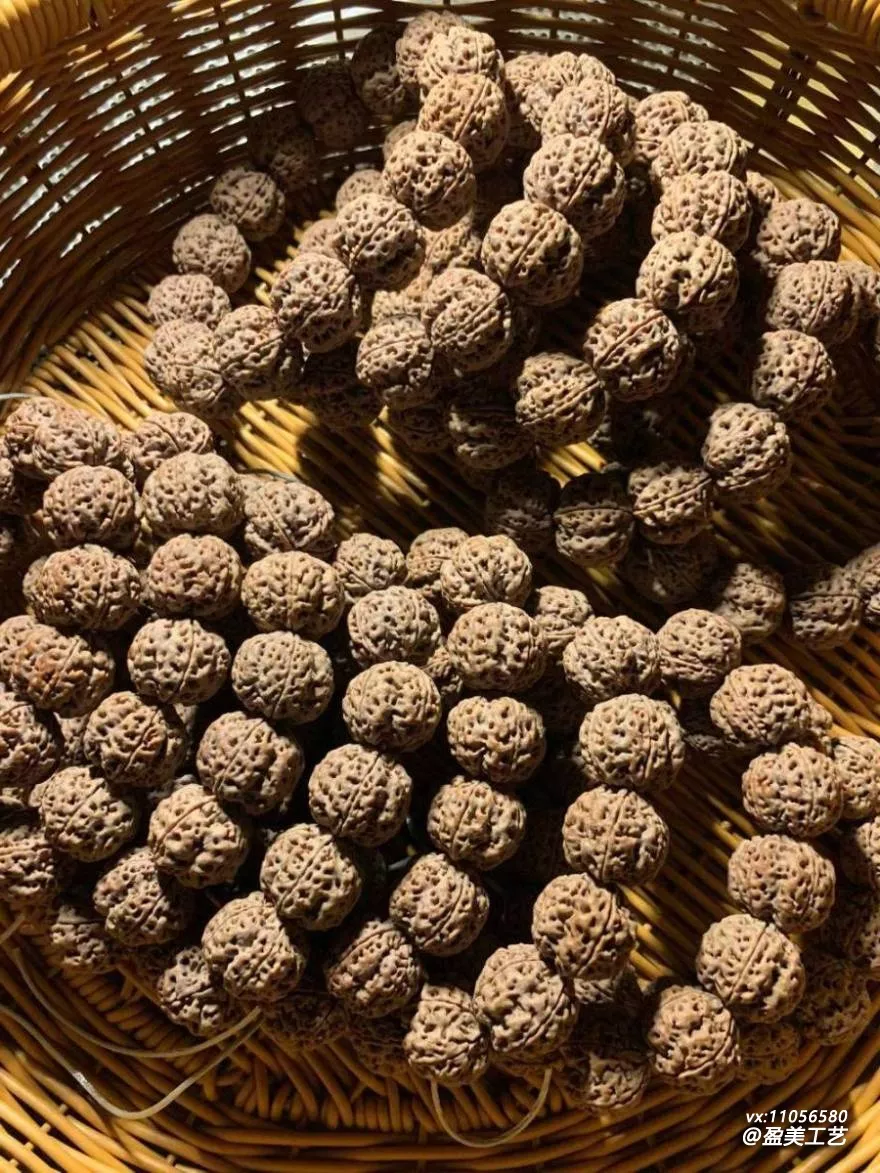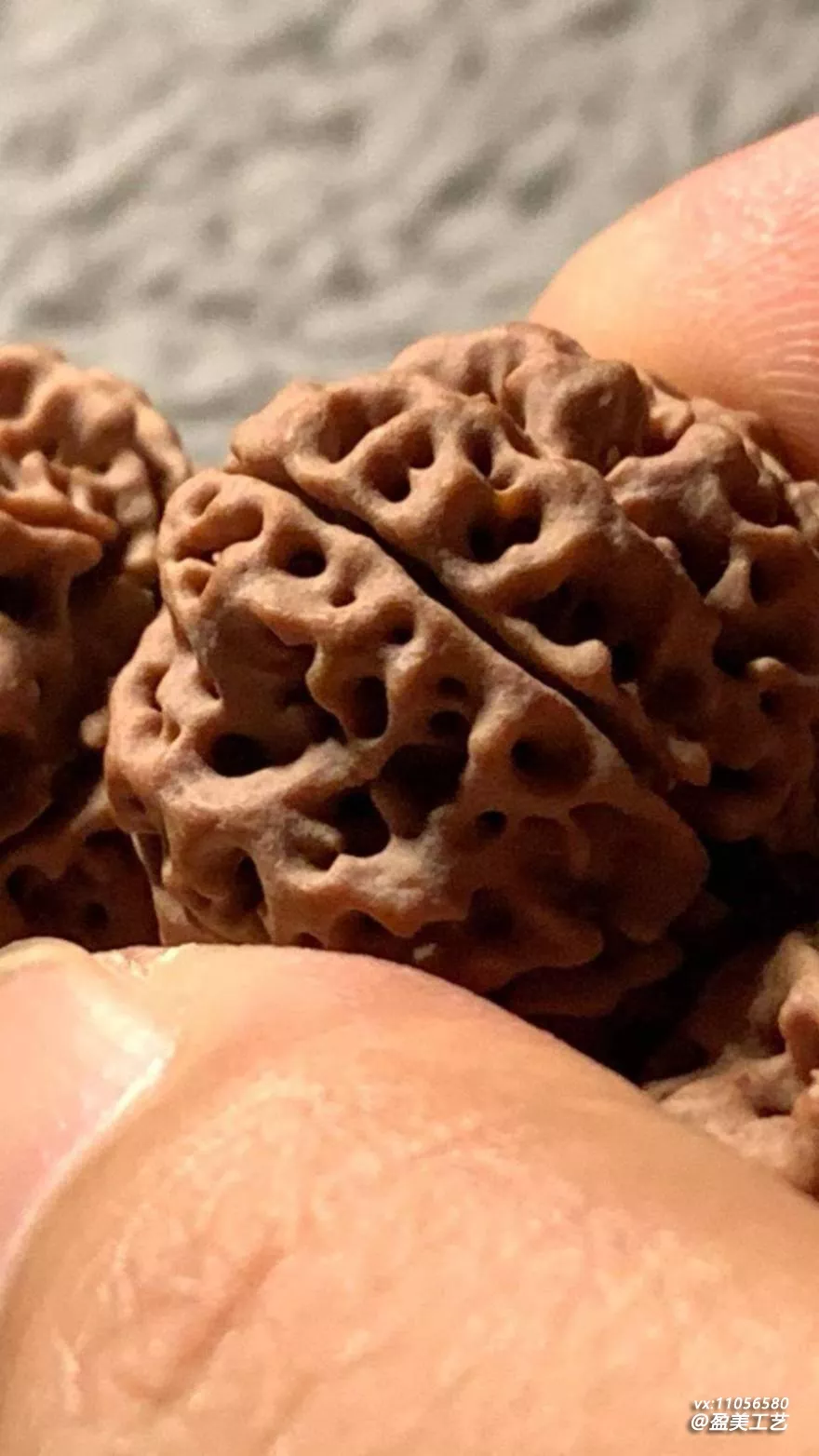
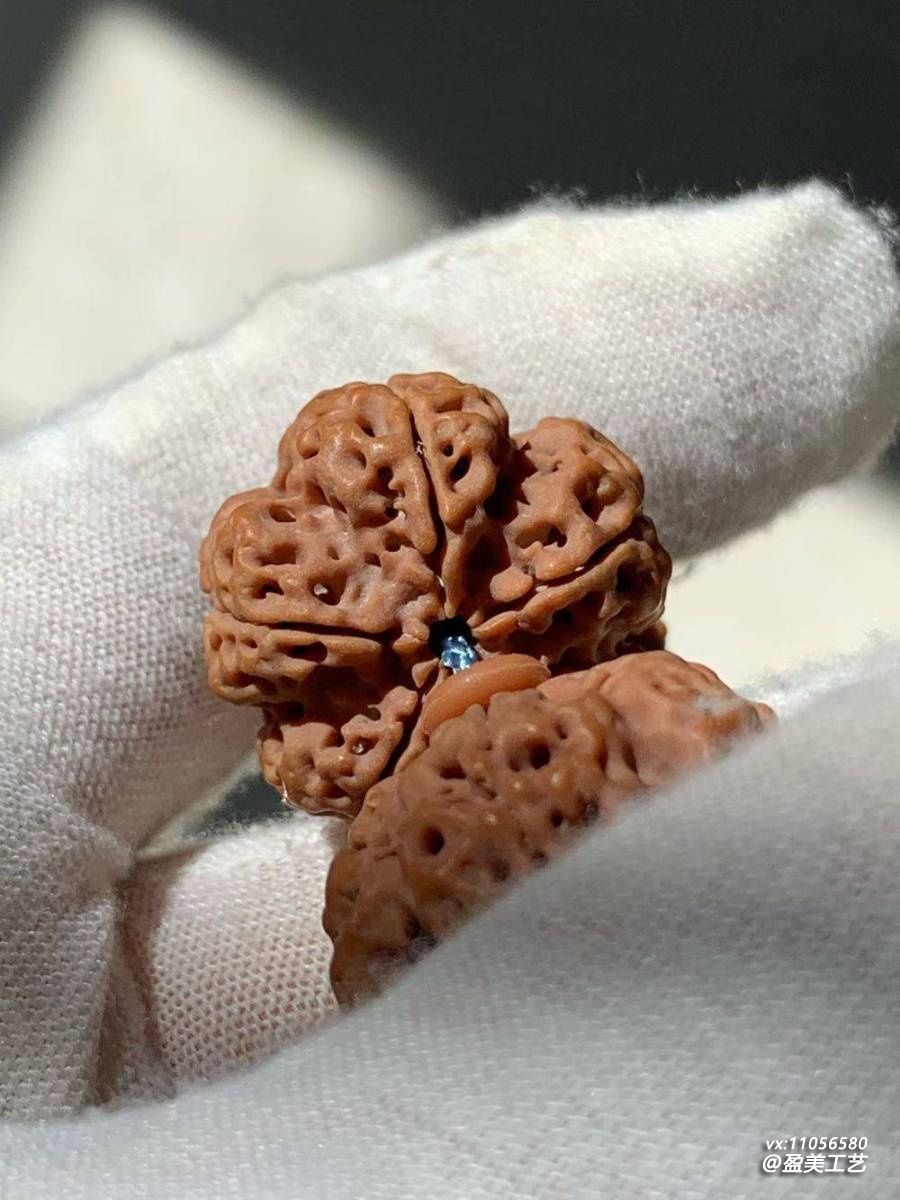
When I first started playing with Rudraksha, I went to the market to pick seeds. The stall owner would tell me this one was a plum-pile type and that one had honeycomb double dragon pattern. I stared at them for ages, but couldn't tell any difference except that they all looked nice. Later, I wasted a lot of money on bad picks and slowly figured out the tricks. Today I'm sharing the key points I use when selecting seeds. They may not be perfect, but they are all summed up from my real mistakes and pitfalls.
1. How to identify the plum-pile shape
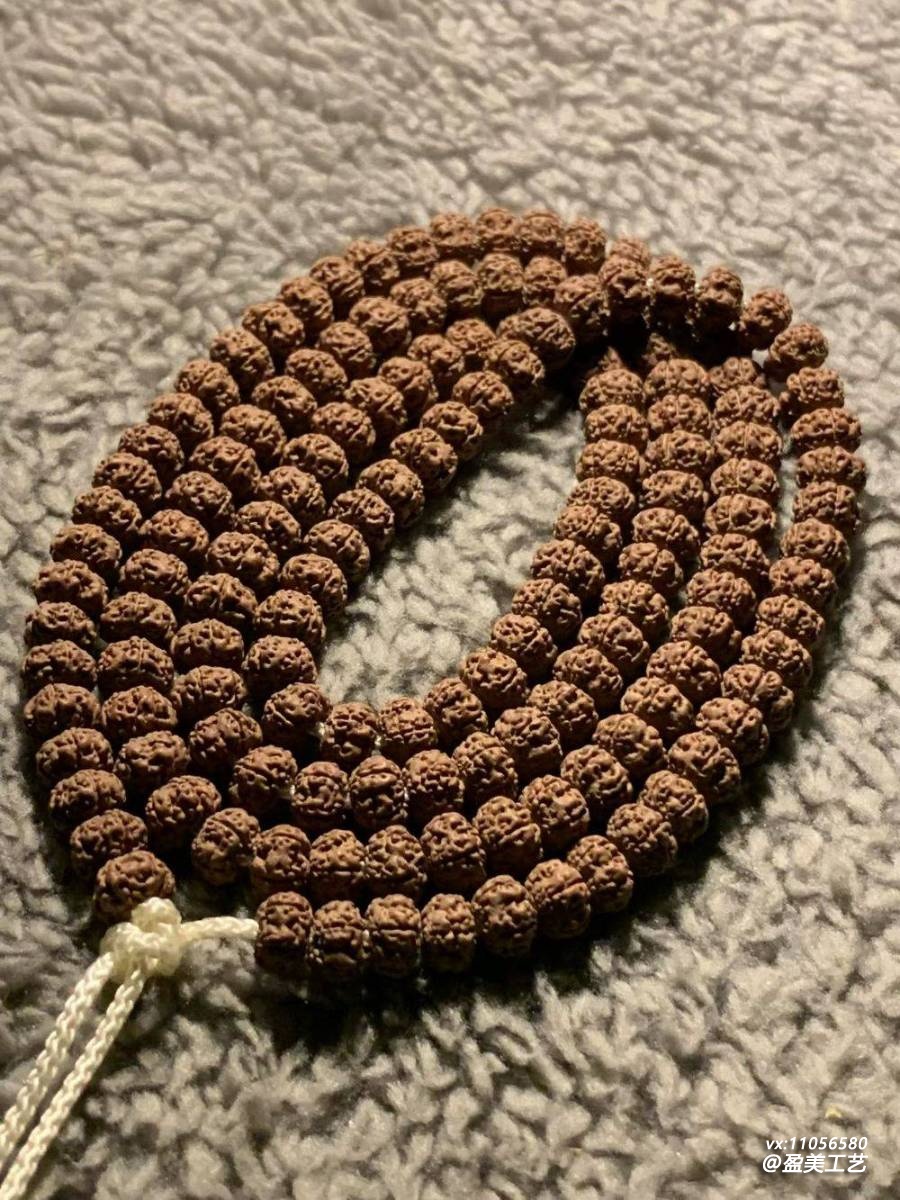
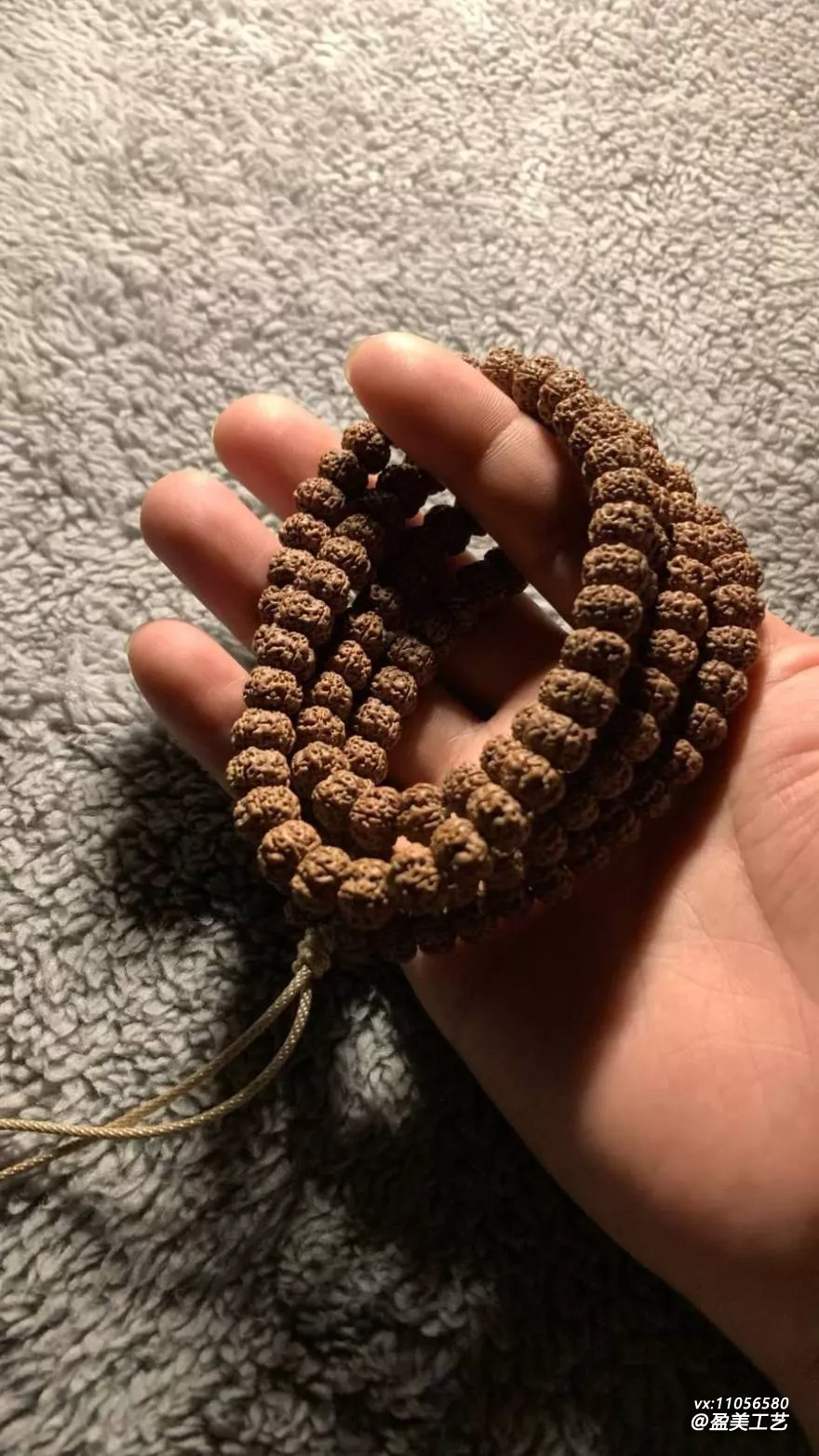
First, let's talk about the pile shape. The name "plum-pile" is very vivid: when you look down from the top of the seed, the lines of the mukhis connect to form the outline of a plum blossom. But not all 5-mukhi Rudraksha can be called plum-pile. There are two key points: first, the mukhi lines must be deep, running all the way from the top to the bottom, without breaking in the middle or being too shallow to feel; second, the seed must have a low pile shape. If the pile is too high, even if the top view looks like a plum blossom, it won't have the proper charm.
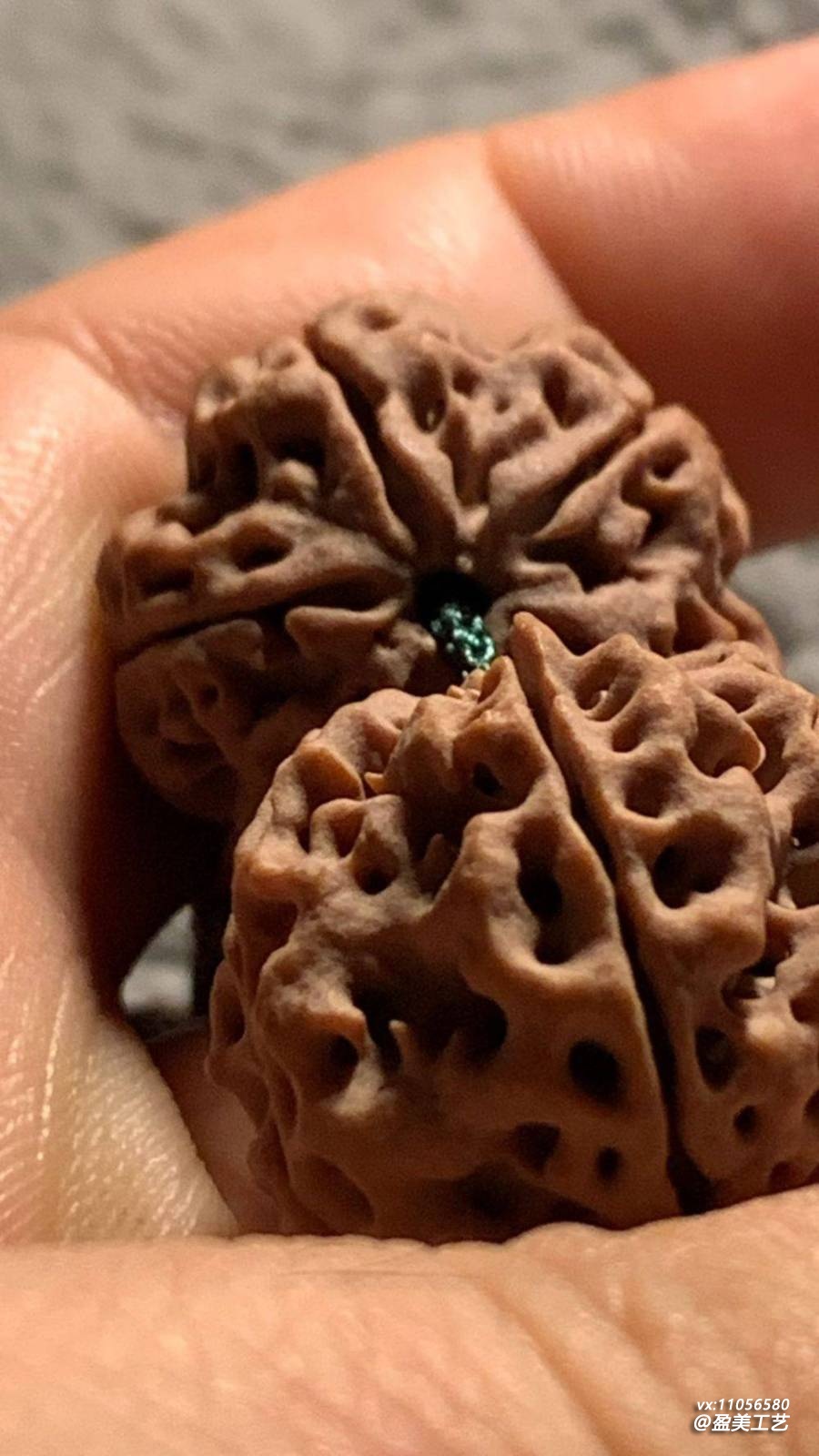
When I pick them myself, I lay the seeds flat on the table and look down directly from above. The flesh of the 5-mukhi beads should be even, not bulging on one side and sunken on the other. The bead in the picture has clear mukhi lines, five evenly fleshed mukhis, a low and solid pile shape, and feels weighty in the hand. This is a relatively standard plum-pile Rudraksha (large).
2. How to distinguish honeycomb grain
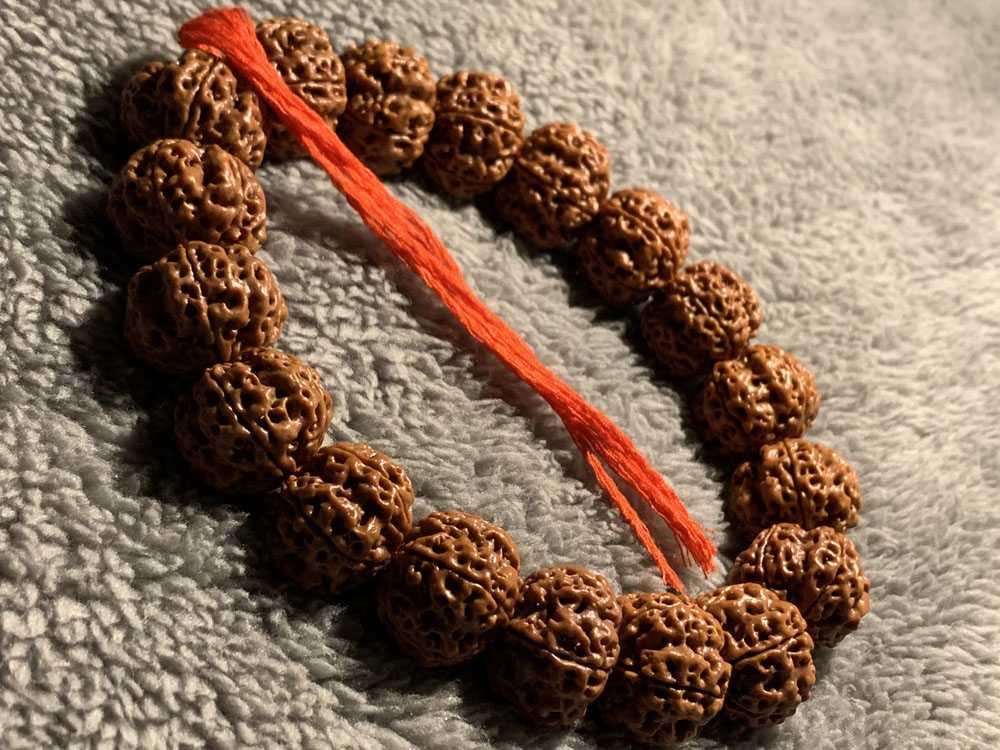
Next, let's talk about honeycomb grain. There are many names for this pattern on the market, such as full-flesh honeycomb, deep-grain honeycomb, queen bee honeycomb. They sound intimidating, but the core is just one point: are the holes in the grain deep and even?
A truly high-quality honeycomb grain has deep holes on the surface. When you gently run your fingernail over it, you can feel the resistance of the small pits, not the shallow grain that will become smooth after a few brushes. In addition, the holes must be evenly distributed. It is not acceptable that the upper half of the bead has deep honeycomb holes while the lower half is flat flesh, which will lead to obvious color difference after breaking-in.
Here is a reminder: do not overly pursue extra-deep honeycomb grain. Some chemically soaked or artificially aged beads have their surface grain eroded extremely deep, which looks like beautiful honeycomb, but their cortex has been damaged. They will turn dark and dull after breaking-in. Now when I pick honeycomb grain Rudraksha, I check the cortex first. On the premise of good natural skin color and high density, then I check the depth of the honeycomb grain. The order cannot be reversed.
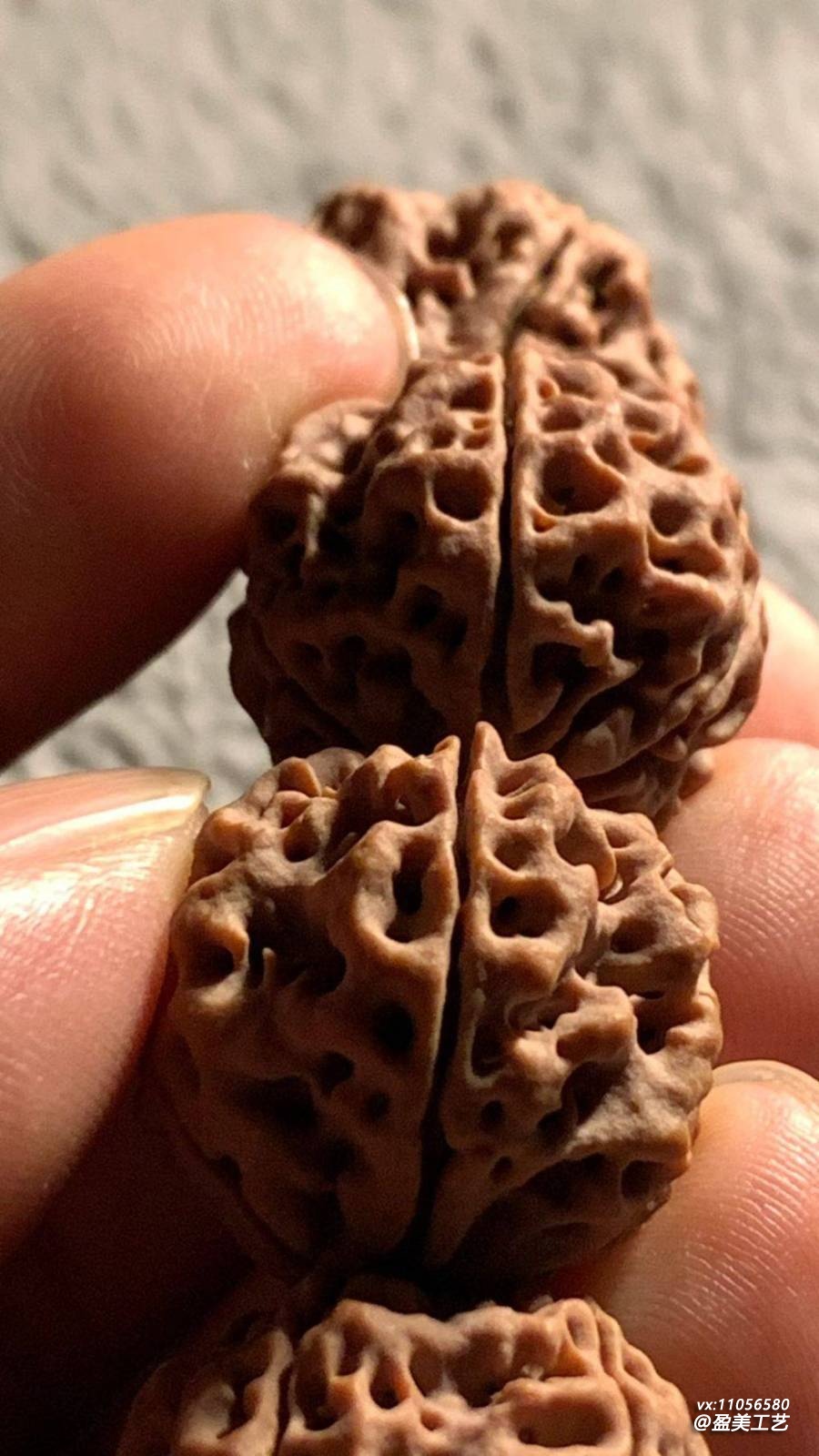
3. The key of double dragon grain
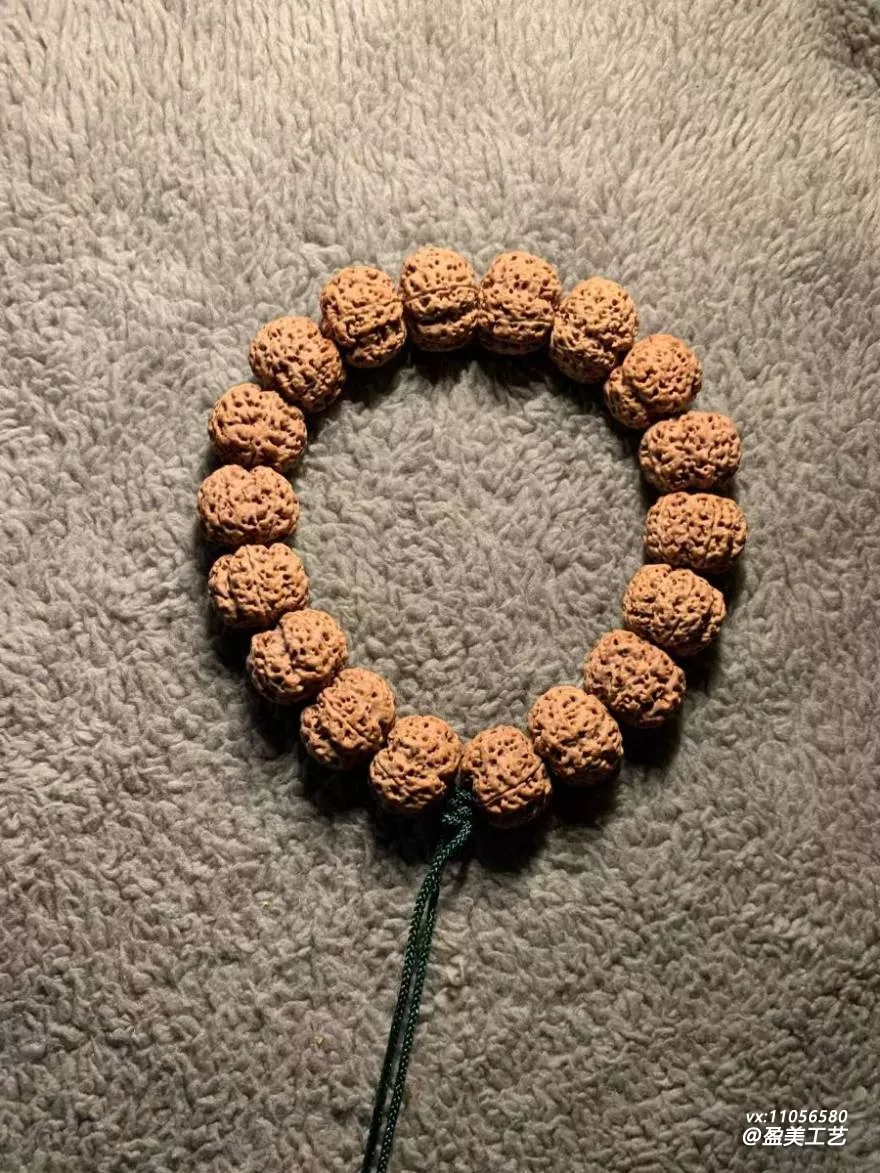
Finally, let's talk about double dragon grain. Double dragon grain refers to two raised ridges on the surface of the bead, running through from the top to the bottom, like the ridges on the backs of two dragons. The key to this grain is continuity.
I have seen many beads where the dragon-ridge is very obvious at the top, but breaks off halfway, or one dragon-ridge is deep and the other is shallow on the same bead. These are not regular double dragon grain. When selecting, you need to rotate each bead to check: the two dragon-ridges must run through the whole bead from start to finish, and their protruding heights are similar. Only in this way can the whole mala be neat after stringing.
Another advantage of double dragon grain is that during the breaking-in process, the dragon-ridge areas become glossy first, and the gully areas become glossy later, so the color development has a layered effect. When the patina forms in the later stage, the dragon-ridge positions are jade-like and translucent, and the color in the gullies is slightly darker. Between the light and dark parts, the three-dimensional sense of the grain stands out, which is why many people love double dragon grain.
Random thoughts on playing with malas
After saying so much, in fact, the final principle of selecting Rudraksha is to pick the one that catches your eye. No matter how good the grain is, it is useless if you don't like it when you hold it in your hand. Even if the grain is ordinary, if you enjoy breaking-in it every day, it will look great with a nice patina in the end.
My current mindset is that I don't chase the so-called "ultimate perfect mala" that meets all standards at once. I just buy the beads that appeal to me, break them in slowly, and enjoy the whole process. After all, for Rudraksha, if you put your heart into it, it will reward you. When enough time passes, your mala will naturally become beautiful.