Add friends and chat together!
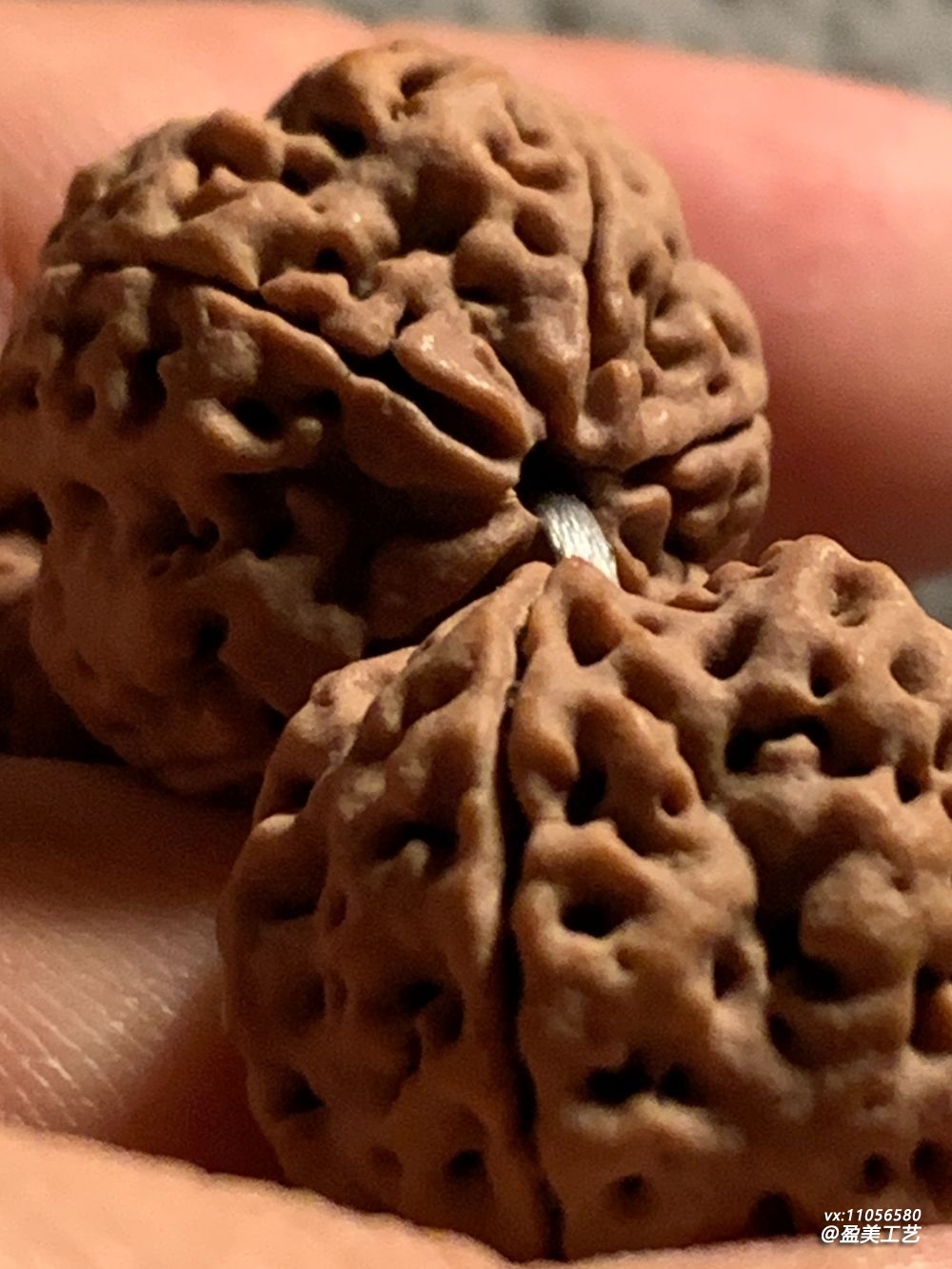
Anyone into Rudraksha can't get around the word "dragon."
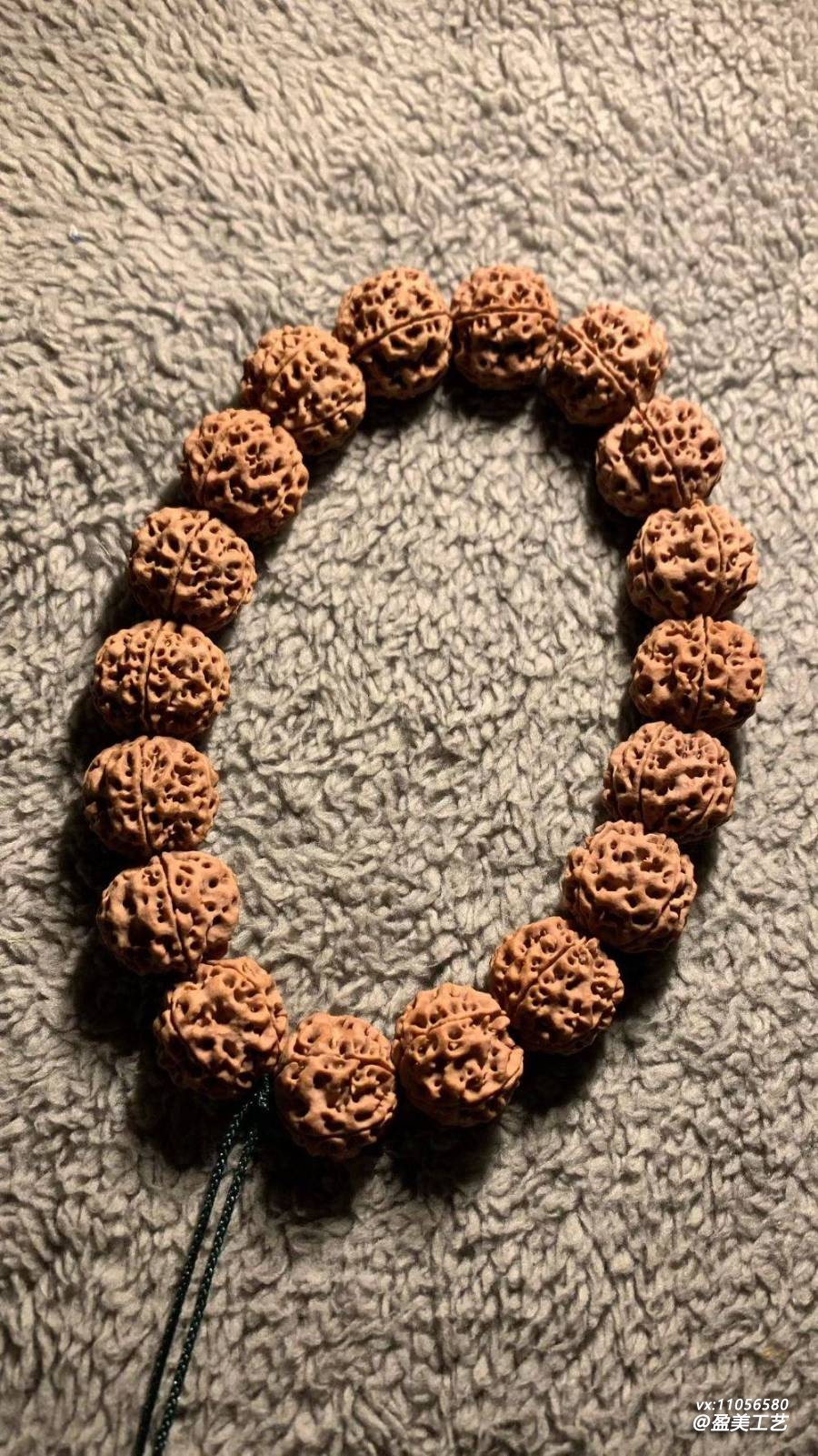
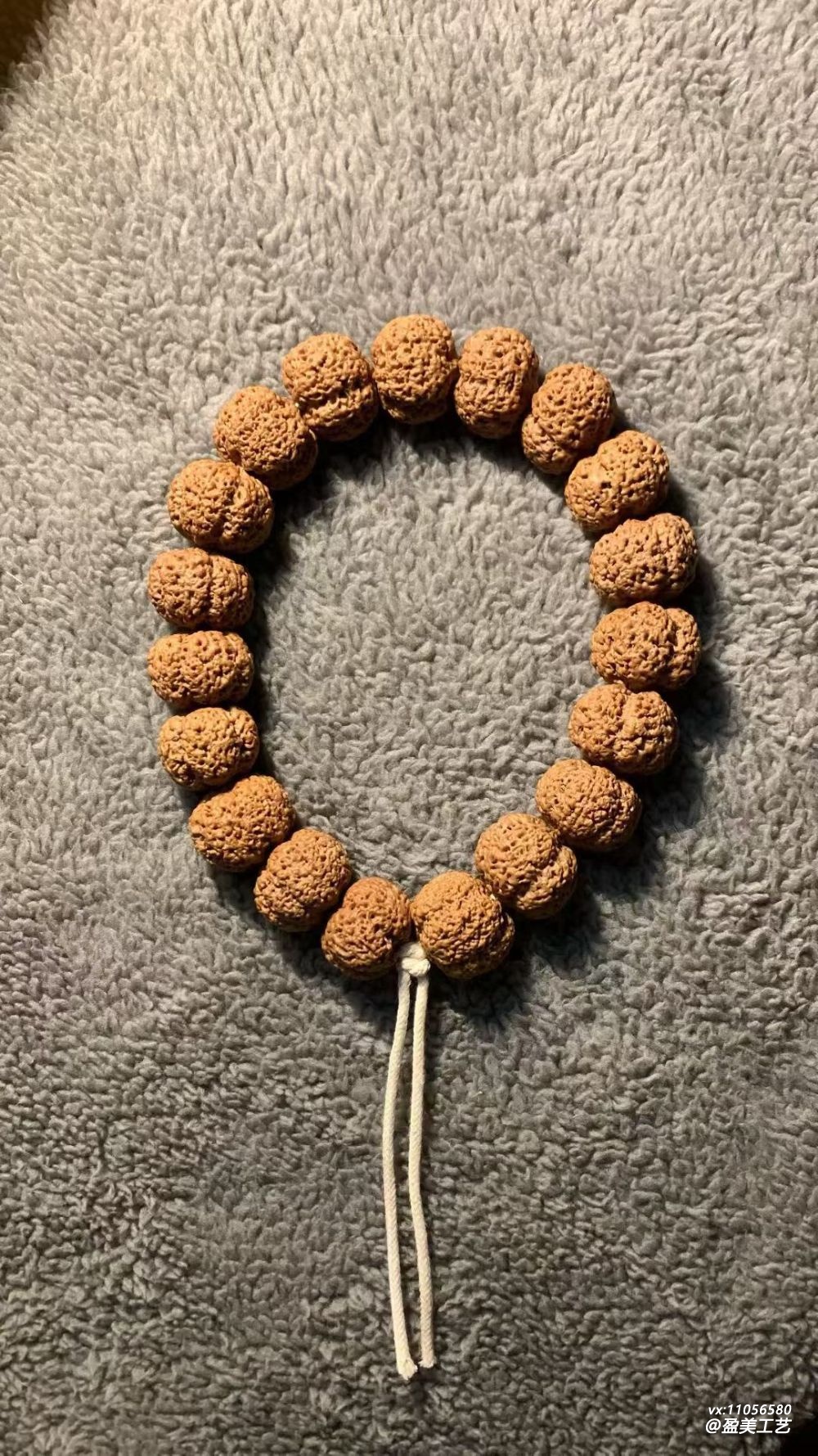
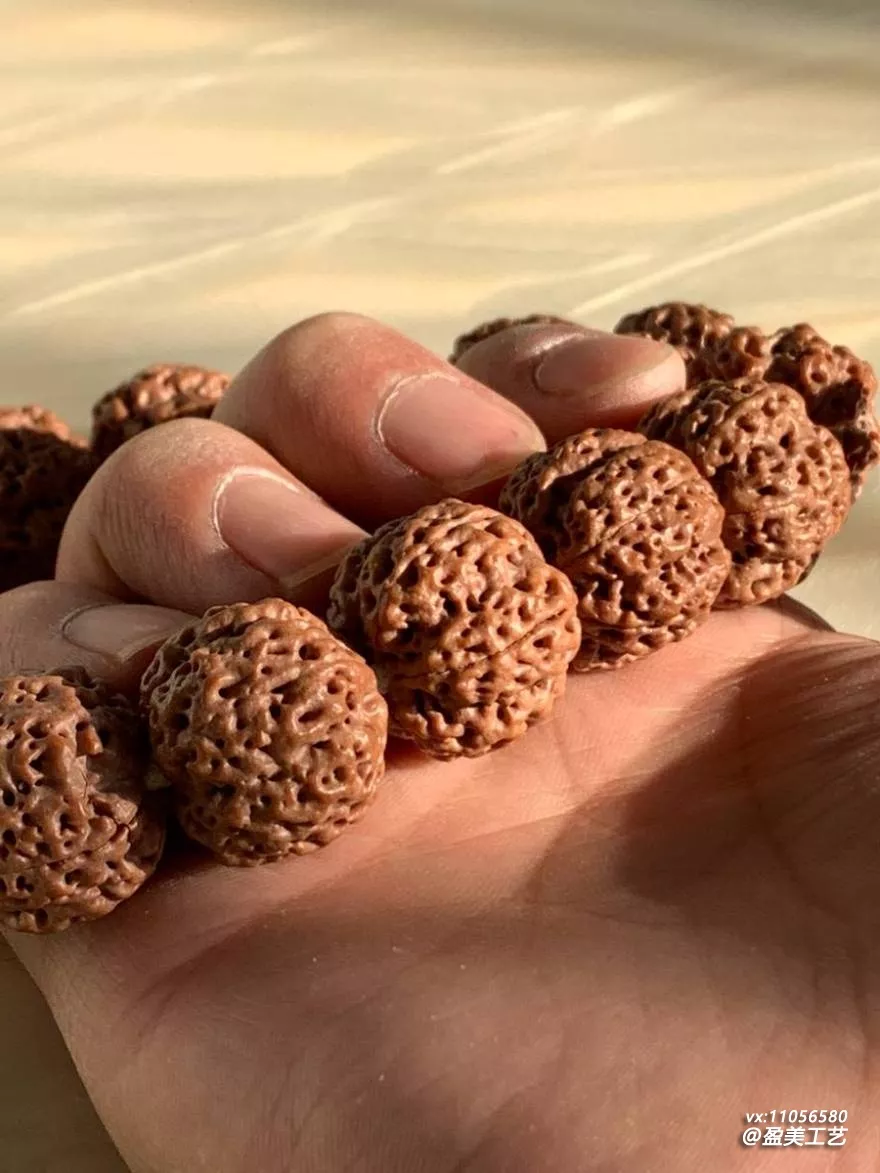
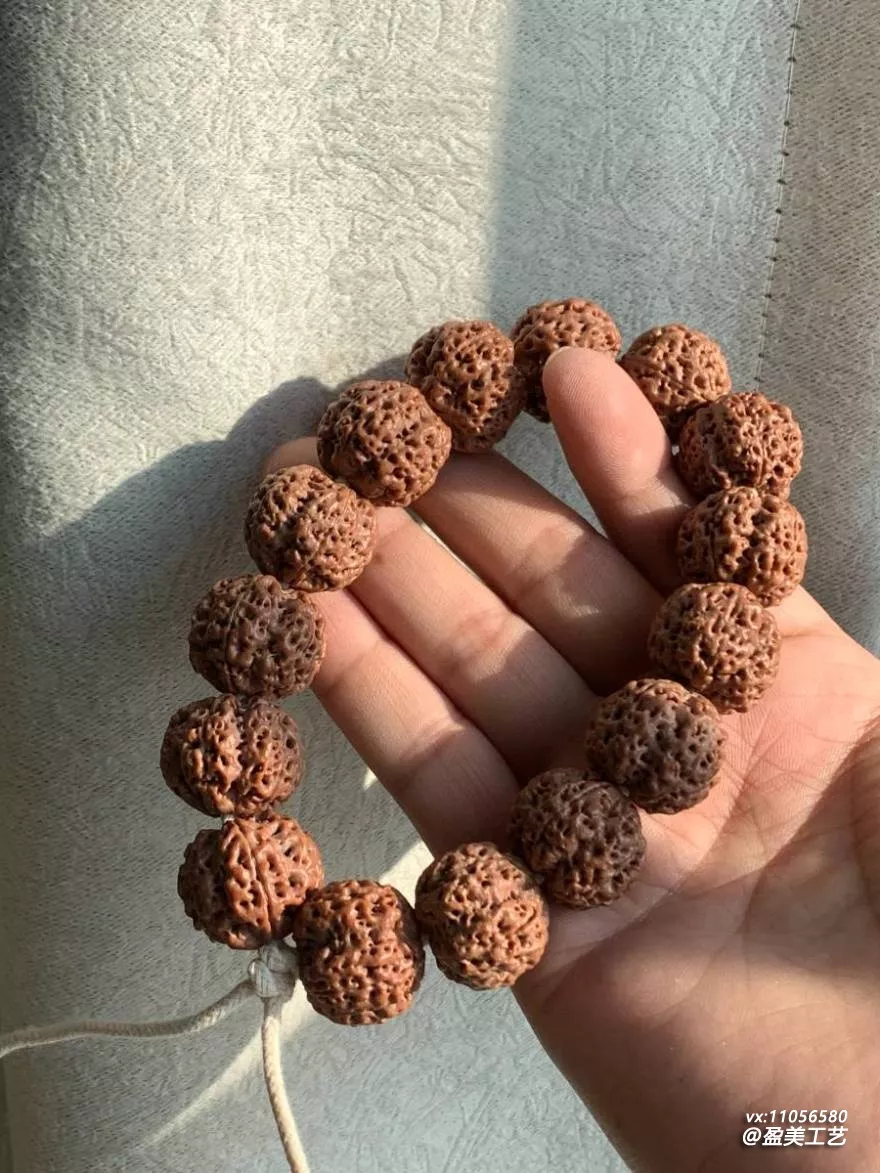
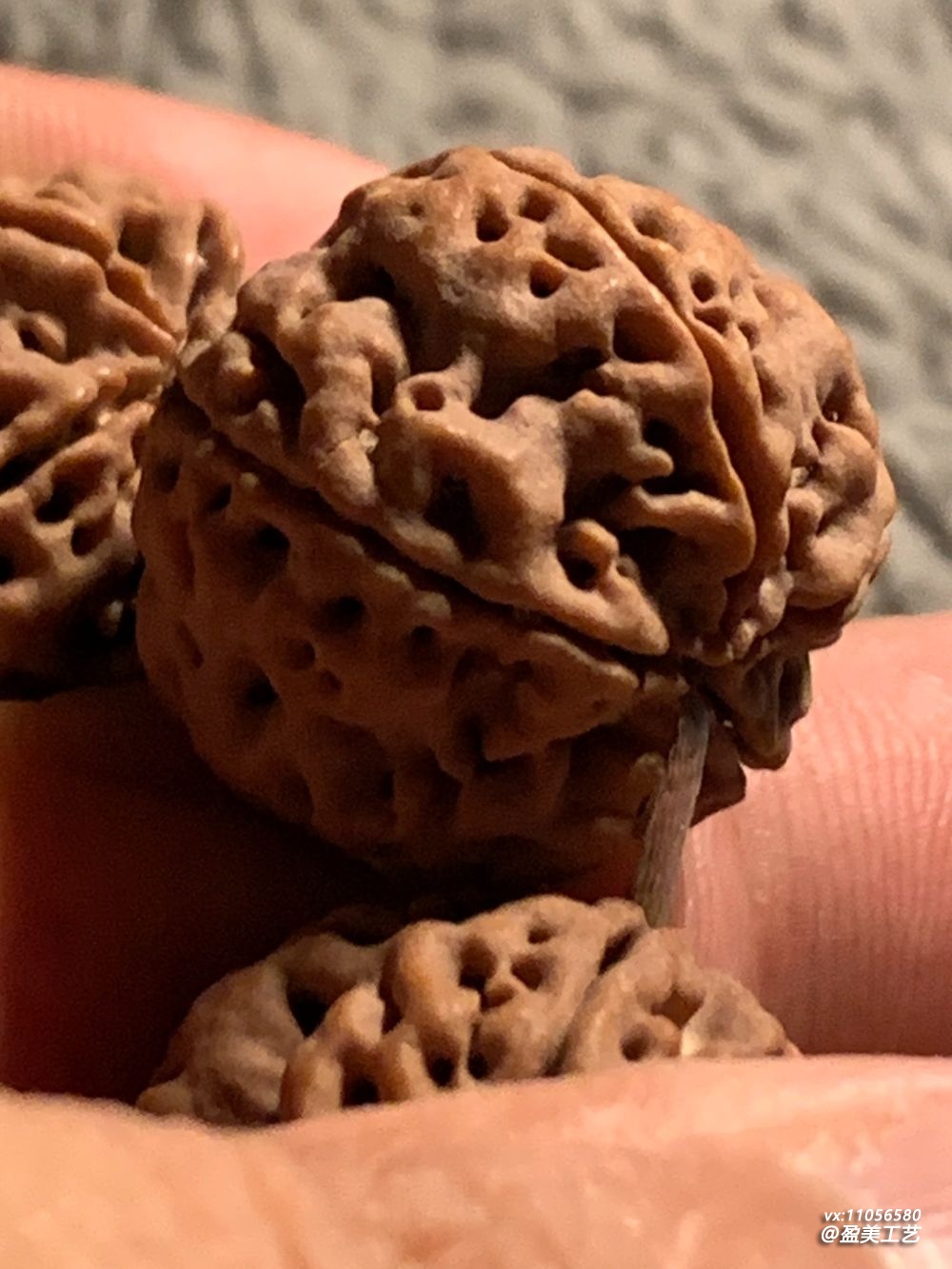
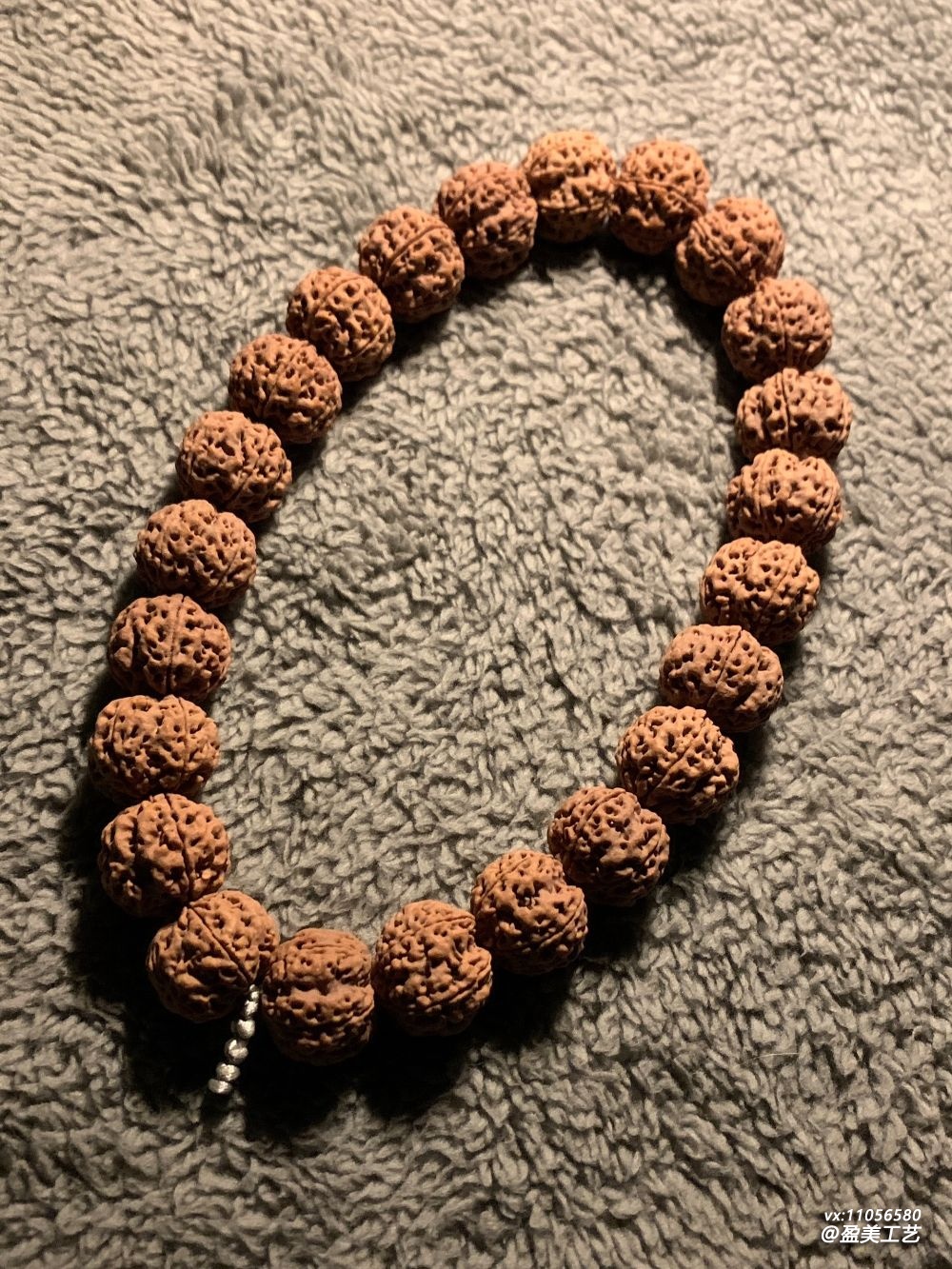
When this Nepal Rudraksha (large) mala arrived, the first thing I noticed wasn't the size, but the two ridge lines running from top to bottom on every bead — what the trade calls the double dragon pattern. Two dragon-ridge (ridge line)s rise along the mukhi lines, bead after bead, continuous and unbroken. Turning it in your hand, the ridges glide across your fingertips, and you can clearly feel the rise and fall of the flesh texture — not the flat, dry kind of grain / texture, but full, thick flesh.
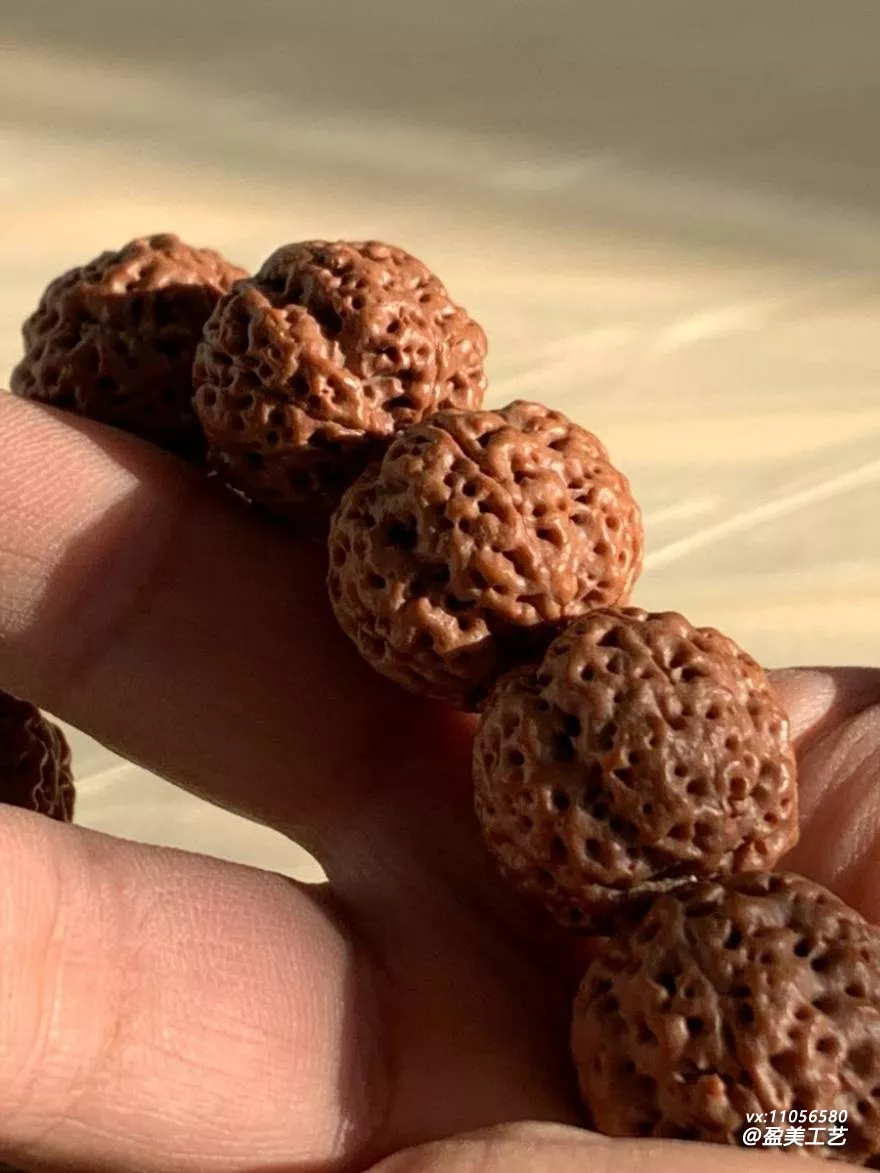
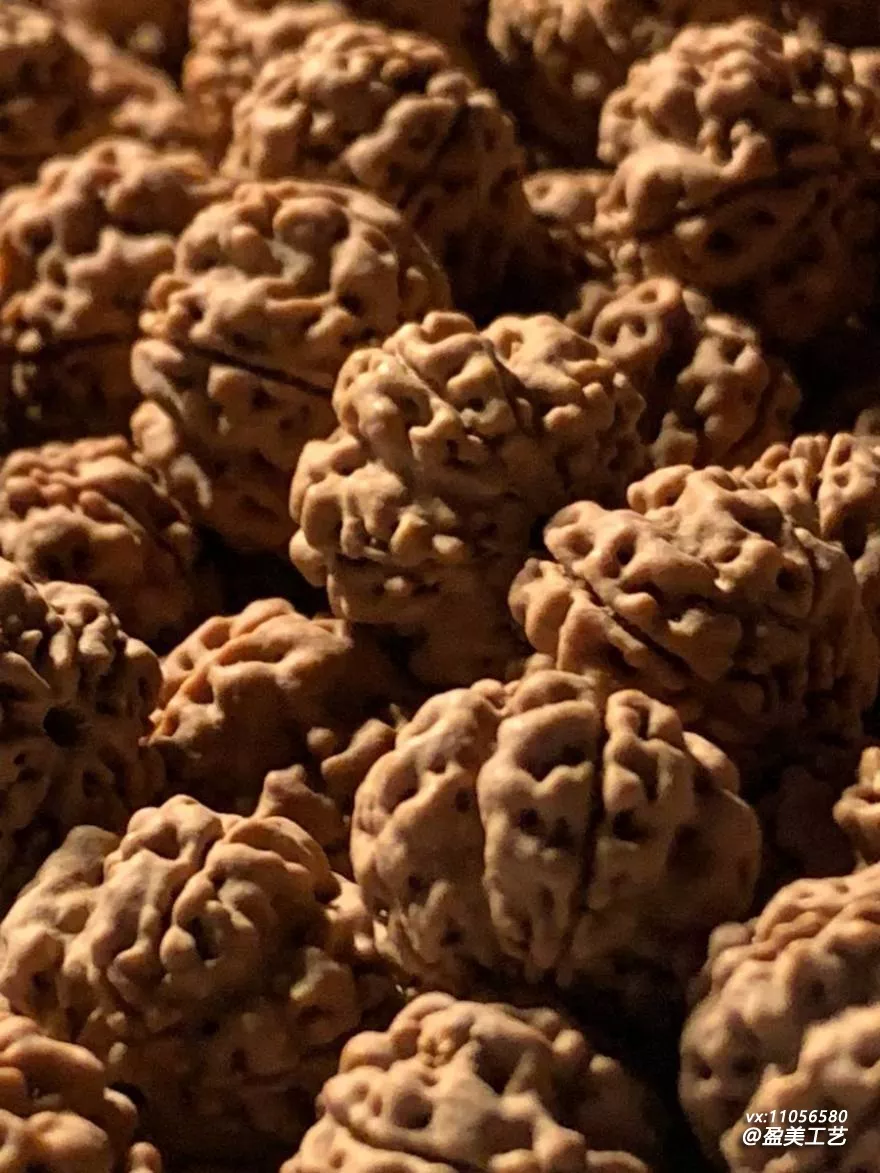
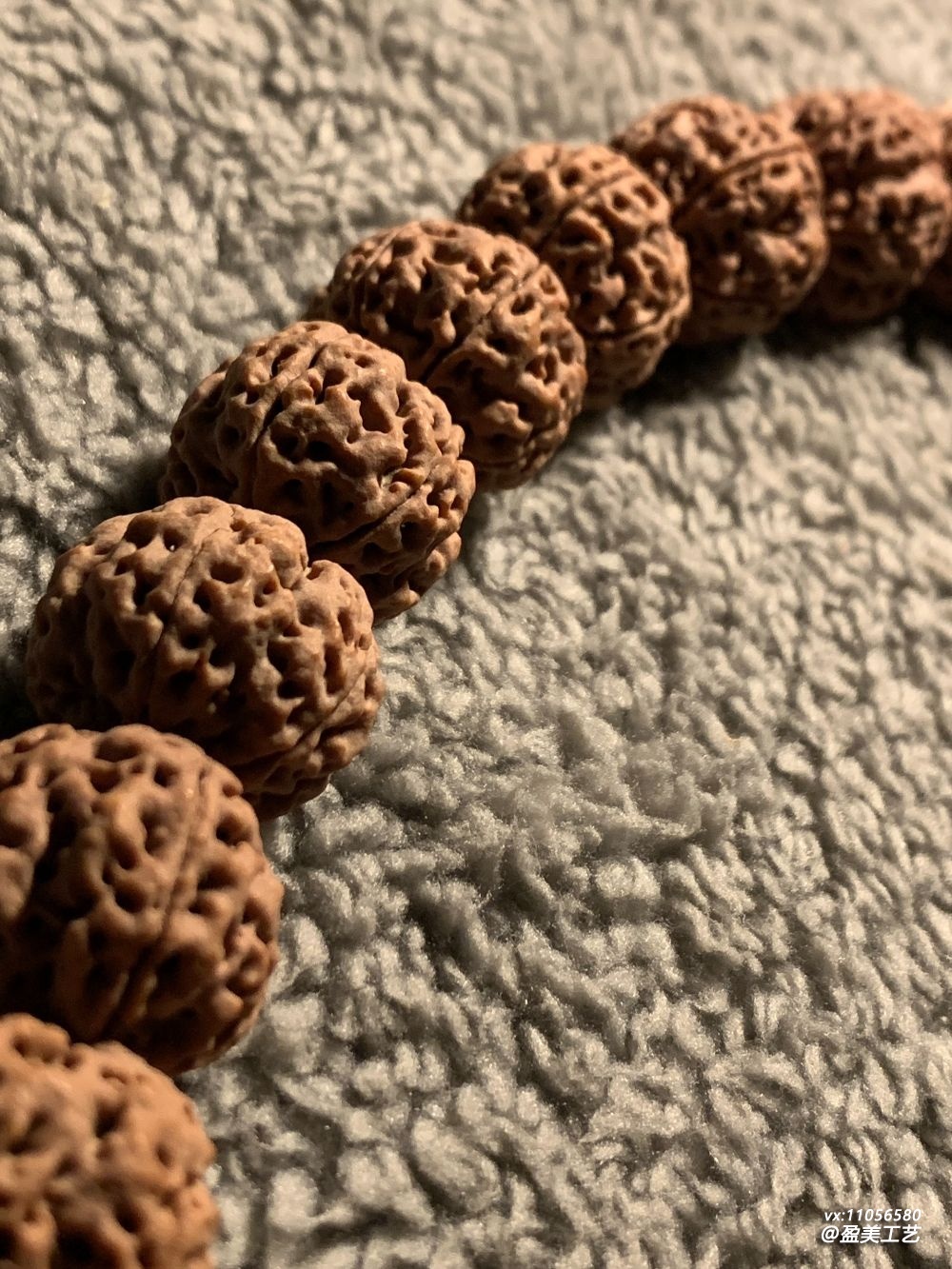
Fully fleshy honeycomb is another feature of these beads. The surface holes are deep and evenly distributed, with flesh bumps stacked one on another. Under a magnifying glass, every recessed honeycomb cell still holds fine lines. This kind of grain / texture is the most patience-testing during base brushing, because the crevices are many — an ordinary brush in one pass simply can't reach the bottom.
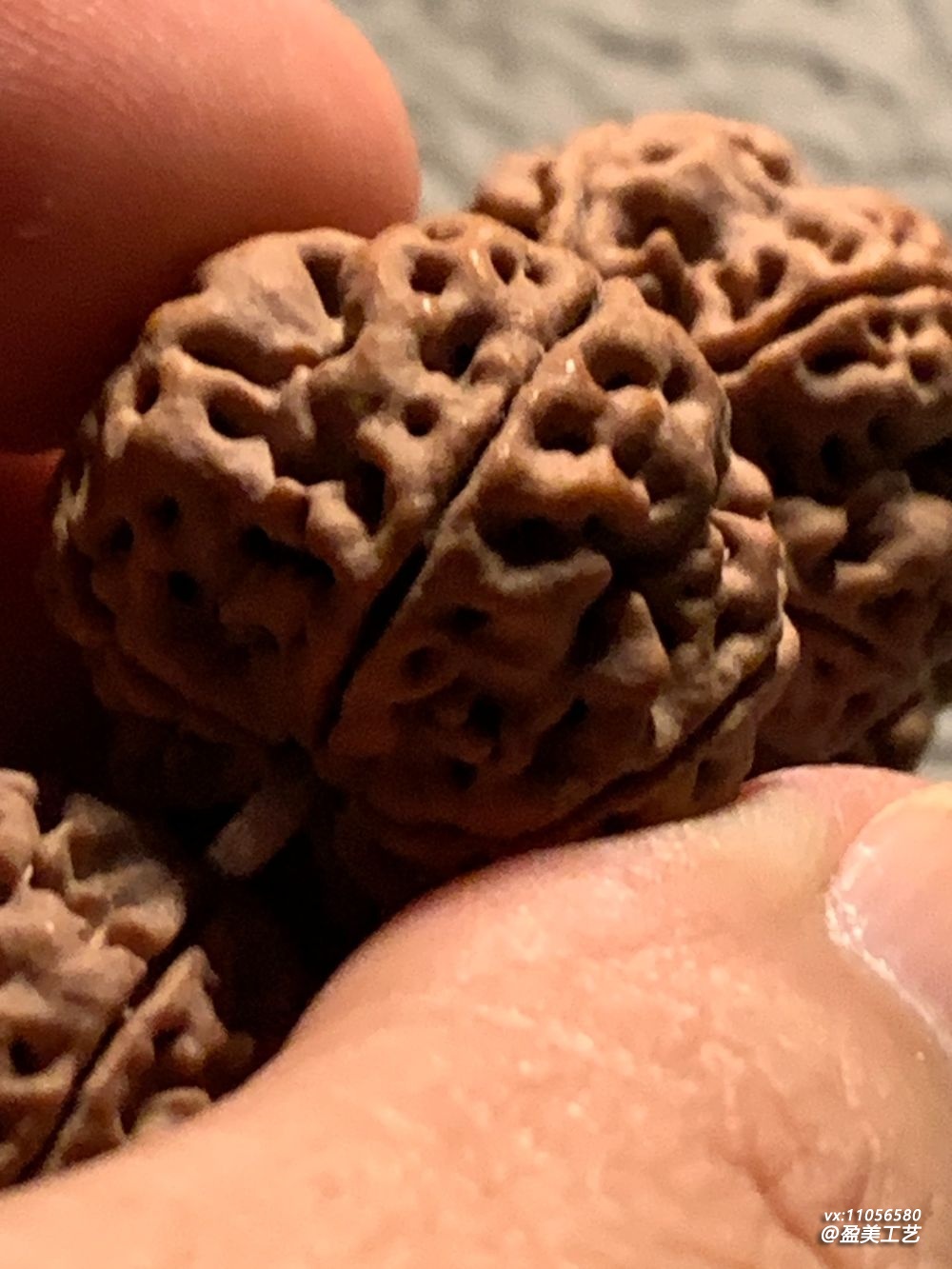
Speaking of base brushing, I usually do it in three steps. Step one: lightly sweep with a steel wire brush to remove surface residue and alkaline bloom first — keep the pressure light, brush along the direction of the dragon-ridge (ridge line), never crosswise, or you'll easily damage the ridges. Step two: switch to a stiff boar-bristle brush and focus on the depths of the honeycomb, brushing each bead for at least three to five minutes. When the surface starts to feel slightly tacky with resistance, it means the base has taken hold. Step three: finish with a nano brush to clear out leftover bristle fragments and dust from the grain / texture. At this point the beads show a matte, warm smoothness — not shiny, but moist and mellow.
Once the base is properly done, breaking-in (patina process) by hand becomes much easier. I hand-hold and turn this mala about half an hour a day. If your hands sweat, remember to wipe it down with a dry cloth afterward — don't let sweat sit and stew in the honeycomb. For the first month, brush mainly and turn as a supplement, so the color development of the dragon-ridge (ridge line)s and grooves evens out as much as possible. After a month you can turn more and brush less. That's when the beads begin to develop a glossy sheen, and the three-dimensionality of the double dragon pattern becomes more and more apparent — the dragon-ridge (ridge line)s brighten first, the grooves later, and the layers emerge.
Enjoying Rudraksha is about the process. From the light brownish-yellow when it first arrives, to the gradual color shift toward red, and finally to patina and jade-like transformation, the double dragon pattern and dragon-ridge (ridge line)s of every bead grow clearer and clearer through this journey. Don't chase quick results — brush a little and turn a little every day, and when the time comes, the mala will naturally give you its answer.
 Enjoying