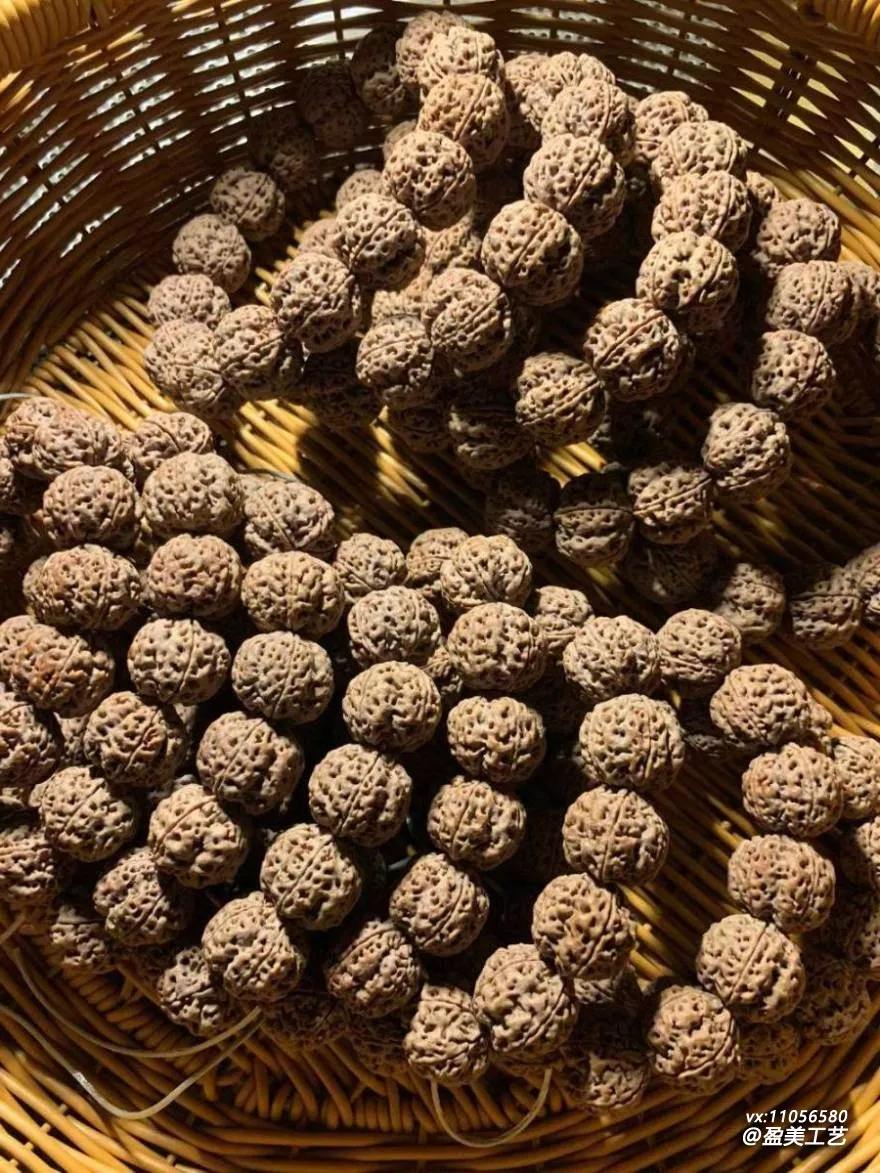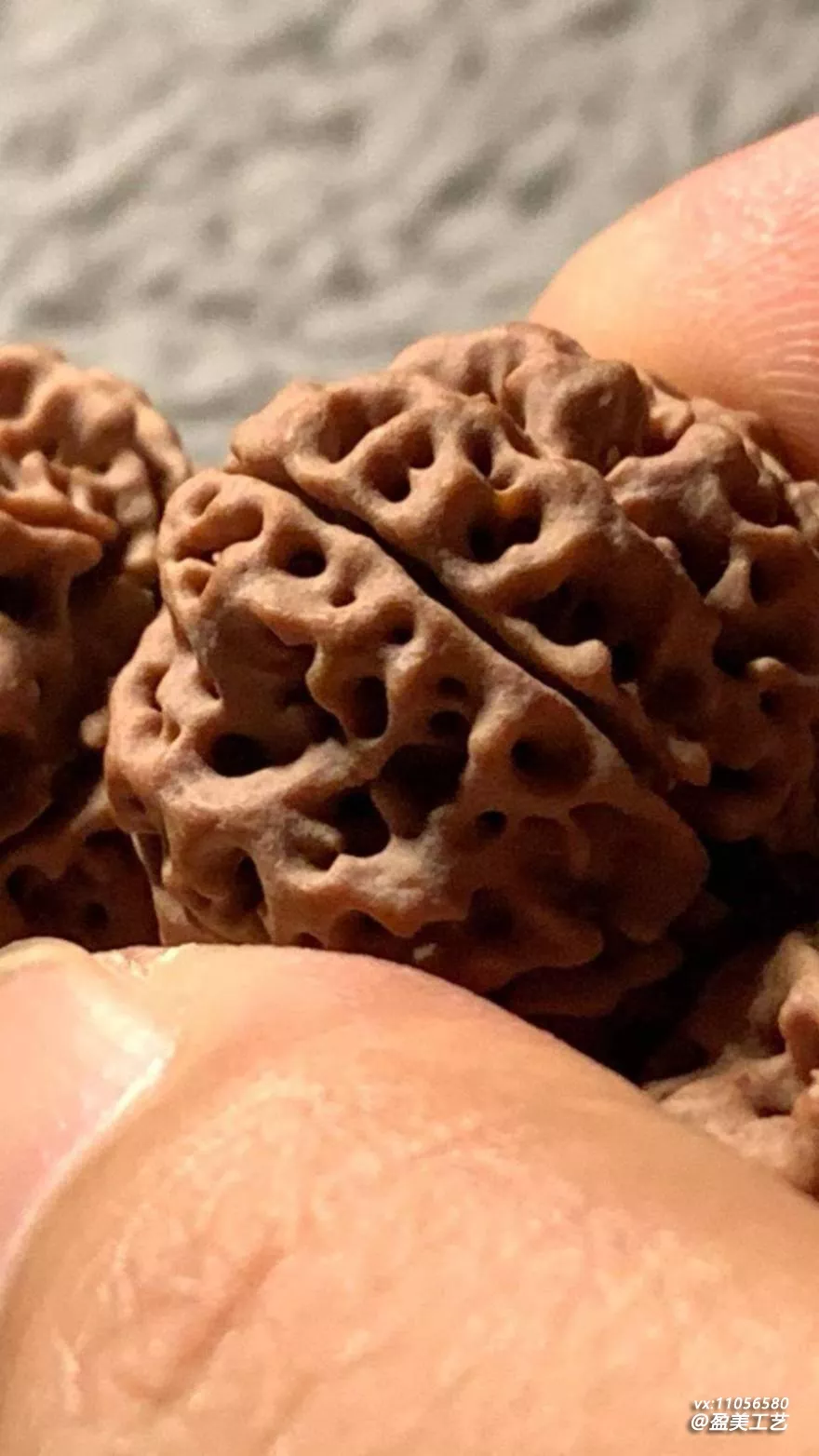
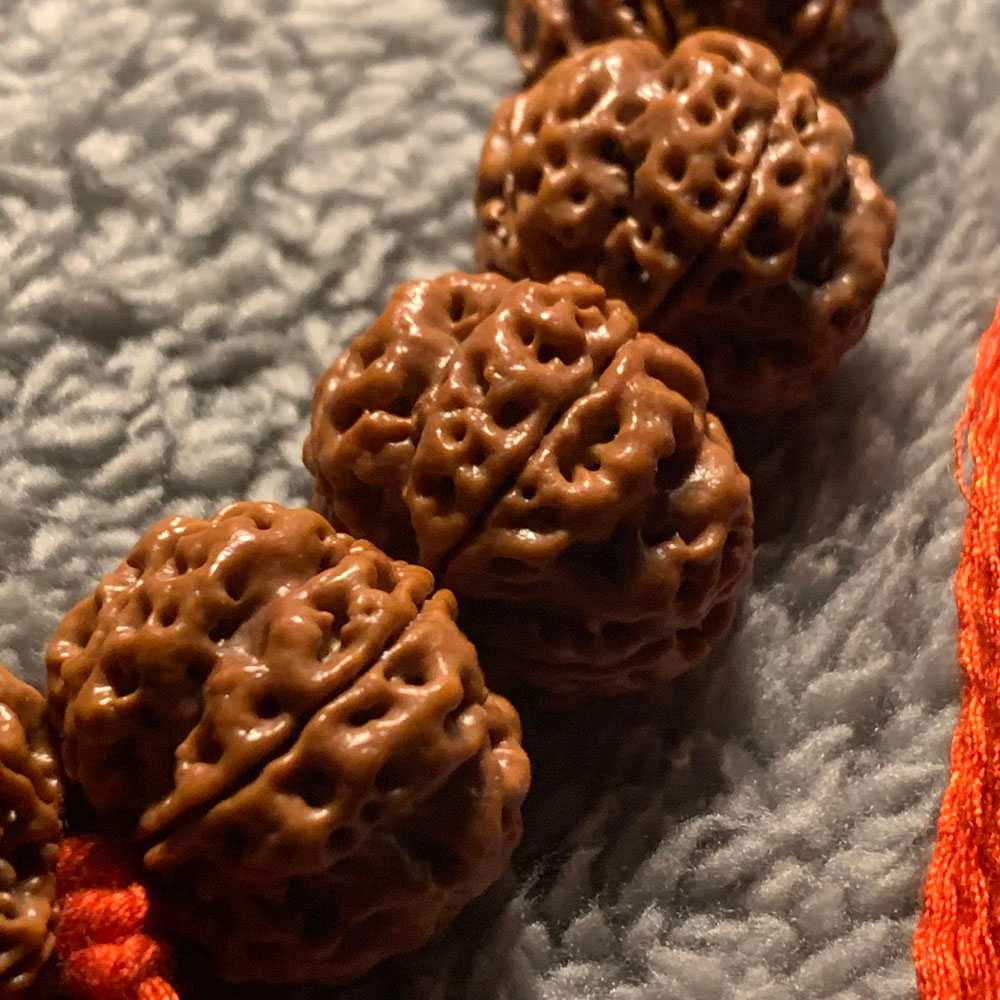
#### 1. Rudraksha
**Status**: Alongside Bodhi seeds (Fringed) and Bodhi seeds (Star), it is ranked among the "Three Traditional Bodhi Seeds of Cultural Relics". Due to its unique natural texture and distinctive shape, it has become a popular category in the cultural relics collection field.
**Features**: Its skin is hard and wear-resistant, with rich texture variations. It requires long-term breaking-in (patina process) to form a patina, combining collection value and playing enjoyment.
#### 2. Rudraksha (large)
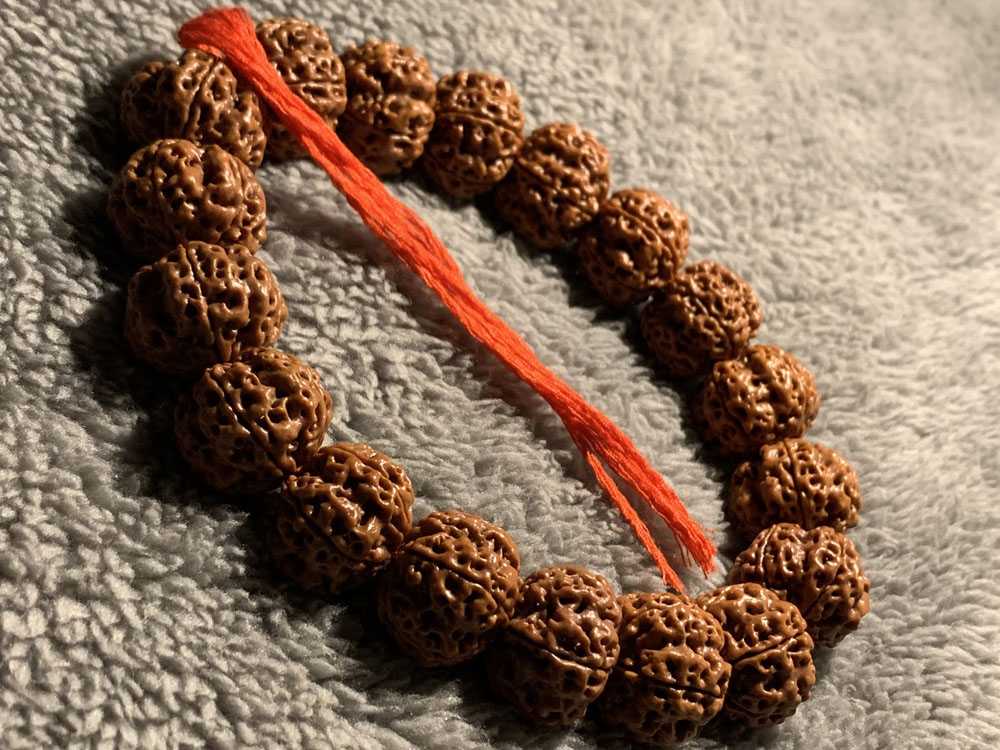
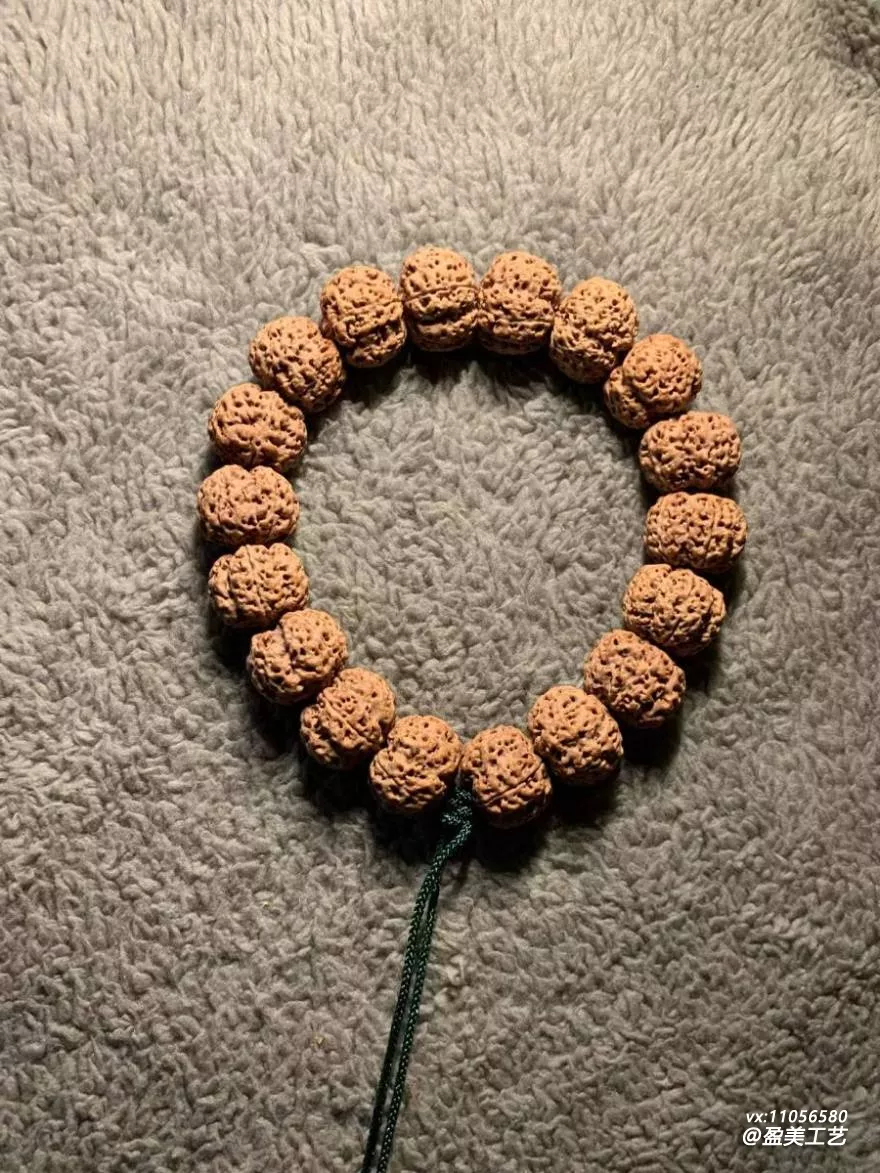
**Size Specifications**: Most have a diameter between 22-32mm; those over 32mm have higher collection value due to rarity.
**Origin Distribution**: Mainly produced in Nepal, with a small amount also found in India and Bhutan.
**Morphological Features**: Mostly oblate, with deep and rough texture. 5-mukhi and 6-mukhi are the most common; 7-mukhi and above have significantly higher collection value due to rarity.
**Target Audience**: Favored by cultural relics players and collectors, suitable for hand breaking-in (focusing on polishing texture and shape).
#### 3. Rudraksha (small)
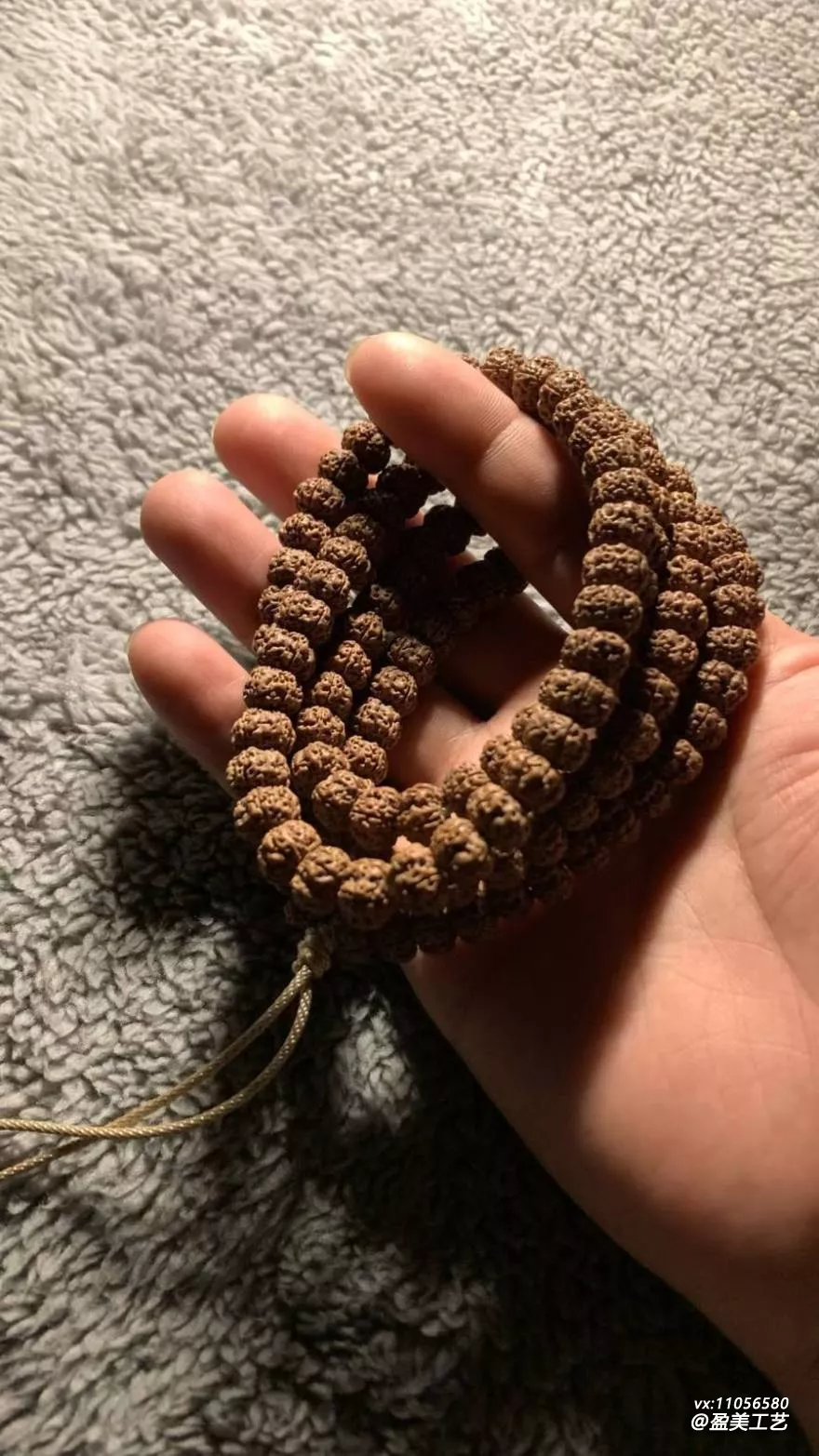
**Size Specifications**: Usually less than 12mm in diameter.
**Origin Distribution**: Mainly produced in Indonesia (such as Sulawesi Island), occasionally found in Nepal, India and other places, but not the core producing area.
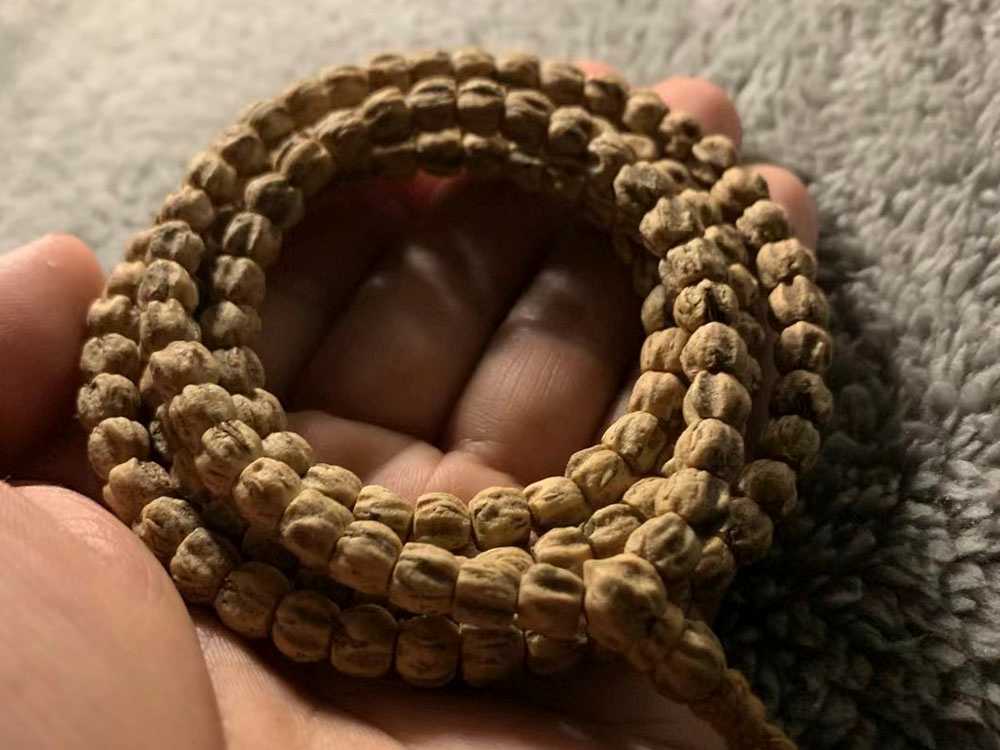
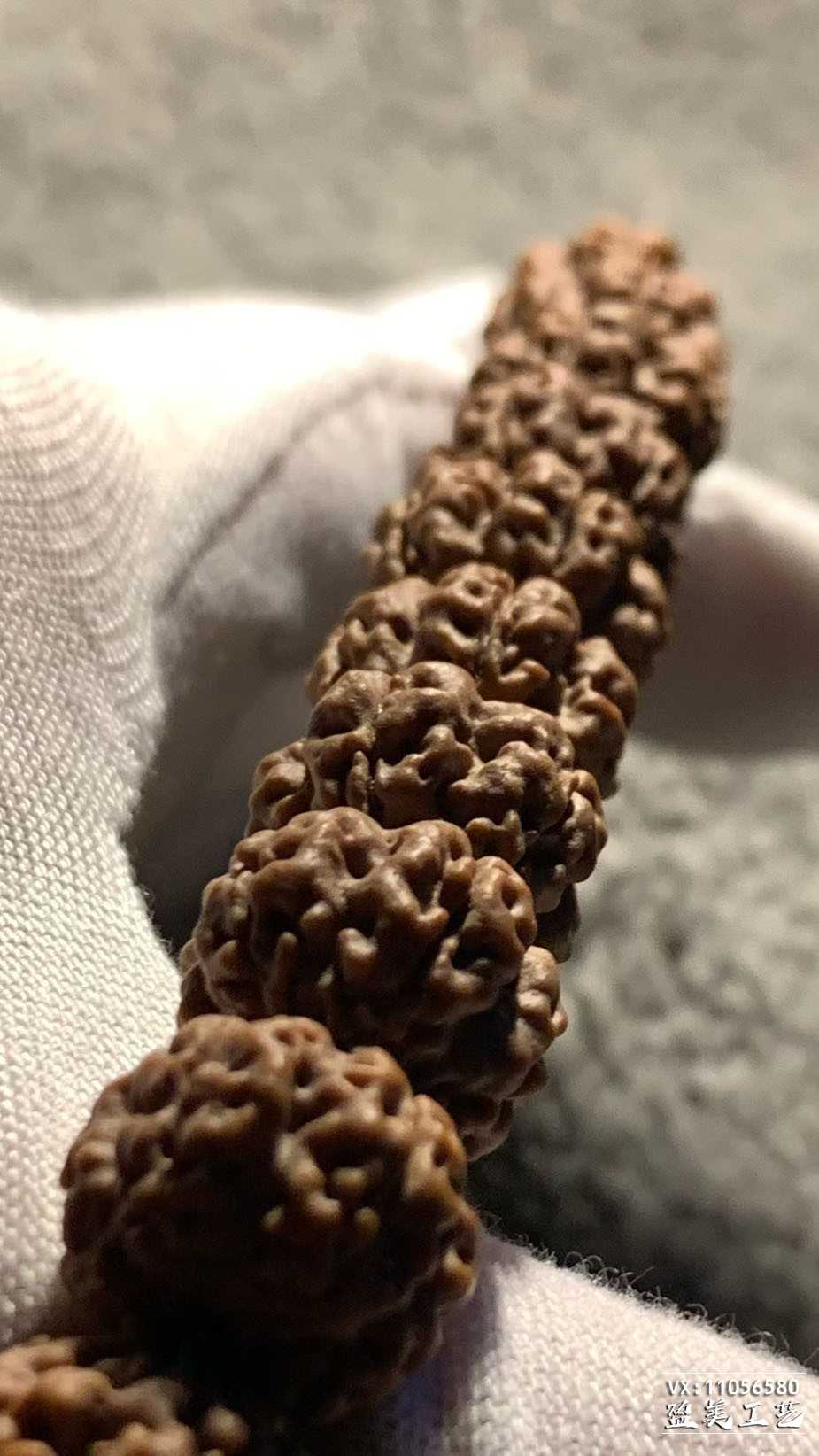
**Morphological Features**: Mostly nearly circular, with fine texture. 5-mukhi to 7-mukhi are common, suitable for making mala (prayer beads), necklaces and other cultural relics accessories.
**Category Difference**: Belongs to the same family as Rudraksha (large) but is a different species, with significant differences in skin, texture and density.
### 2. Core Feature Terms
#### 4. Number of Mukhis
**Definition**: The number of lobe-like "sections" naturally formed on the surface of Rudraksha. 5-mukhi and 6-mukhi are the most common; 3-mukhi has high value due to rarity, and 7-mukhi and above (commonly known as "multi-mukhi") are also collection-level, with relatively high market prices.
**Cultural Implication**: Different mukhi numbers have specific symbols in traditional culture (e.g., 5-mukhi symbolizes "good luck", 7-mukhi symbolizes "attracting wealth"), but actual collection value mainly depends on skin density and integrity, not cultural implication.
#### 5. Mukhi Line
**Definition and Function**: The dividing texture between mukhis, which is a key feature to distinguish Rudraksha from different origins.
- Nepal Rudraksha (large): The mukhi line is clear and deep, mostly in a "gully-like" texture;
- Indonesia Rudraksha (small): The mukhi line is relatively shallow, and some varieties are almost smooth.
#### 6. Tooth Texture
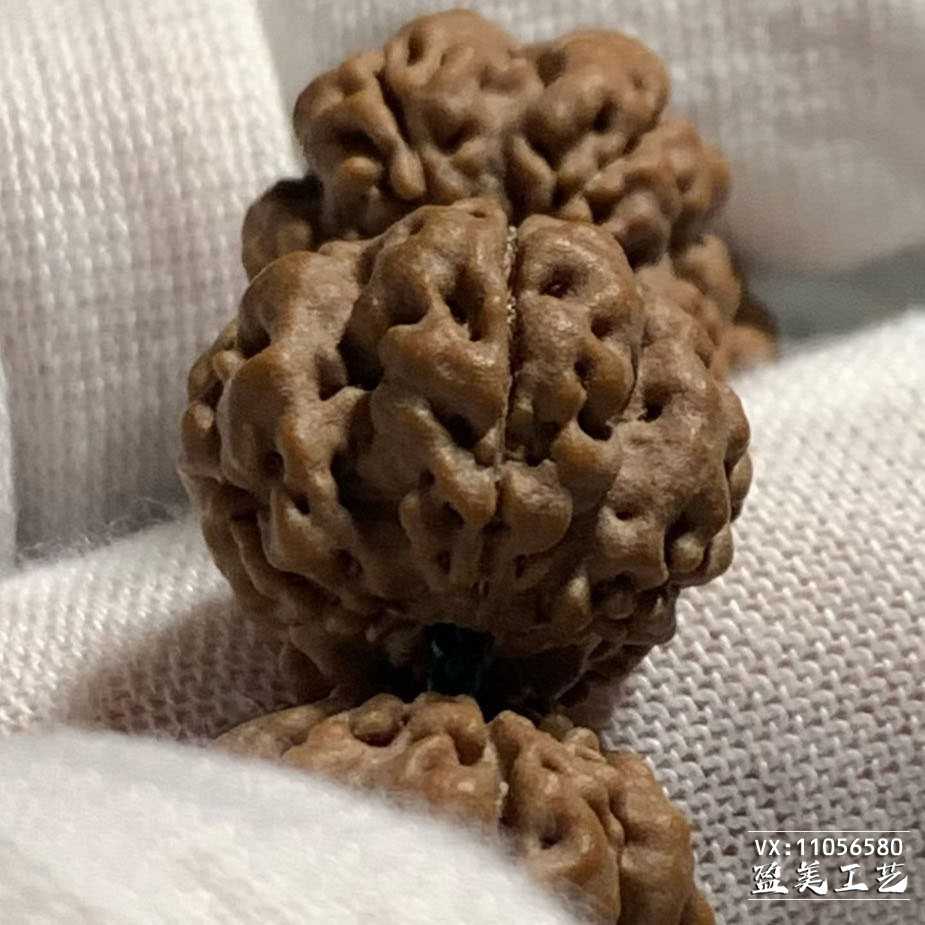
**Definition**: The protruding "tooth-like" structure on the surface, which can be divided into two categories:
- "Fleshy texture": The tooth-like structure is full and round;
- "Woody texture": The tooth-like structure is sharp and sparse.
**Natural Tooth Loss**: Rudraksha naturally has tooth loss. Minor tooth loss does not affect normal breaking-in; those without tooth loss or with complete fleshy texture have higher prices due to rarity.
### 3. Quality and Processing Terms
#### 7. Bulk Goods
**Features**: Batch goods that have not undergone strict screening or only basic sorting, usually containing defects such as defective seeds, color-difference seeds, mixed sizes, etc. They are low-priced and mainly used for beginners to practice.
#### 8. High-quality Goods
**Standard**: Carefully selected manually, must meet the following conditions: very small color difference, no serious defects (such as broken teeth, deep cracks), regular and uniform shape, similar density. It is mainly for senior players who pursue quality.
#### 9. Edge and Shape
- **Edge**: Refers to the transverse diameter of Rudraksha, representing its "width" indicator;
- **Shape**: Refers to the longitudinal height of Rudraksha, representing its "height" indicator;
- **Low shape**: The height is less than the edge width, and it looks more round visually. Among Rudraksha (large), low shape (such as "flying saucer shape") has higher collection value due to rarity.
### 4. Breaking-in and Maintenance Terms
#### 12. Breaking-in
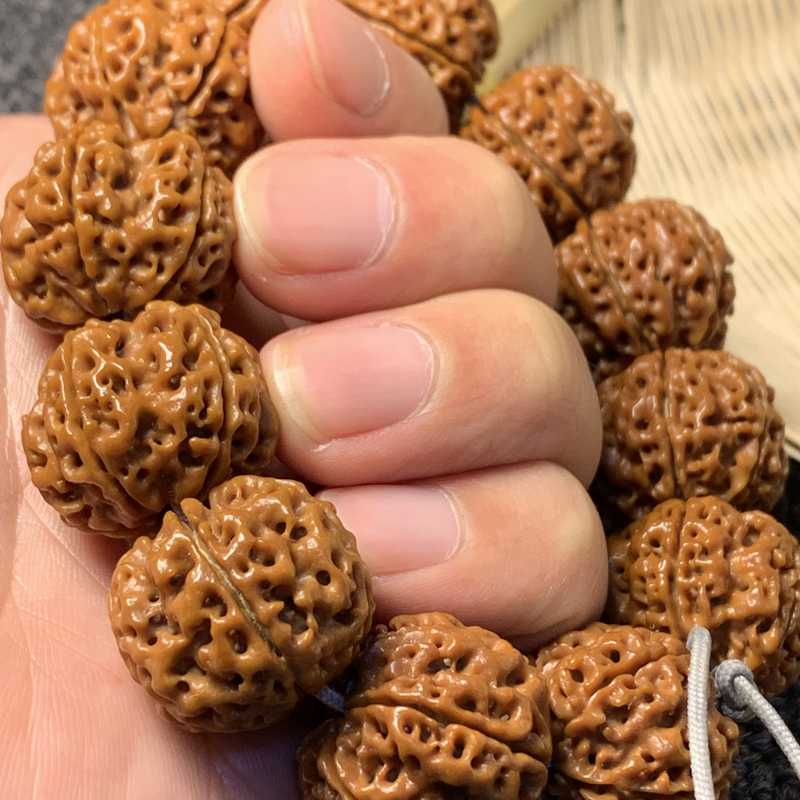
**Definition**: The process of forming a patina on the surface of Rudraksha through actions such as rubbing and pressing with hands, which needs to be combined with a "brush" to keep the surface clean.
**Skills**: For Rudraksha (large), breaking-in is mainly done by hand; for Rudraksha (small), "combining breaking-in and brushing" is required. In the initial stage, brush more to prevent dirt from adhering; in the later stage, increase breaking-in time to promote patina and color development.
#### 13. Brush
**Tool Selection**:
- Rudraksha (large): Hard-bristle brush (for cleaning deep textures) or pig-bristle brush (for polishing) can be chosen;
- Rudraksha (small): Soft-bristle brush is recommended to avoid damaging the tooth-like structure.
**Breaking-in and Brushing Frequency**: Follow the principle of "30% breaking-in, 70% brushing". In the initial stage, brush for 2-3 hours a day; in the later stage, appropriately reduce brushing time according to the patina progress.
#### 14. Crack
**Cause**: Due to the relatively brittle skin of Rudraksha (large), it is prone to cracking when encountering changes in dry and humid environments (commonly known as "internal crack"), and such cracks are mostly concentrated in the mukhi line area.
**Treatment Method**: Minor cracks have no significant impact on breaking-in, and can be alleviated by maintaining appropriate humidity; Rudraksha with deep cracks should be carefully selected to avoid affecting subsequent breaking-in and collection.
### 5. Special Categories and Phenomena
#### 15. Abnormal Rudraksha
**Definition**: Special categories with morphological variation during growth. Common types:
- **Elephant Trunk Rudraksha**: A single lobe protrudes like an "elephant trunk", symbolizing good luck in traditional culture. Its collection value depends on the number of mukhis and the regularity of the shape;
- **Conjoined Rudraksha**: Two or more lobes are fused (commonly known as "twins"). Two-lobe conjoined is relatively rare, and three-lobe and above conjoined Rudraksha are collection-level treasures.
#### 18. Alkaline Bloom
**Phenomenon**: White alkaline powder precipitates on the surface of new seeds, mostly caused by cleaning process or long-term humid environment.
**Treatment Method**: The alkaline powder on the surface can be repeatedly cleaned with a dry brush, and contact with water should be avoided. In the initial stage of breaking-in, as the patina forms, the alkaline bloom phenomenon will gradually ease until it disappears.
#### 19. Glossy Sheen and Patina
- **Glossy Sheen**: The glassy luster formed on the surface of Rudraksha in the initial breaking-in stage (physical polishing effect). It should be noted that artificial polishing can be forged by machines, so the authenticity needs to be comprehensively judged in combination with the texture of the skin;
- **Patina**: The warm and moist protective layer formed by the combined action of sweat, oil and air oxidation after long-term breaking-in, presenting amber or dark brown-red color. It is an important symbol of old mala (prayer beads) of Rudraksha.
### 6. Beginner's Pitfall Avoidance Tips
- **Origin Misconception**: Rudraksha (large) produced in Nepal is of the best quality; for Rudraksha (small), density is the core consideration rather than origin. Indonesian producing areas also have high-quality seeds such as "dragon-scale texture" and "Five-star General";
- **Mukhi Number Trap**: Multi-mukhi Rudraksha (such as 7-mukhi and above) has a high market price, but artificial cutting fakes should be guarded against (such as unnatural mukhi lines, uneven skin color);
- **Daily Maintenance Key**: Avoid exposure to the sun and sudden changes in temperature. When breaking-in with sweaty hands, it is recommended to wear gloves to prevent the formation of "black lines"; regularly use a soft cloth to clean the dirt in the gaps to keep Rudraksha clean.
By systematically mastering the above terms, players can more scientifically select and break-in Rudraksha, and gradually appreciate the fun and sense of achievement of cultural relics collection.1. Basic Classification
1. Rudraksha
Status: Alongside Bodhi seeds (Fringed) and Bodhi seeds (Star), it is ranked among the "Three Traditional Bodhi Seeds of Cultural Relics". Due to its unique natural texture and distinctive shape, it has become a popular category in cultural relics.
Features: Its skin is hard and wear-resistant, with rich texture variations. It requires long-term breaking-in (patina process) to form a patina, combining collection value and playing enjoyment.
2. Rudraksha (large)
Size: Usually 22-32mm in diameter (those over 32mm are rare).