
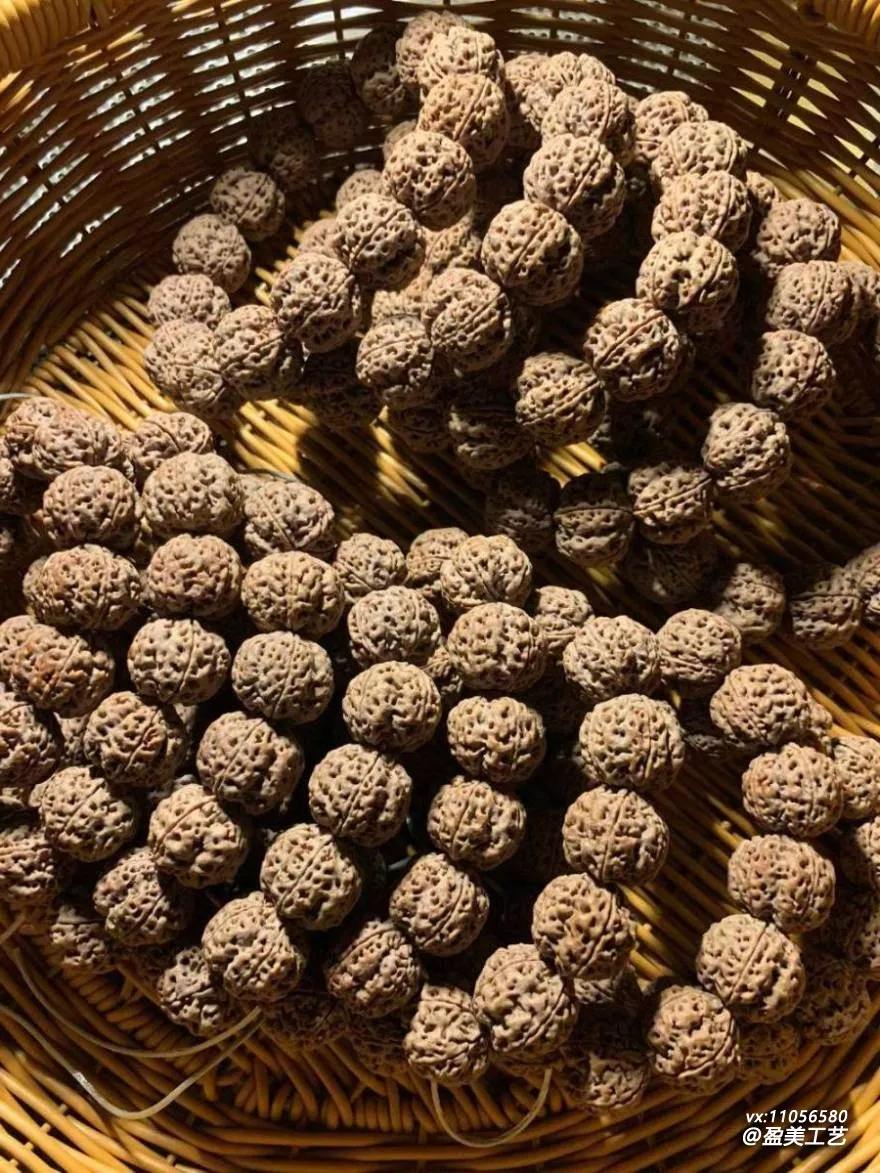
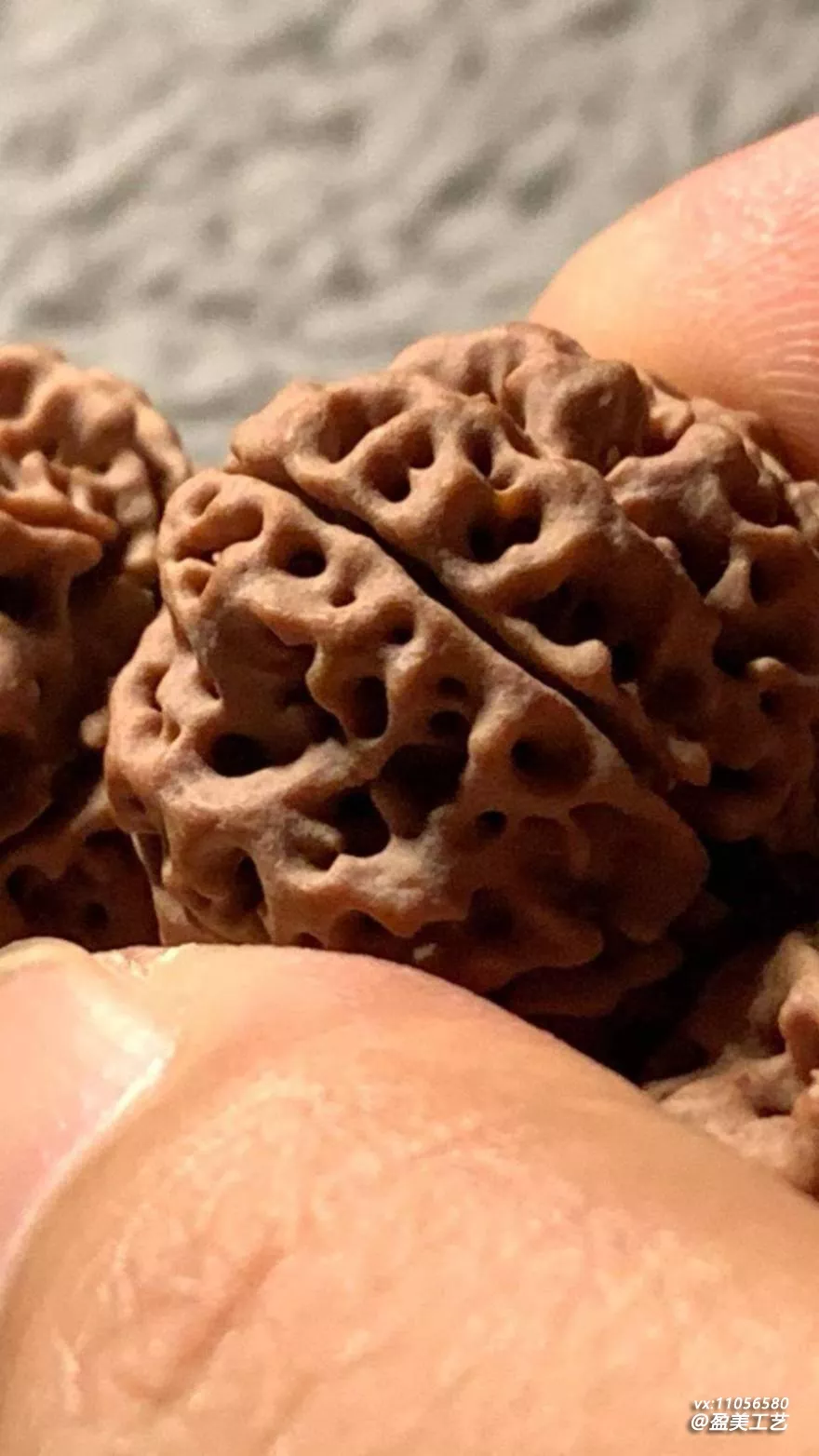
Breaking-in Rudraksha (large) focuses on three core steps: cleaning and priming, moderate oiling, and consistent long-term care. You need to control the ambient humidity daily, take precautions against cracking, and follow the steps below:
1. Cleaning and priming (first 1-2 weeks, the foundation of breaking-in)
1. Cleaning and priming (first 1-2 weeks, the foundation of breaking-in)
Use a stiff boar bristle brush to scrub repeatedly along the grain to remove residual pulp and dust from the grain gaps, 10-15 minutes daily;
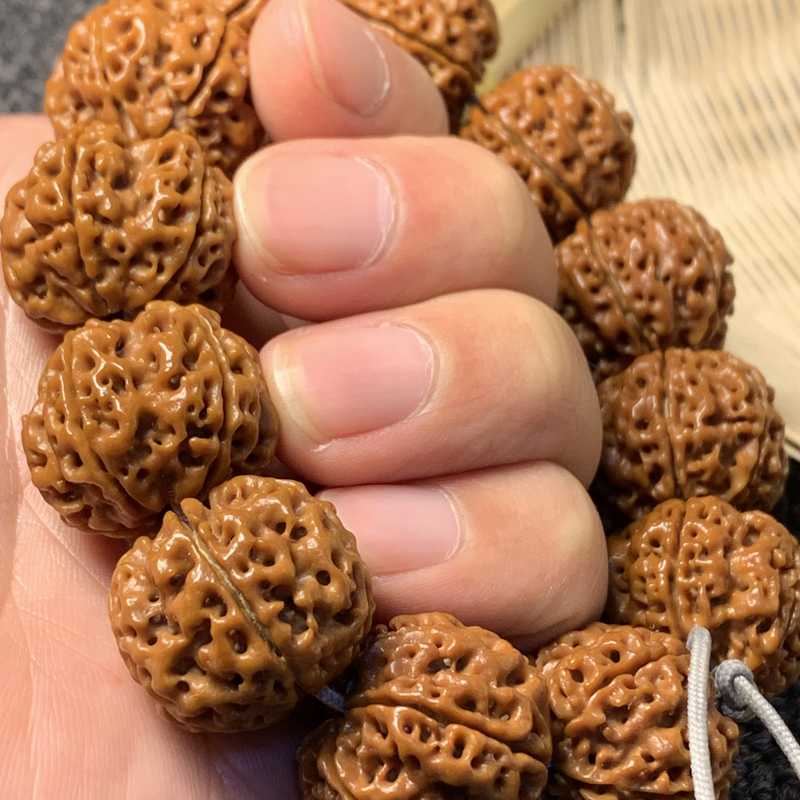
- Use a nano brush for auxiliary polishing; chemical cleaners like dish soap are not recommended. You can dry-brush for maintenance. If you need to rinse with water, ensure it is fully air-dried in a cool, well-ventilated place after rinsing to reduce the chance of alkaline bloom;
- In the initial stage, you can wear clean cotton gloves to do breaking-in, about 30 minutes daily, to form an initial patina film on the bead surface and reduce dirt adhesion.
- 2. Oiling and breaking-in (key for long-term care)
- Oiling requires a small amount and moderate application. Only when the seed is very dry and the grain looks parched can you use a cotton swab to apply a small amount of olive oil or walnut oil thinly on the bead surface, covering the grain gaps. After application, wipe off excess oil with a cotton cloth to reduce oil accumulation, blackening and dust adhesion. Frequent oiling is not needed in daily conditions.
Comments loading...
# Keyword
How to break in Rudraksha
how to clean Rudraksha thoroughly
how to quickly break in Rudraksha to red
how to identify genuine vs. fake Rudraksha
how to tell how many mukhi a Rudraksha has
how to tell if Rudraksha is plastic
how to do base preparation for Rudraksha
the most correct brushing method for Rudraksha
how to brush Rudraksha
what makes good Rudraksha
Recommended content of the same type:
-
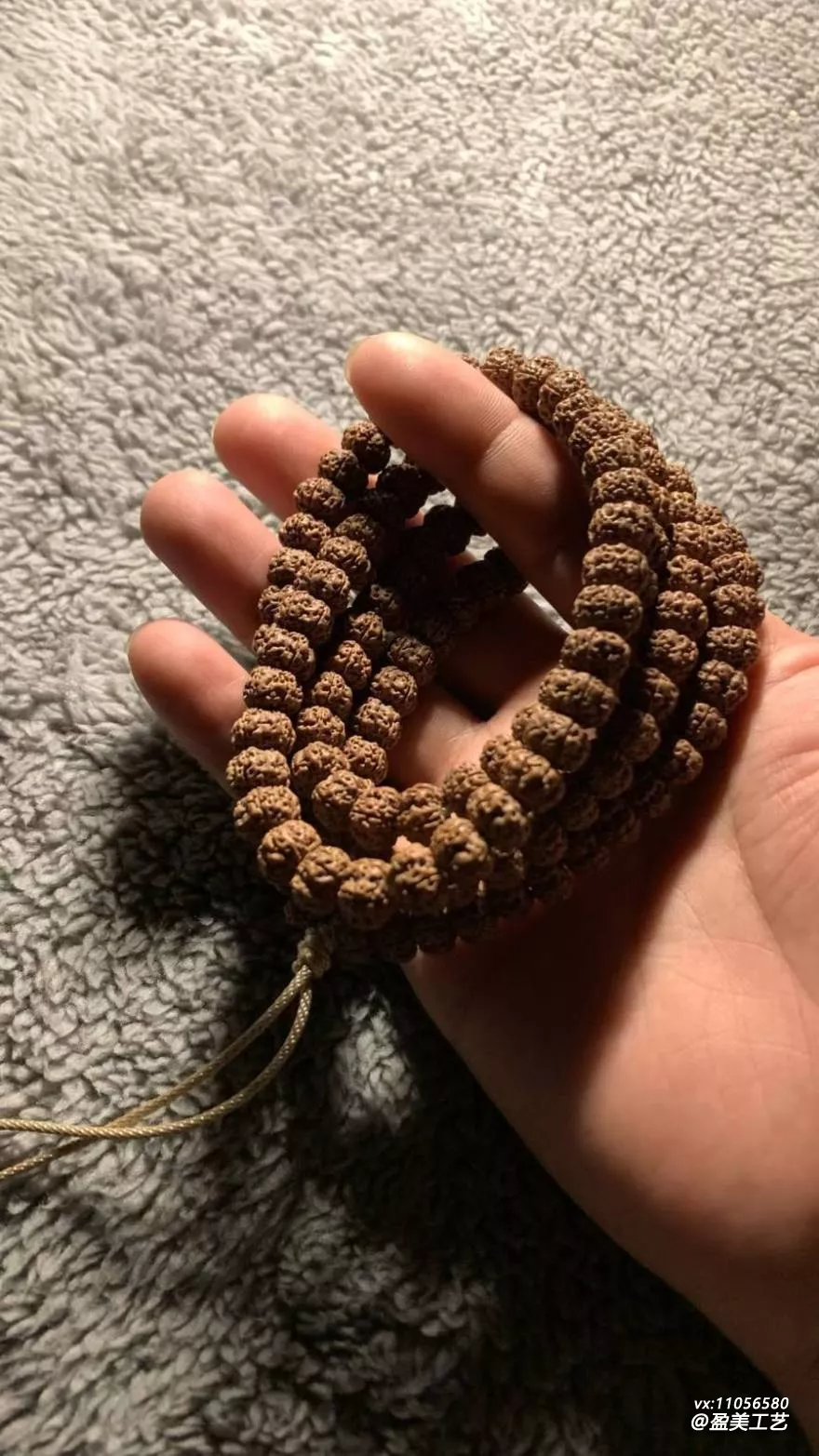
When Breaking-in Rudraksha, Do You Need 30% Breaking-in and 70% Brushing? Let Me Explain
-
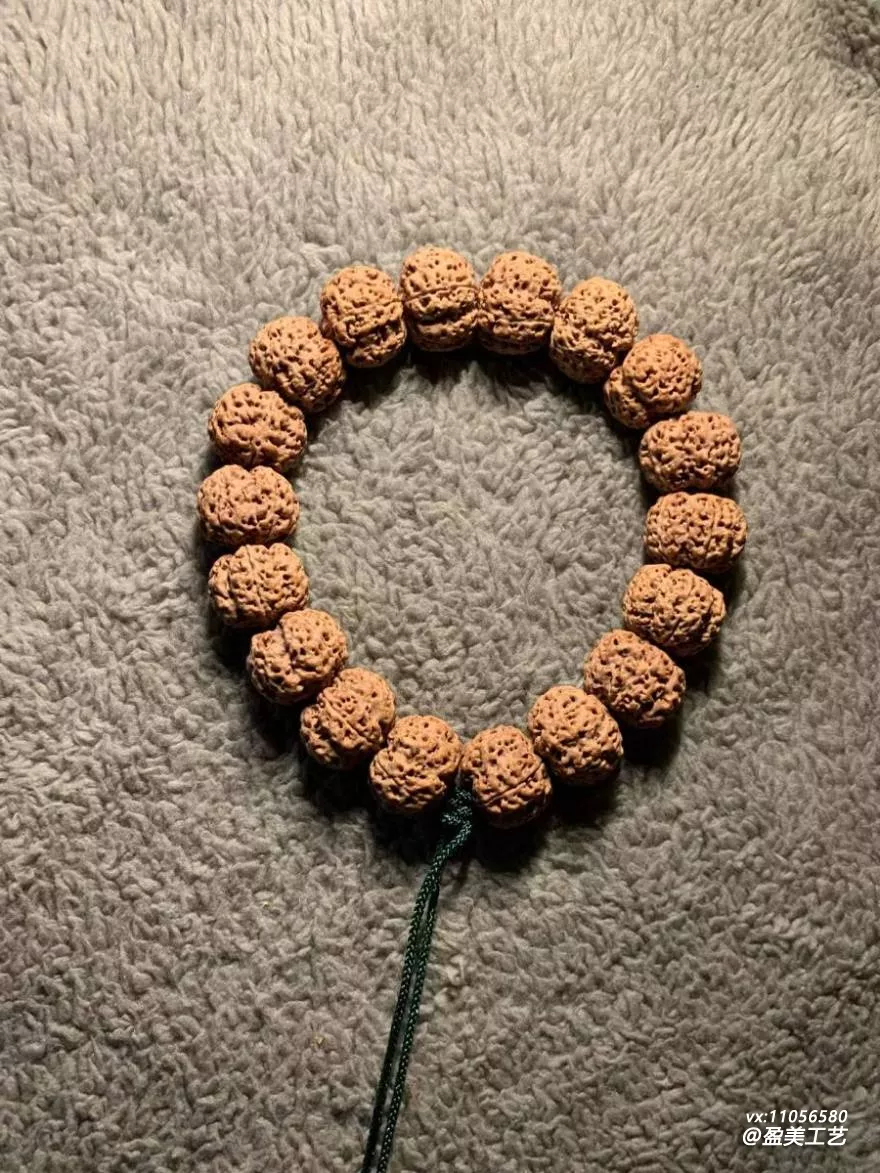
There’s a lot of grime hidden in the grain of Rudraksha. How do you clean it thoroughly?
-
My Rudraksha hasn’t changed after half a year of breaking-in — is my method wrong?
-
How to Avoid Pitfalls When Buying Rudraksha as a Beginner – These Points Must Be Remembered