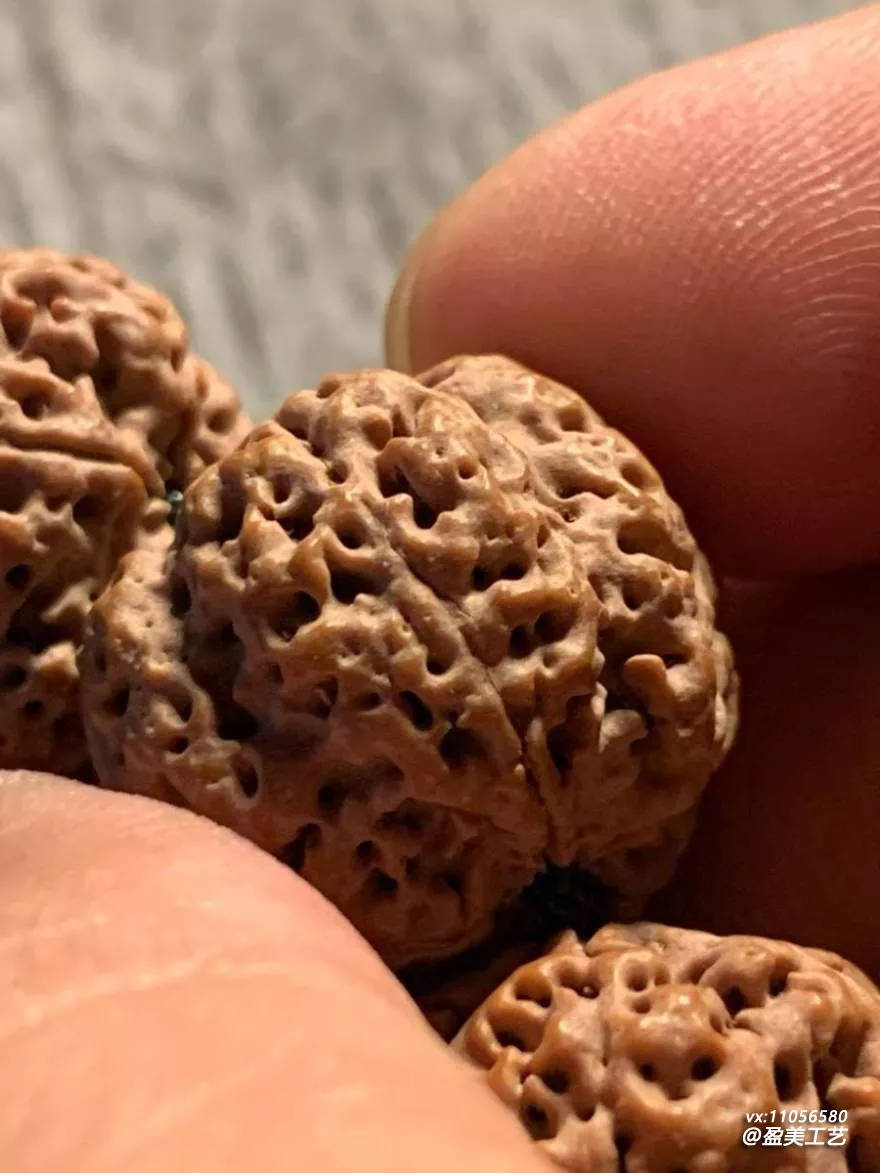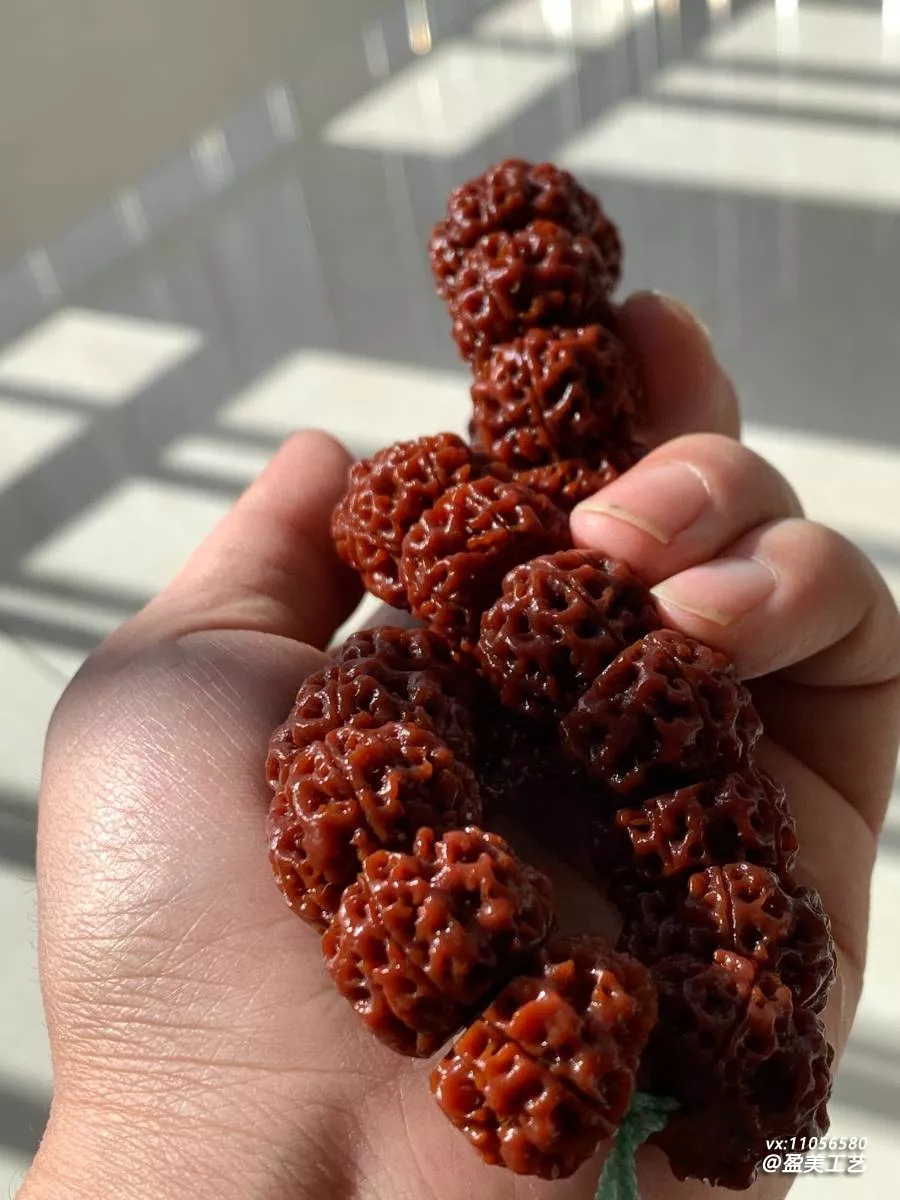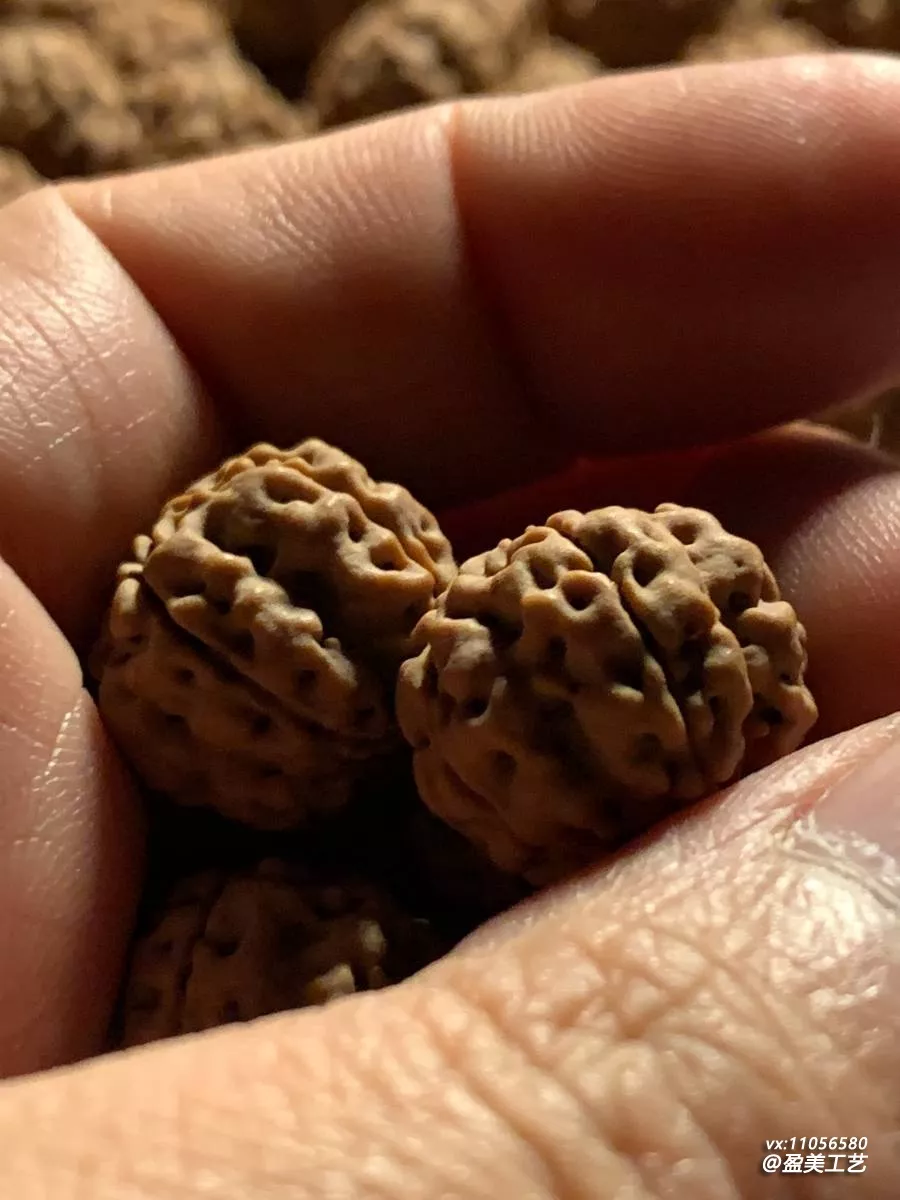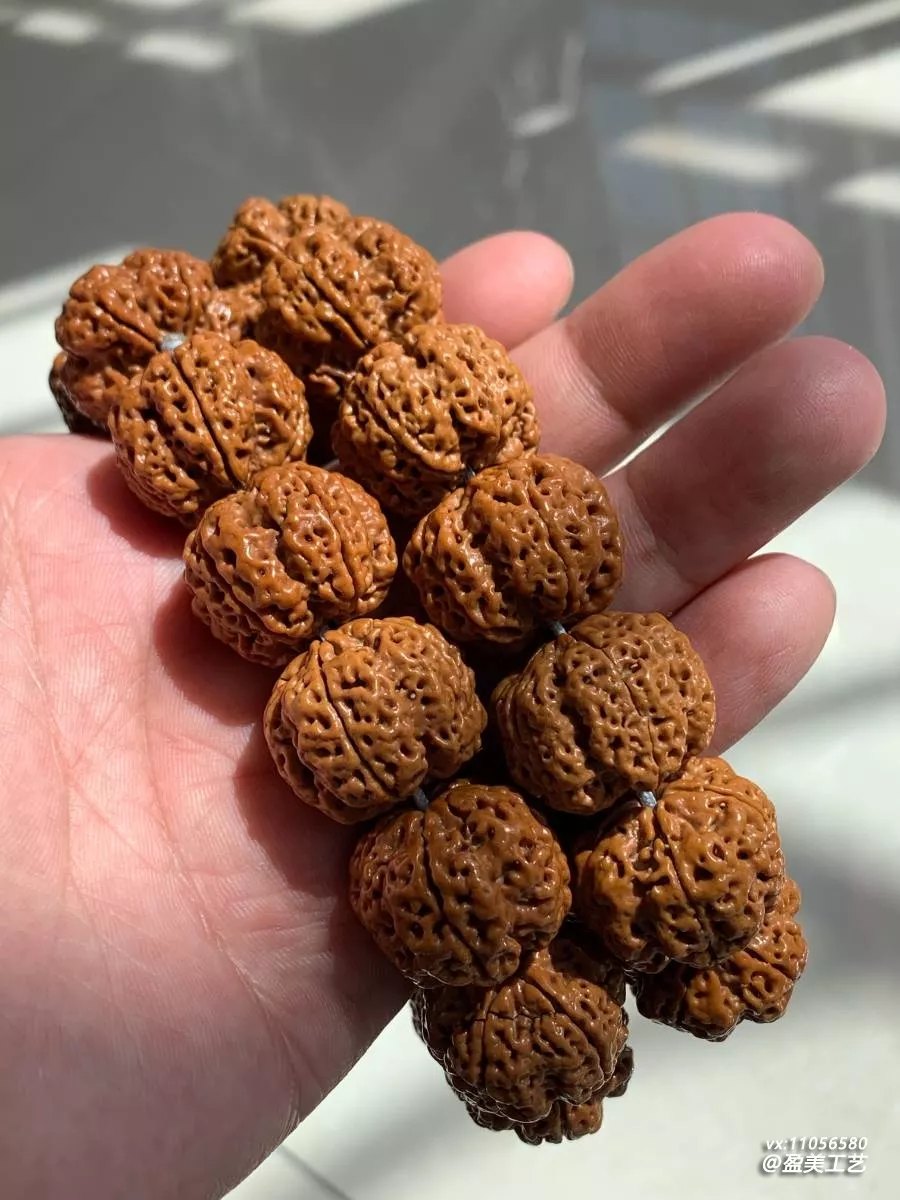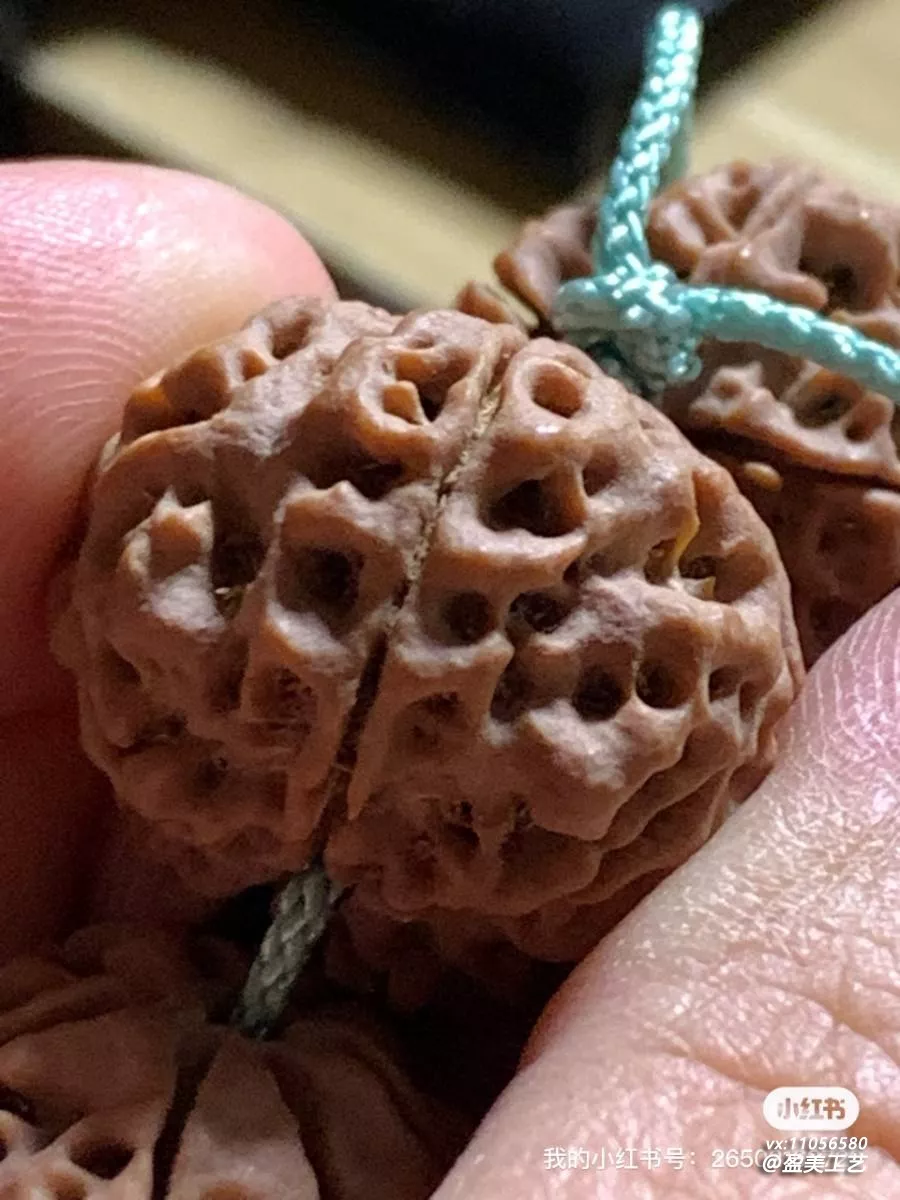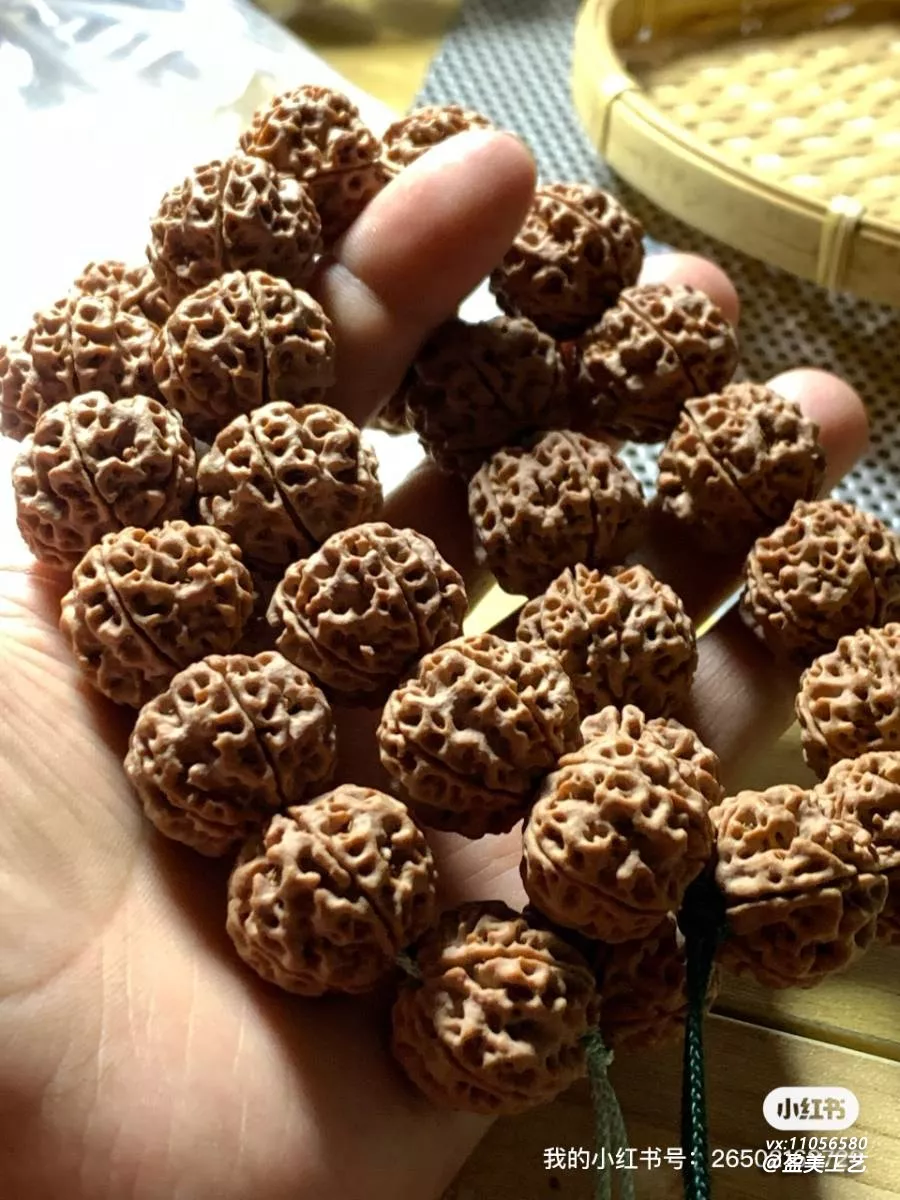
My Laoshuwang single loop is losing colour — dyed or normal? When a string loses colour, beginners easily panic, afraid they bought a dyed one. Colour loss can be normal or a sign of dyeing; here is how to tell them apart, clearly.
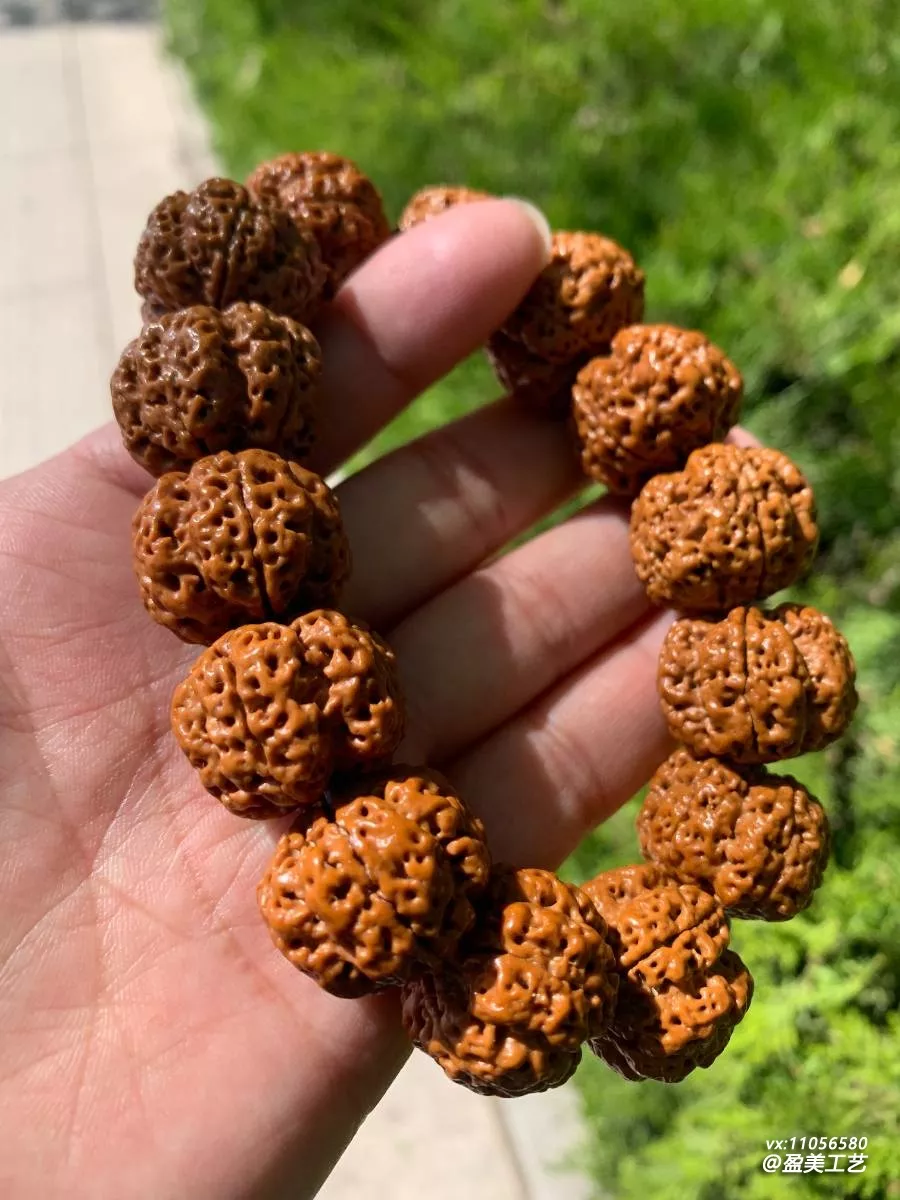
What normal colour loss looks like
Normal colour loss is floating colour coming off. Early in playing a new string, the floating colour and fruit gum on the seed surface rub off, the string loses colour and stains your hand, and the colour is a faint red-brown — that is normal. Once the floating colour is gone it stops, usually after one or two months. A string losing colour normally has a natural colour, and what comes off is surface floating colour — no need to worry.
What dyed colour loss looks like
Dyed colour loss is pigment coming off. The pigment of a dyed string fades after long playing, the colour that rubs off looks dead, and it comes off string after string, with an unnatural colour; besides, a dyed string looks fake-bright and turns patchy after a while. With a dyed string what comes off is pigment, the colour is contrived, and the difference from normal loss is obvious — look carefully and you can tell.
How to tell and what to do
How to tell: look at the colour that comes off — natural red-brown is normal, a dead colour means dyeing; look at the colour of the string surface — natural transition is normal, fake-bright means dyeing. Normal loss needs no action, keep playing; dyed loss needs action — stop playing and contact the seller for a return. My Laoshuwang single loop is losing colour — dyed or normal? Judge by the colour: if normal, play with peace of mind; if dyed, deal with it promptly.