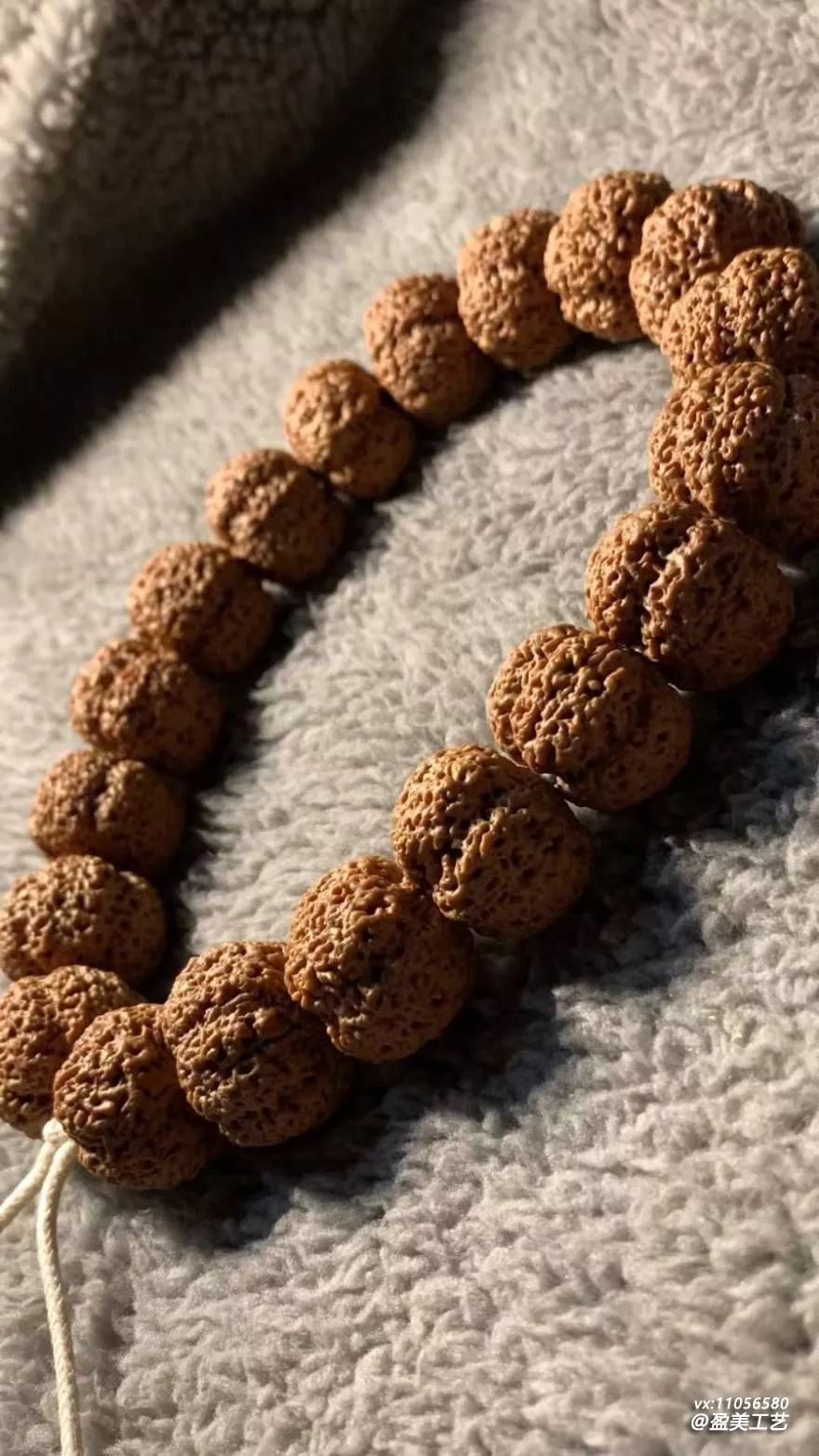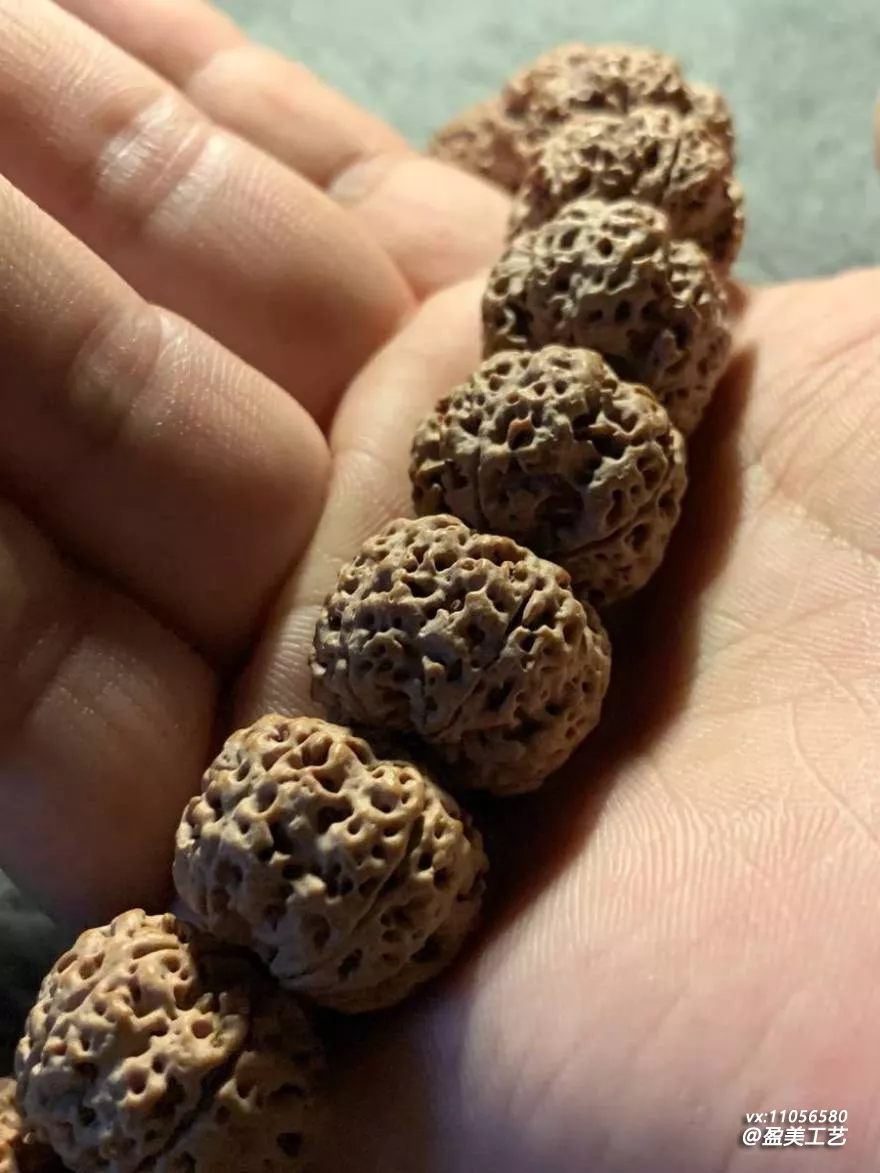
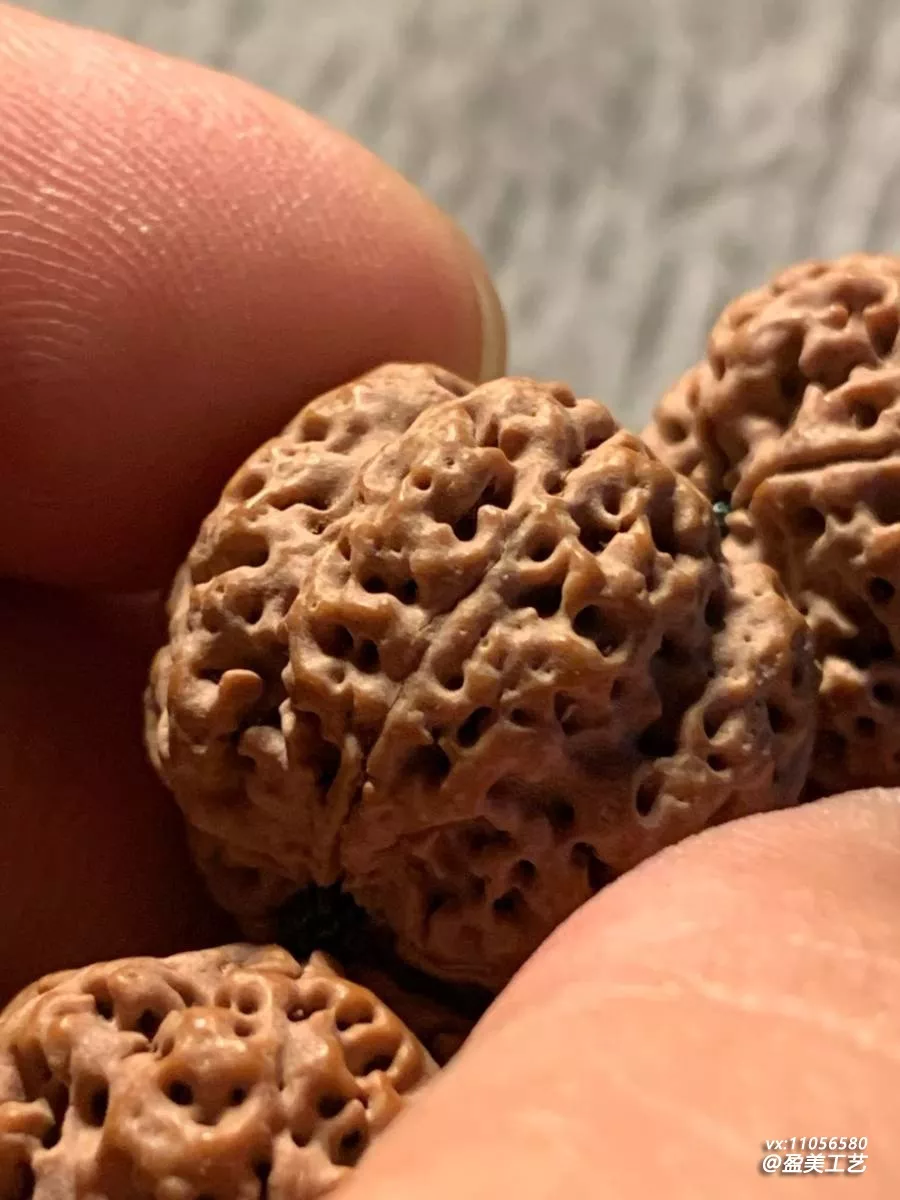
1. The client's requirements
Last month a client came to me saying he wanted to get a Rudraksha (large) string and asked me to help him choose one. He had looked at several strings in physical stores before, but either the prices were too high or the seed quality was average, so he never made a purchase. Knowing I had been into this for several years, he asked me to pick a string for him, with a budget of around two thousand, wanting honeycomb double dragon-ridge (ridge line), size 20mm.
I first confirmed several details with him: he chose yellow skin beads, a short-stem shape, intended to wear the mala (prayer beads) most of the time and only do a little breaking-in (patina process) occasionally. Once the requirements were confirmed, I started sourcing the seeds, contacted several regular suppliers I usually get stock from, and inspected a total of five batches of beads, amounting to over a thousand beads in all.
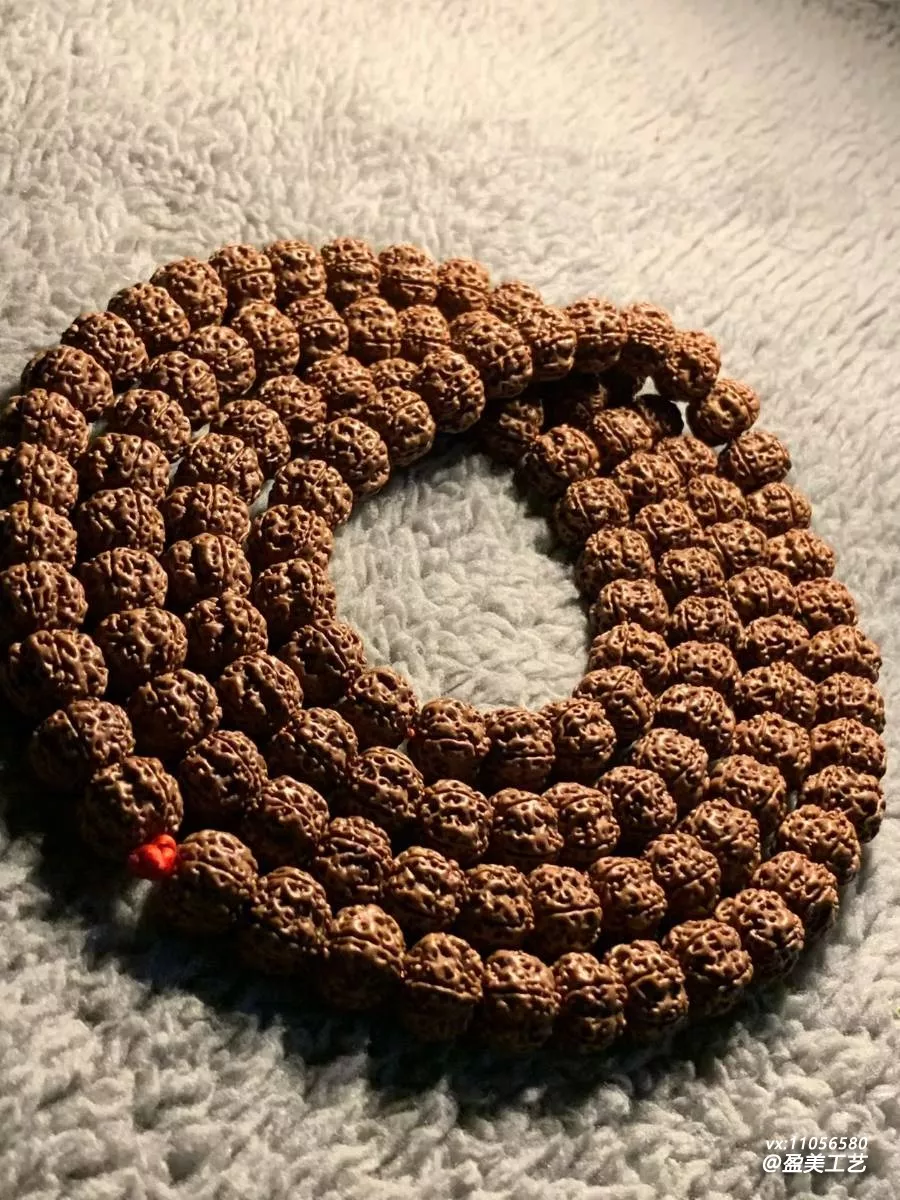
II. The process of selecting beads
From over a thousand beads, I needed to pick out a set of twelve for a mala (prayer beads) — it sounds simple, but it is extremely eye-straining to do. The first step was to measure the dimensions, keeping only the beads between 19.8mm and 20.2mm, which left me with more than 200 beads. The second step was to check the density and skin tone: I discarded any beads that felt too light, as well as those with stained or mottled skin, leaving around 100 beads remaining.
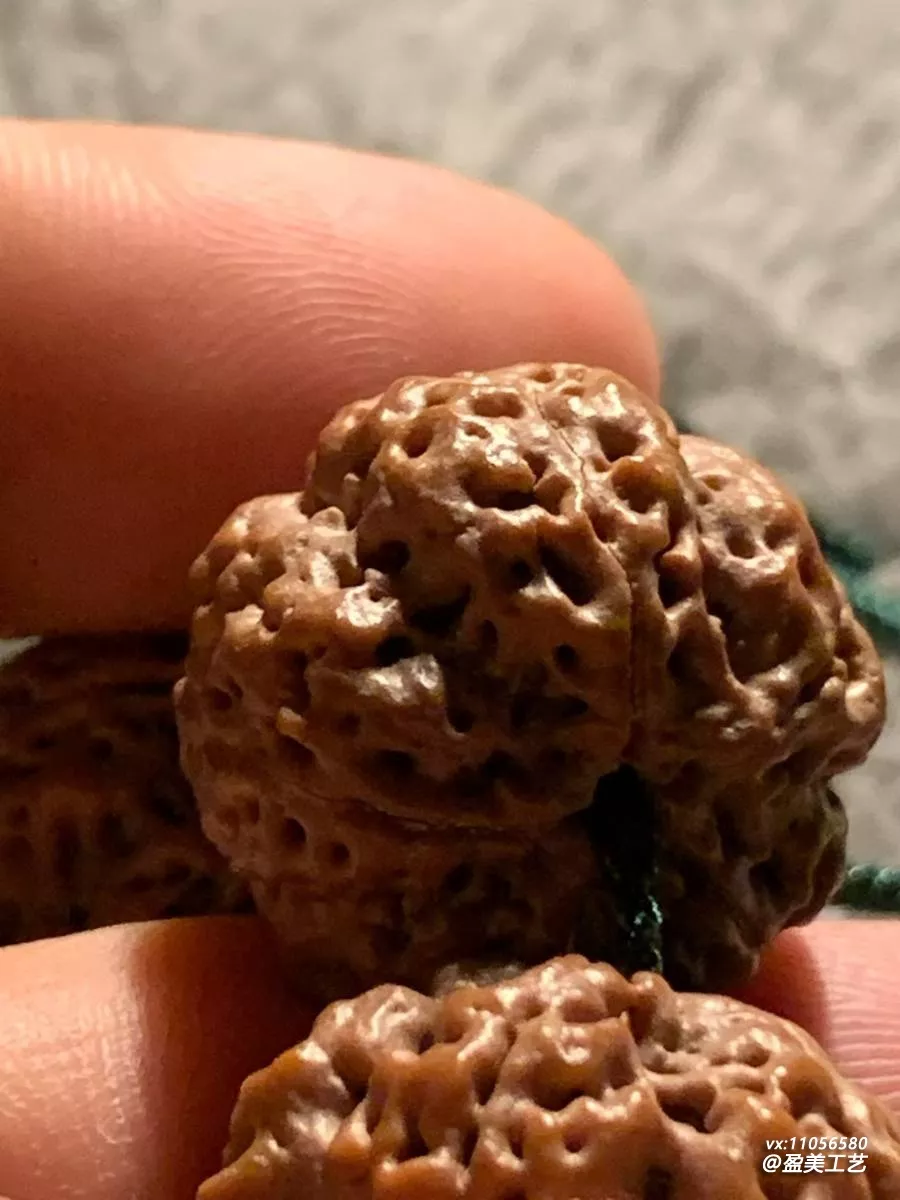
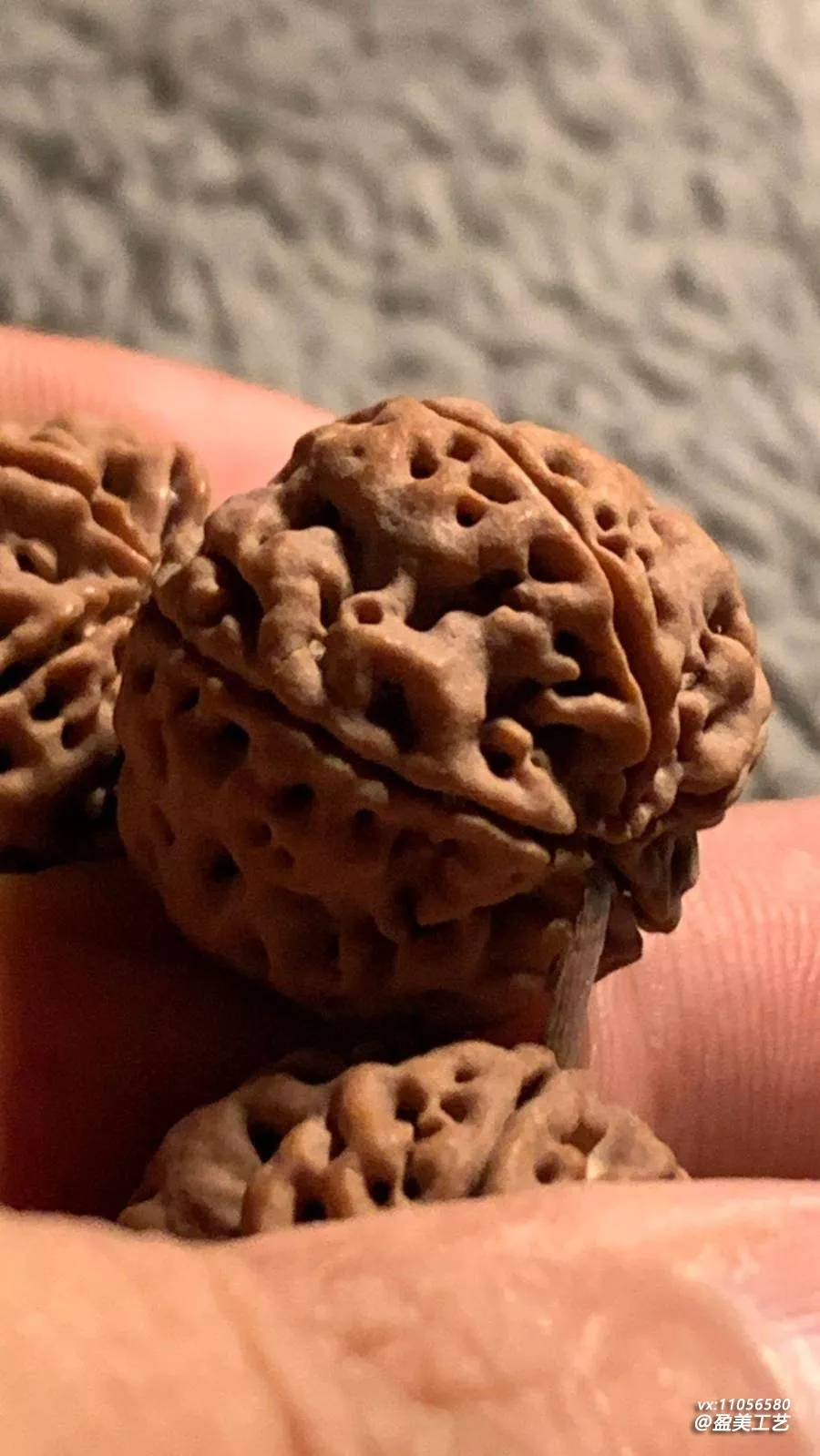
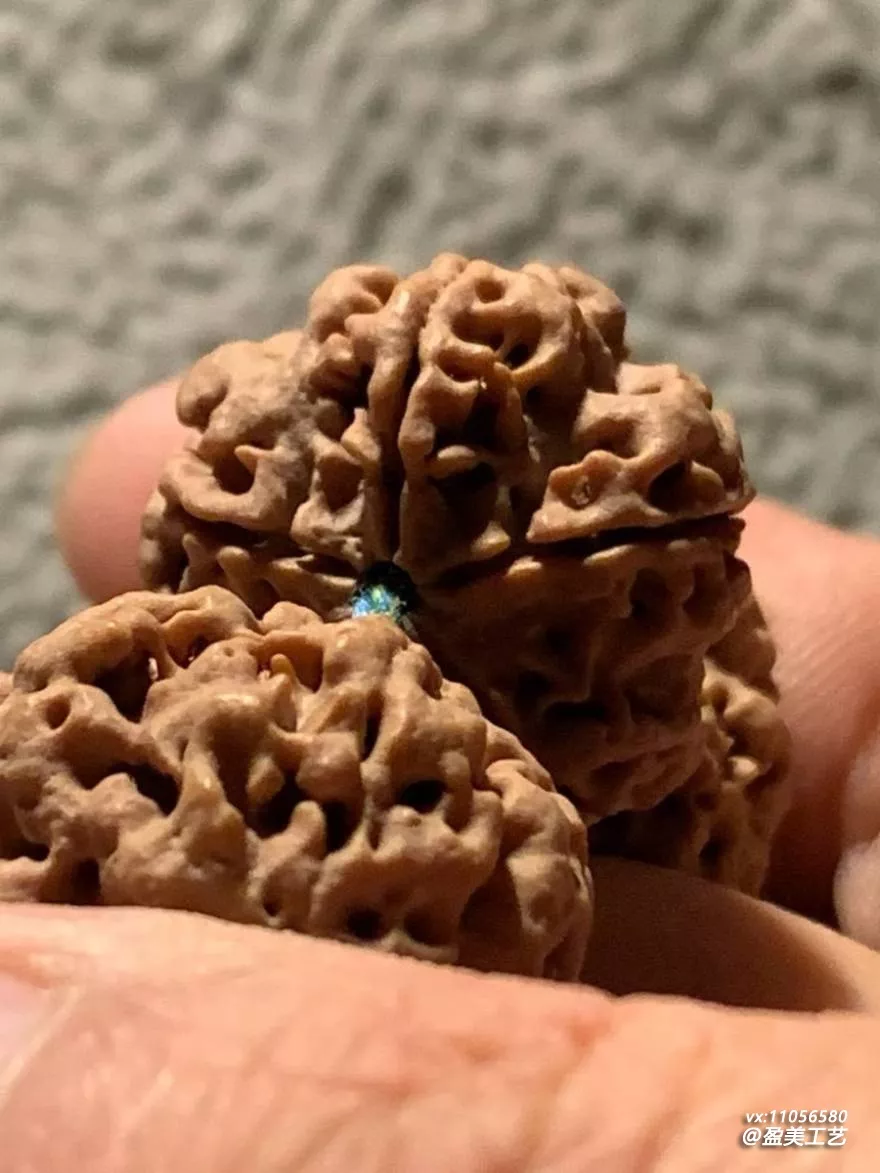
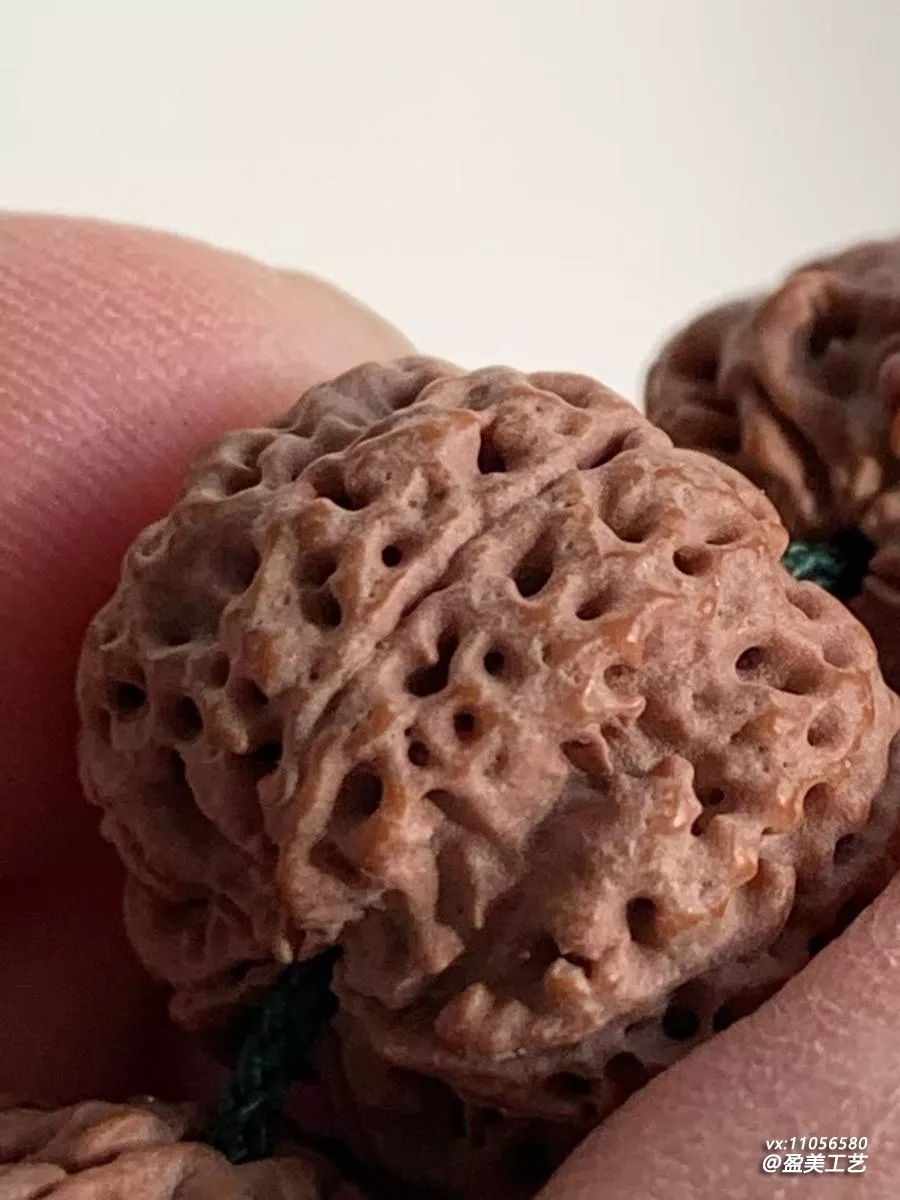
The third step was to check the stem shape: only short-stem beads with a height under 18mm were kept, leaving 60 beads. The fourth step was to examine the grain / texture: the honeycomb texture had to be deep, the double dragon pattern had to be continuous, and every bead had to have a consistent style. This step was the most tedious, as I compared each bead back and forth, and finally ended up with 15 beads total: 12 for the main mala (prayer beads) and 3 as spare beads.
The entire bead selection process took five days in total, with me spending two to three hours on it after work every day until my eyes were strained. But the 15 beads I picked out are all premium quality, with perfectly consistent dimensions, stem shape, grain / texture and skin tone.
III. Assembling the finished mala (prayer beads)
Once the beads were selected, I started drilling holes and stringing them. I used a 1.5mm drill bit at a low rotation speed, drilling each bead slowly one by one to avoid cracking. I checked if the drilled hole was straight after finishing each bead; one of the 15 beads was drilled slightly off-center, so I moved it to the spare beads pile.
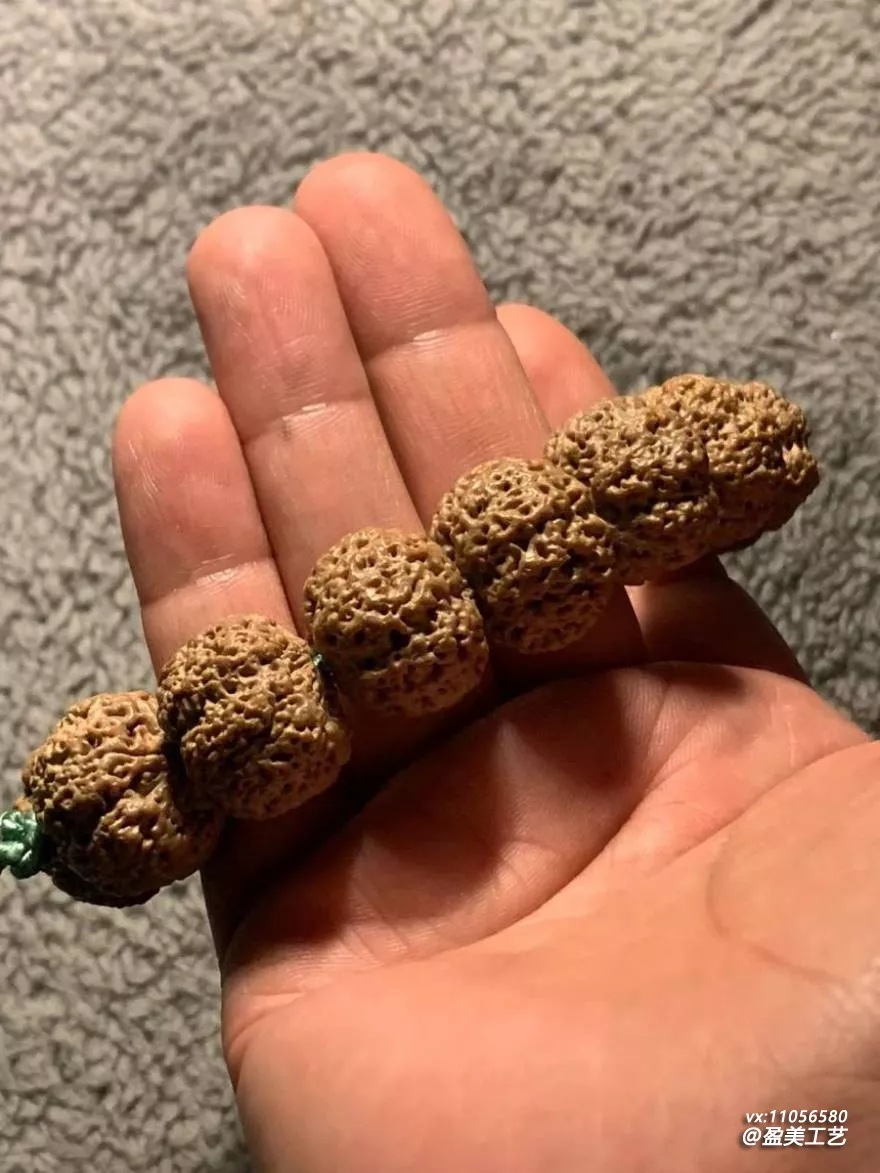
When stringing, I made sure every bead was oriented the same way, with the front side facing out and the dragon-ridge (ridge line) aligned uniformly, so the mala (prayer beads) looks neat when viewed from all angles. After stringing, I tried it on for fit: the customer's wrist circumference is 17.5cm, so 12 20mm beads plus the guru bead fit perfectly. Finally, I adjusted the details, tightened the knot, and tucked the knot into the hole of the guru bead — the mala (prayer beads) was then fully completed.
When I delivered the mala (prayer beads) to the customer, he examined it over and over for a long time and was extremely satisfied. He said the malas he had seen in physical stores before either had inconsistent dimensions, uneven grain / texture, or were overpriced. This mala I made was selected with great care, every bead is perfectly consistent, and it is far better than the ones sold in physical stores.
Speaking of which
Actually, I barely made any profit from making this mala for the customer, I just did it as a favor. But seeing the satisfied look on the customer's face when he received the mala (prayer beads) gave me a real sense of achievement. The joy of cultural collectibles is not only the pleasure you get from doing your own breaking-in (patina process), but also the fun of helping others find a mala (prayer beads) that perfectly meets their expectations.
If any friends want to pick a Rudraksha mala but don't know how to choose, they can reach out to me, explain their needs clearly, and I can give them advice. Though picking the beads takes time, the mala selected will definitely be better than buying randomly.